
Decommissioning Data Centers the Smart Way for Modern IT Fleets
Secure, Compliant Data Center Decommissioning Starts With a Plan
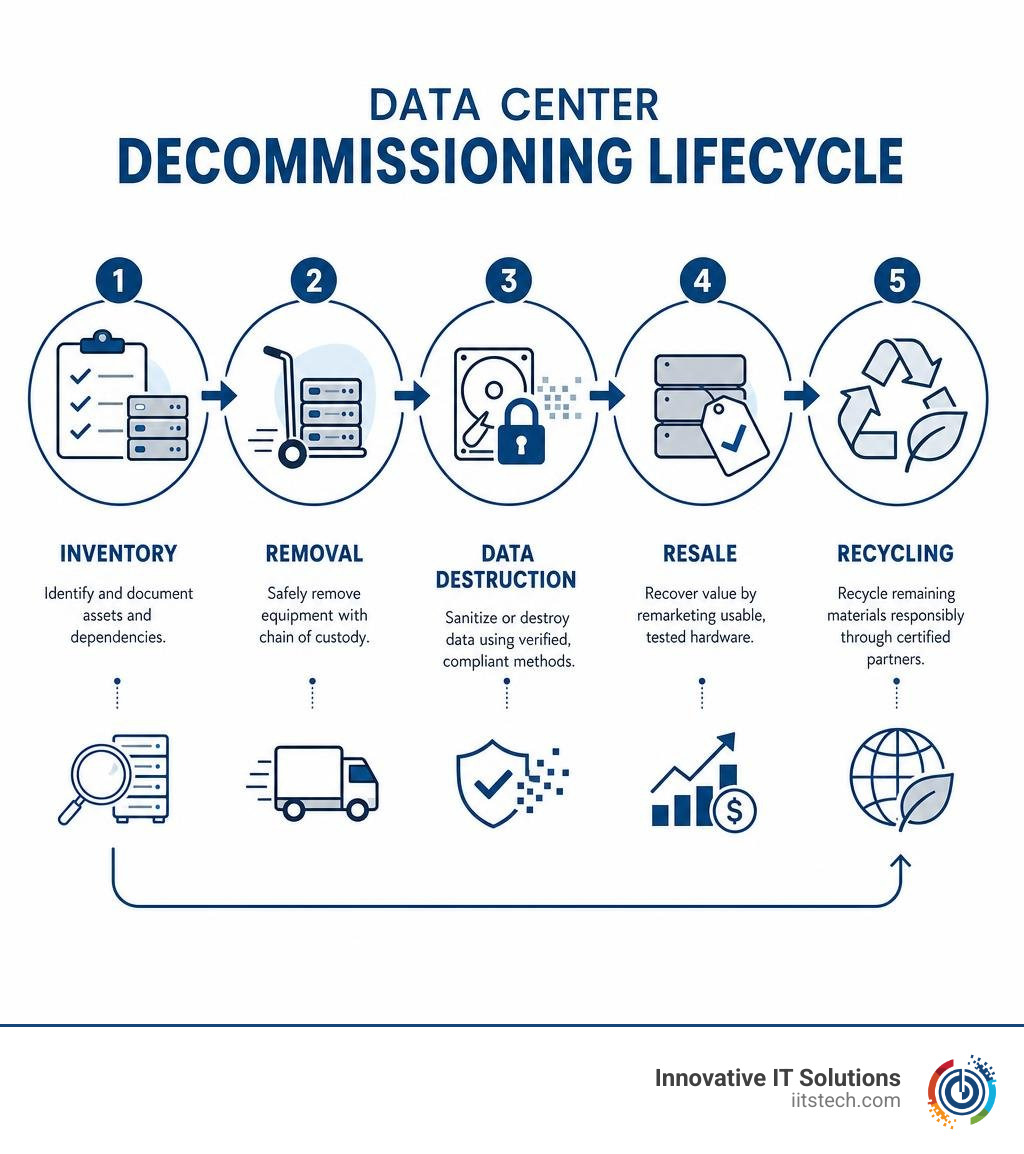
Data center decommissioning services help businesses retire servers, storage arrays, network equipment, and related hardware without leaving data, compliance, or environmental risks behind. A sound project should begin with a complete asset inventory and dependency check, then move through secure removal, tracked transport, verified data sanitization, value recovery, and responsible recycling.
For an IT manager, the priorities are clear:
- Keep critical workloads running while equipment is removed.
- Maintain chain of custody for every serialized asset.
- Sanitize or destroy data-bearing drives using documented methods.
- Recover resale value from usable enterprise hardware.
- Recycle remaining materials through responsible downstream partners.
Hardware refreshes, cloud migrations, consolidations, and facility moves all create retired IT assets. Handling them casually can expose sensitive data and create audit problems under HIPAA, GDPR, PCI DSS, and e-waste rules. Professional planning helps turn a difficult teardown into a controlled lifecycle event, with records that support both security and sustainability goals.
I am Mike Haden, Founder and Director of Business Development at Innovative IT Solutions, with 14 years of experience in ITAD, secure asset handling, data sanitization, enterprise hardware remarketing, and data center decommissioning services. This guide explains what a well-managed project should include and how to evaluate the process from first inventory through final disposition.
Common data center decommissioning services vocab:
Why Modern Enterprises Rely on Data Center Decommissioning Services
As we navigate the enterprise landscape of 2026, IT architectures are shifting rapidly. Accelerated hardware refresh cycles, hybrid cloud adoptions, and high-density compute demands mean enterprise data centers retire equipment faster than ever before. The global data center decommissioning market reflects this growth, projected to climb from $8.5 billion in 2023 to $15.2 billion by 2030 at an 8.7% CAGR.
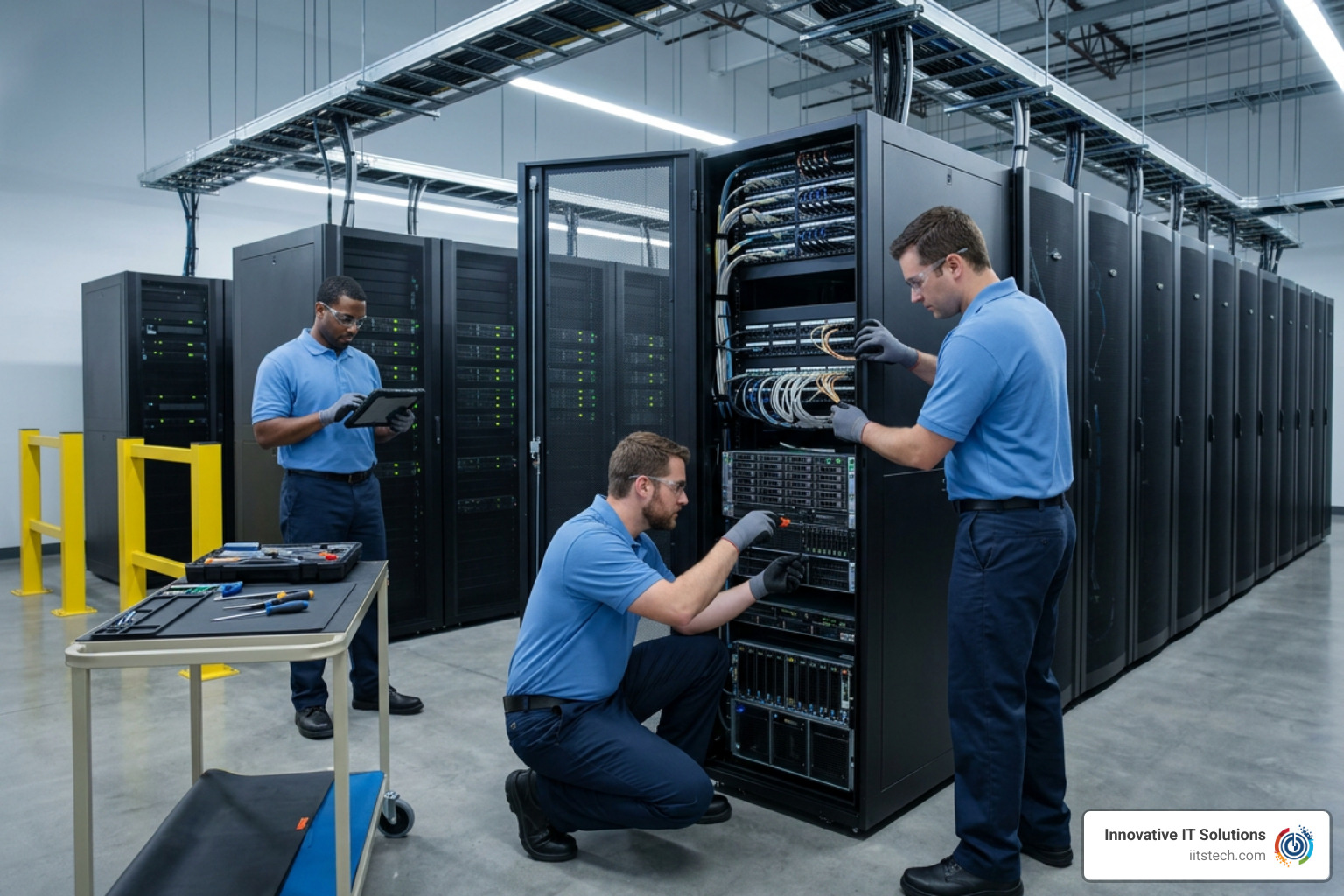
Retiring enterprise infrastructure is not as simple as pulling plugs and hauling racks to a storage room. Modern enterprises recognize that data center teardowns involve intricate operational dependencies, major cybersecurity vulnerabilities, and strict environmental mandates.
When your team implements IT Asset Disposition (ITAD) – Why Every Business Needs a Secure ITAD Strategy, you transform an operational liability into a structured lifecycle event. Engaging specialized professionals minimizes business interruption, protects your brand reputation, and directly supports the bottom line through component recovery and compliance adherence.
Core Hardware Handled by Data Center Decommissioning Services
Enterprise data center environments house far more than generic computer towers. A typical decommissioning project involves high-density, business-grade hardware designed for mission-critical enterprise workloads:
- Rackmount and Blade Servers: High-capacity multi-node compute units, hyper-converged chassis, and standalone enterprise mainframes. Knowing what to do with old servers – disposal options for businesses helps determine which units undergo sanitization for resale versus material recycling.
- Enterprise Storage Arrays: SAN (Storage Area Network), NAS (Network Attached Storage), and dense enterprise arrays populated with high-speed NVMe, SAS, and SATA drives.
- Core Networking Fabrics: Enterprise-grade core switches, spine-leaf topologies, edge routers, hardware firewalls, load balancers, and fiber patch distribution panels.
- Power Distribution Equipment: Rack-level intelligent Power Distribution Units (ePDUs), managed busways, and inline battery backup modules.
In-House Execution Versus Professional ITAD Providers
Attempting a data center teardown using internal engineering staff frequently leads to project bottlenecks, scope creep, and elevated risk profiles.
Internal teams excel at building and maintaining operational architectures, but they rarely have the specialized tools, de-racking rigs, degaussers, mobile shredders, or logistics frameworks necessary for compliant decommissioning. Partnering with professional IT disposal companies – everything you need to know transfers environmental and data security liabilities away from your balance sheet while freeing internal engineers to focus on forward-looking initiatives.
Step-by-Step Data Center Decommissioning Process
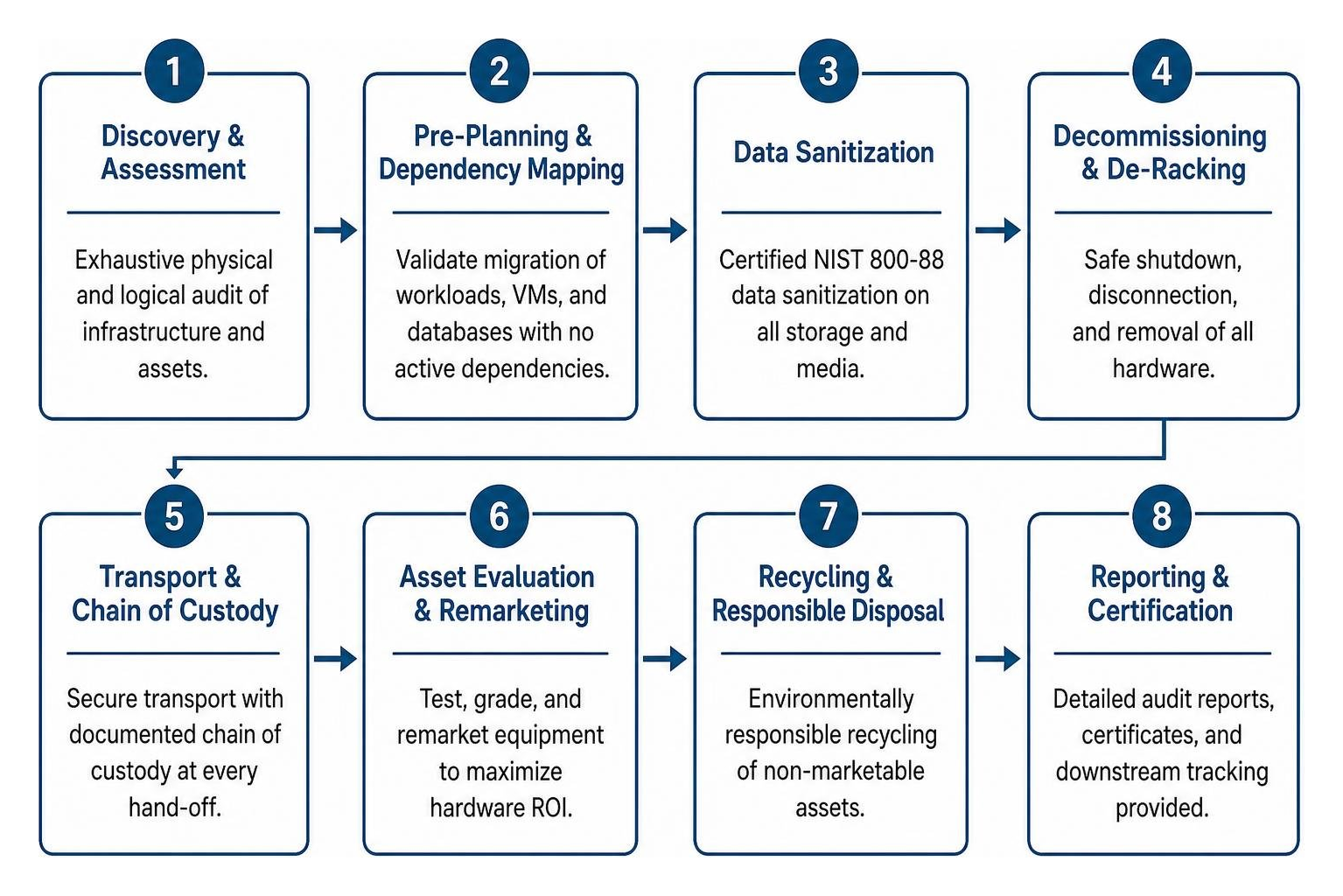
Executing a seamless enterprise data center teardown requires disciplined project management. Every server blade, power cable, and drive bay must be accounted for before physical extraction begins.
Asset Discovery, Pre-Planning, and Dependency Mapping
A successful project begins months before any hardware is unbolted. During the initial discovery phase, we conduct an exhaustive physical and logical audit of the infrastructure:
- Dependency Mapping: Validating that all critical enterprise workloads, virtual machines, and databases have migrated to new hardware or cloud environments without active dependencies on legacy hardware.
- Software De-licensing: Harvesting hypervisor, OS, and enterprise software licenses from physical serial numbers to avoid unnecessary recurring subscription charges.
- Asset Inventory Auditing: Matching physical hardware against internal Configuration Management Databases (CMDB) using an end-of-life IT equipment checklist for office moves and closures.
- Physical Preparation: Tracing, auditing, and labeling all power feeds, data cables, and auxiliary connections. Following structured guides on how to prepare IT equipment for secure disposal – a step-by-step guide ensures systematic isolation without unintended network drops.
Physical De-Installation, Packaging, and Secure Logistics
Once enterprise systems are safely powered down and isolated from the live power grid, physical extraction commences:
- De-Racking and De-Cabulation: Specialized technicians carefully unrack multi-node servers, blade chassis, SAN arrays, and networking switches, preventing physical damage to surrounding production infrastructure.
- Anti-Static, Shock-Absorbent Packaging: High-value enterprise compute components are sealed in static-shielding material, foam-crated, and palletized to protect delicate internal circuity for secondary market value recovery.
- Secure Logistics and Custody Tracking: Transporting data-bearing enterprise assets requires unbroken chain-of-custody protocols. Understanding what is chain of custody in ITAD and why it matters ensures your organization avoids compliance failures. Assets are moved in dedicated, locked, GPS-monitored vehicles with tamper-evident seals from the data center floor to certified processing facilities.
For enterprises undergoing facility transitions across the region, integrating specialized local expertise—such as Oklahoma City Data Center Services—ensures seamless regional infrastructure support alongside end-to-end ITAD execution.
Data Sanitization and Certified Destruction Protocols
Data security represents the most critical liability vector during any facility decommissioning project. According to IBM’s Cost of a Data Breach Report, improper data destruction during hardware retirement exposes organizations to average breach costs reaching $4.24 million per incident.
Alarmingly, over 50% of organizations fail to properly sanitize data from decommissioned data center assets, exposing themselves to regulatory fines and corporate espionage. Understanding the importance of data destruction is vital when handling enterprise storage.
On-Site vs Off-Site Sanitization Methods
Organizations can choose between on-site and off-site data eradication strategies based on their internal security classification frameworks:
- On-Site Degaussing and Mechanical Crushing: For ultra-sensitive, regulated, or classified corporate drives, we deploy mobile shredding rigs directly to your data center dock. Drives are mechanically shredded down to 20mm or smaller fragments before leaving the building footprint. Learning how to ensure certified data destruction for retired devices empowers security teams to select the exact physical destruction profile needed for their compliance obligations.
- Off-Site Automated Sanitization: Drives destined for hardware remarketing are logged by serial number, secured in locked transport bins, and wiped using multi-pass, cryptographic sanitization systems that overwrite every addressable sector in compliance with NIST SP 800-88 Rev 1 guidelines.
Audit Trails and Certificates of Destruction
Data sanitization is only as good as the paperwork that proves it. In the event of a regulatory audit under HIPAA, PCI-DSS, or SOC 2 frameworks, physical proof of compliance is non-negotiable.
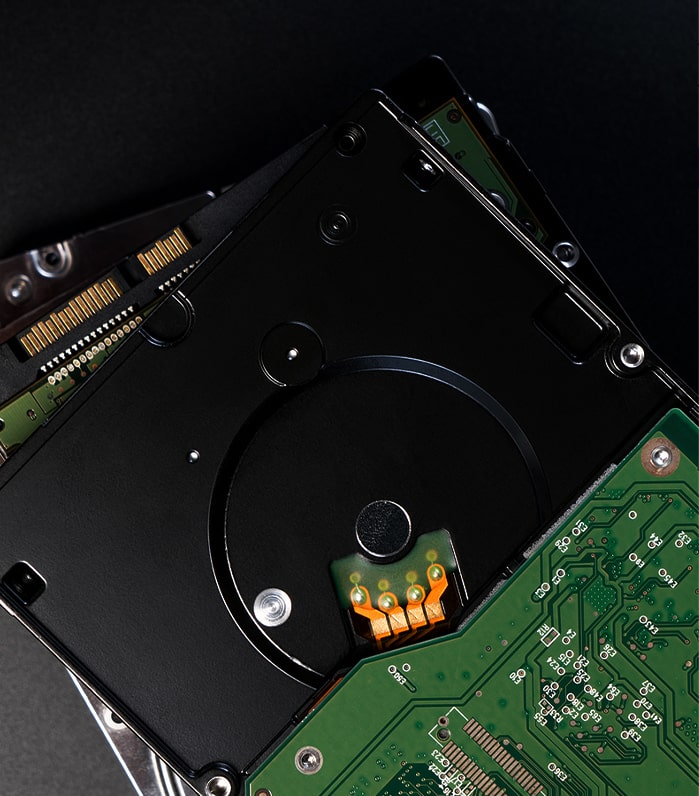
Every sanitized or shredded drive must generate an itemized, tamper-evident audit record detailing:
- Drive make, model, and physical serial number.
- Parent server asset tag and rack identifier.
- Method of sanitization or shredding used.
- Pass/Fail status with bad-sector reallocation logging.
- Exact timestamp, technician ID, and verified software verification logs.
Reviewing guides on demystifying the certificate of destruction for your business helps compliance officers understand what auditors look for in a valid certificate. This documentation proves why ITAD should be part of your cybersecurity strategy, bridging the gap between digital defense and physical hardware retirement.
Maximizing Value Recovery and Sustainable E-Waste Management
Enterprise data center decommissioning is not merely an expense; when executed smartly, it serves as a substantial cost-recovery channel. With data center hardware, approximately 80% of decommissioned equipment can be reused or refurbished, directly supporting circular economy principles and corporate ESG milestones. Decommissioning services can recover up to 95% of original hardware value on select assets through active remarketing of servers, enterprise storage components, and high-performance network gear.
Component Harvesting and Enterprise Hardware Resale
A three-year-old server chassis might no longer meet your enterprise processing benchmarks, but its internal components retain high secondary-market liquidity. Our technicians harvest, test, and remarket individual modular components:
- High-Density Server Memory: Registered ECC DDR4 and DDR5 DIMMs.
- Enterprise CPUs: Multi-core Intel Xeon Scalable and AMD EPYC enterprise processors.
- High-Performance Solid State Storage: Enterprise-grade NVMe and SAS SSD modules.
- Network Interface Cards & HBAs: Multi-port 25GbE/100GbE NICs and Fibre Channel controllers.
Deploying corporate electronics buyback programs – secure disposal meets ROI helps enterprise organizations convert obsolete hardware directly into working capital, offsetting the total cost of facility teardowns. For deeper insight into liquidation channels, consult the ultimate guide to asset recovery and explore proven methodologies for maximizing value from obsolete IT equipment and asset recovery.
Environmentally Responsible Recycling and Hazardous Material Disposal
Hardware that has reached absolute end-of-life or failed functional testing enters our strict, zero-landfill material recovery pipeline.
Adhering to EPA regulations ensures hazardous elements never contaminate local ecosystems. Discover how smart IT equipment recycling for businesses – turning e-waste into opportunity aligns enterprise infrastructure lifecycles with the environmental impact of ITAD done right.
Best Practices for Vendor Selection and Compliance Management
Selecting an unqualified vendor to tear down an enterprise facility introduces unacceptable operational and legal risks. From data spills to improper scrap dumping, the liability associated with IT disposal rests squarely on the enterprise hardware owner unless explicitly transferred through certified, insured contracts.
Selecting Certified Data Center Decommissioning Services
When vetting a decommissioning partner, review their third-party industry certifications:
- R2v3 (Responsible Recycling) and e-Stewards: Guarantees zero-landfill disposal, strict environmental practices, worker safety, and certified downstream vendor tracking. For in-depth requirements, refer to our R2 certified ITAD provider guide 2026.
- ISO 9001, 14001, and 45001: Confirms quality management, environmental responsibility, and occupational health systems.
- Downstream Transparency: A reputable vendor must account for every ounce of commodity scrap throughout its entire recycling journey. Understanding why your ITAD provider’s downstream partners matter prevents unexpected regulatory fines years down the road.
Before signing a service agreement, evaluate your vendor using our checklist on how to choose the right ITAD vendor for your business.
Mitigating Project Risk and Maintaining Compliance
To insulate your business against unforeseen vendor negligence or transport mishaps, verify that your partner carries robust cybersecurity and environmental liability coverage. Reading ITAD liability insurance – protecting your business when vendors fail provides actionable guidance on necessary indemnification thresholds.
Coupled with proactive governance, these measures support full ITAD compliance – how to keep your business audit-ready and secure, no matter how complex the decommissioned environment.
Frequently Asked Questions about Data Center Decommissioning
How long does a data center decommissioning project typically take?
Project duration varies based on total rack count, hardware density, and the level of on-site data destruction required. A small enterprise server room (2 to 5 racks) can often be uninstalled and sanitized in 2 to 3 days. Large enterprise facilities or co-location cages (50 to 200+ racks) are typically phased over 3 to 6 weeks to ensure continuous uptime for migrated workloads and systematic chain-of-custody logging.
What is the difference between cryptographic wiping and drive shredding?
Cryptographic wiping logically purges all data sectors using multi-pass overwrite algorithms compliant with NIST 800-88 Purge standards, leaving the physical hard drive or NVMe SSD fully functional for testing, redeployment, or remarketing. Physical drive shredding passes the storage media through high-torque industrial blades, permanently turning the drive into small physical fragments for raw material recycling.
How can enterprises maximize ROI on retired server fleets?
To maximize financial returns, retire hardware while it still possesses active secondary-market relevance (typically within 3 to 5 years of initial deployment). Avoid letting retired servers sit idle in storage rooms where they steadily depreciate. Additionally, partnering with an ITAD vendor capable of harvesting modular components—such as enterprise CPUs, high-capacity DDR4/DDR5 RAM, and high-speed network cards—will yield significantly higher revenue recovery than selling outdated systems as monolithic scrap.
Conclusion
Retiring enterprise server hardware requires comprehensive lifecycle governance, verified cybersecurity protocols, and zero-landfill environmental responsibility. Treating data center decommissioning as an ad-hoc cleanup project invites regulatory penalties, data breach exposures, and lost financial value.
At Innovative IT Solutions, based right here in Oklahoma City, we deliver NIST/DoD-compliant, EPA-aligned data center decommissioning services. We handle the heavy lifting, serialized data destruction, transparent chain of custody, and maximum asset value recovery so your engineering staff can stay focused on powering the next generation of business innovation.
Ready to streamline your next hardware refresh or facility migration? Contact our team today to schedule an on-site asset assessment and implement sustainable IT equipment recycling for your enterprise fleet.


