
Is a Used Toast POS System Worth the Price?
A used Toast POS system may cost less upfront, but do not buy one until Toast confirms it can be used with your account. Check the device model and serial number, then compare the full cost of hardware, software, payment processing, and support. A low resale price is no bargain if the terminal cannot be set up for your restaurant or lacks warranty coverage.
Toast-certified refurbished hardware is different from an unverified secondhand device: it is tested for working condition, and eligible products bought directly from Toast carry the same one-year limited warranty as new hardware. Confirm the exact warranty and return terms before you pay.
I’m Mike Haden, founder of Innovative IT Solutions. My 14 years in IT asset disposition and refurbished hardware resale have taught me to judge a used Toast POS system by its usability and total cost, not just its sticker price.
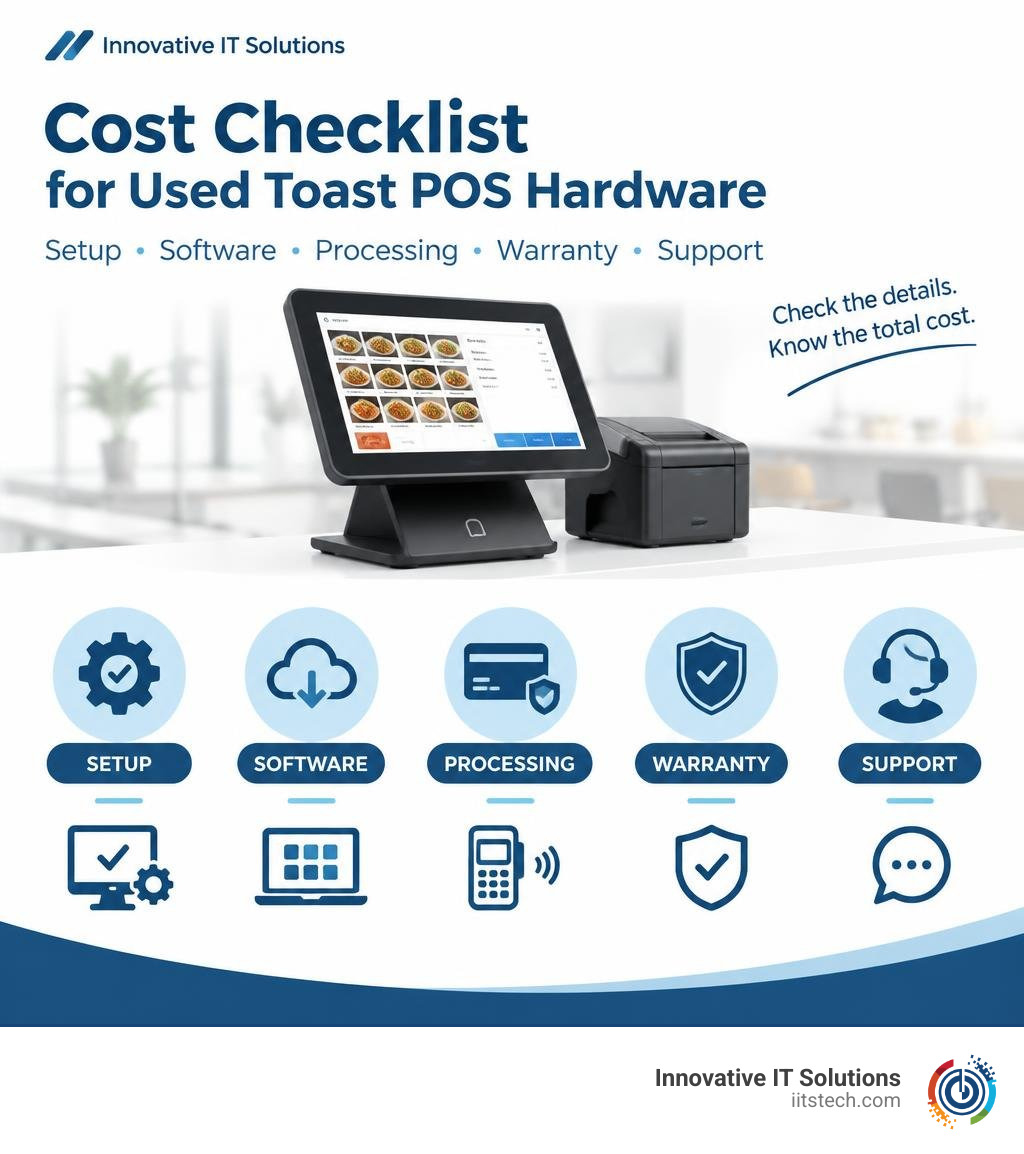
Key terms for used toast pos system:
The Hidden Costs and Realities of Buying a Used Toast POS System
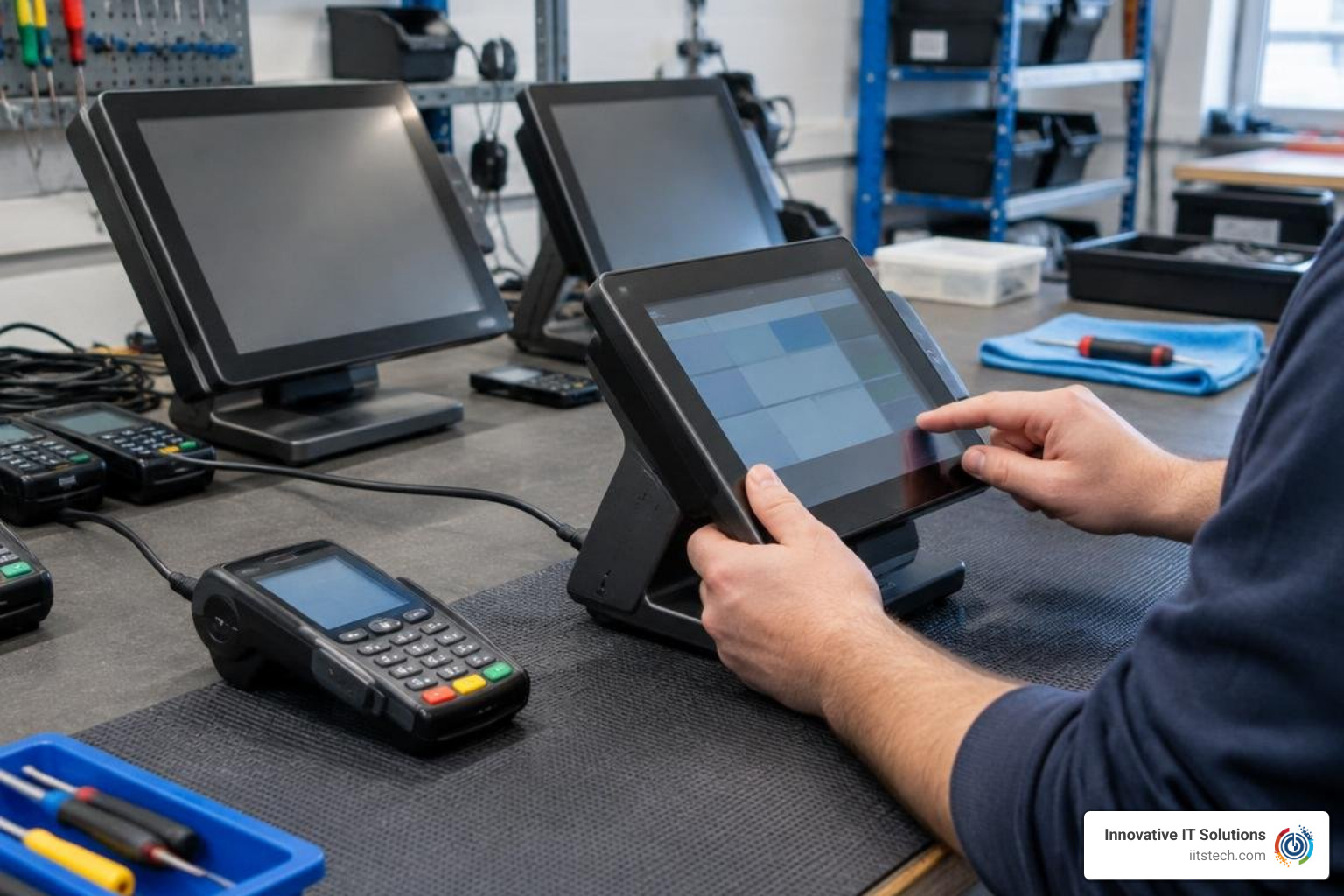
When running a busy restaurant, retail space, or commercial venue, every dollar counts. Procuring pre-owned IT infrastructure often seems like a brilliant shortcut to lower startup capital. However, point of sale terminals do not operate like standalone desktop computers or simple enterprise servers. They are tightly tethered to payment gateways, dedicated cloud operating systems, and strict merchant processing agreements.
Navigating the pre-owned market requires a clear understanding of used POS terminals: a guide to saving money safely. The upfront markdown on a marketplace listing can quickly evaporate when unexpected setup hurdles, activation fees, or hardware incompatibilities arise.
| Evaluation Metric | Direct / Certified Procurement | Unauthorized Third-Party Used Gear |
|---|---|---|
| Device Provisioning | Automatic cloud sync and immediate activation | High risk of serial number lockouts or blacklisting |
| Warranty Protection | Standard 1-year limited warranty included | As-is condition with zero manufacturer warranty |
| Payment Security | Fully validated EMV and PCI DSS compliance | Risk of tamper flags, wear, or physical degradation |
| Processing Flexibility | Native merchant agreement integration | Mandatory SaaS account binding and reprocessing |
| Total Deployment Speed | Fast cutover (often operational in 24 hours) | Indefinite delays resolving ownership transfers |
Proprietary Software Locks and Licensing Hurdles
Toast operates on a closed, cloud-connected Android ecosystem. The physical terminal, whether a fixed countertop terminal or a mobile Toast Go handheld, functions as a gateway to Toast’s proprietary Software-as-a-Service (SaaS) architecture.
When an unauthorized third party sells a pre-owned terminal on the open market, that terminal’s unique serial number remains tied to the original owner’s merchant account. If the previous owner left an outstanding financial balance, closed their business abruptly, or failed to submit an official hardware release, Toast’s central provisioning servers can flag or blacklist the serial number.
Plugging in an unverified terminal will greet you with a locked provisioning screen that cannot access your restaurant’s menu data, employee accounts, or payment processing channels. Without an official administrative transfer, that hardware turns into a desktop paperweight.
Payment Processing and Long-Term Operating Expenses
A point-of-sale system is fundamentally an engine for digital transactions. Toast requires merchants to utilize its integrated payment processing platform. Unlike open-source POS terminals where you can shop around for different merchant accounts and interchange rates, Toast bundles its software ecosystem with its own transaction processing fees.
When purchasing gray-market hardware, you do not bypass these payment commitments. If you enter an agreement without promotional hardware bundling or volume-based subsidies, your long-term operating expenses can climb through higher transaction surcharges or standard SaaS tier rates. When evaluating refurbished vs new IT equipment: making the smart procurement choice, you must calculate the total cost of ownership over three to five years rather than focusing solely on day-one hardware line items.
Certified Refurbished vs. Unauthorized Pre-Owned POS Equipment
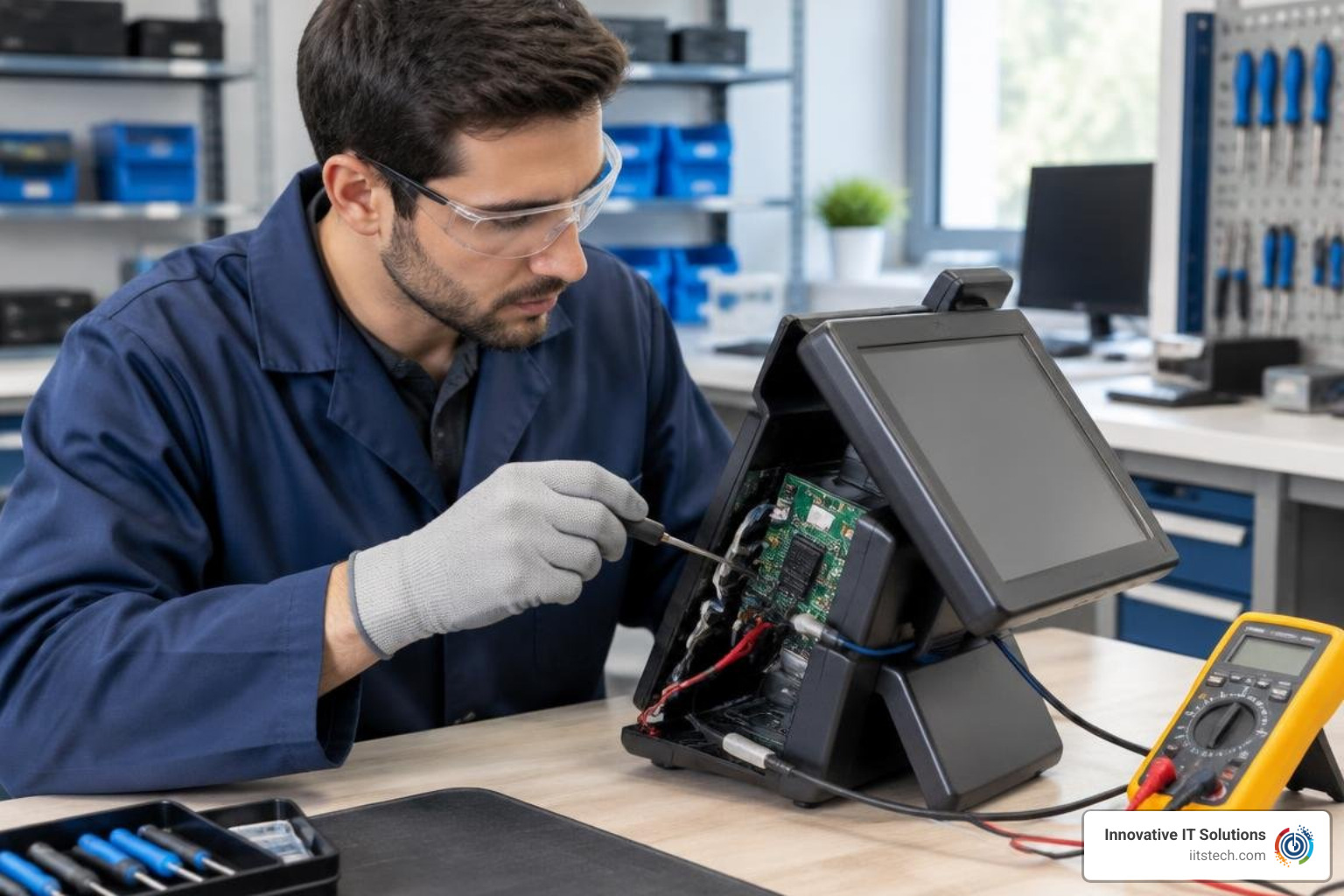
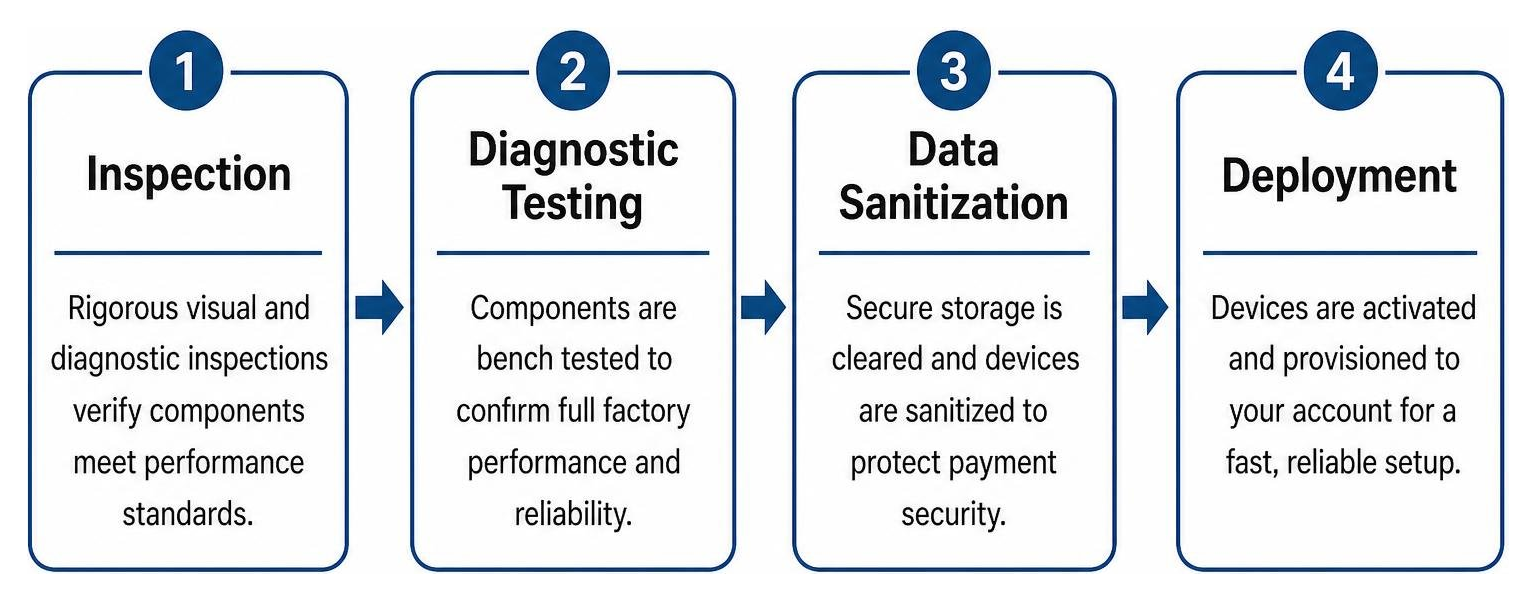
Understanding the difference between manufacturer-certified hardware and untested, pre-owned gear is crucial for business continuity. Unverified hardware listings found on peer-to-peer marketplaces rarely undergo professional bench testing, secure storage sanitation, or firmware validation.
Hardware Inspection Standards and Performance Parity
Certified refurbished devices undergo rigorous visual and diagnostic inspections to verify that every component meets rigorous performance standards. While a refurbished unit may exhibit minor cosmetic scuffs on its outer casing, its internal architecture—including processors, network controllers, and touch digitizers—is brought to full factory performance.
Operating on commercial-grade Android operating systems, these enterprise terminals require responsive touchscreens, dependable thermal printer communication, and robust wireless antenna arrays. Handheld units like the Toast Go 2 face demanding kitchen heat, spills, and continuous battery cycling.
In demanding hospitality environments, hardware reliability directly dictates revenue flow. Upgrading to a properly deployed cloud-based infrastructure can drive substantial returns; real-world implementations detailed in this digital hospitality case study show that modernizing mobile and countertop terminals can streamline workflow, boost sales, and elevate service speed.
Warranty Coverage, Return Protocols, and Technical Support
One of the strongest arguments for certified refurbished units is warranty parity. Certified Refurbished Toast Go products purchased directly from authorized channels come standard with the same 1-year limited warranty provided with brand-new equipment. This safeguards your capital investment against unexpected motherboard faults, power failures, or screen malfunctions.
However, buyers must recognize key warranty boundaries:
- No Extensions: Unlike general enterprise servers or office workstations, Toast does not offer extended warranty packages on certified refurbished units beyond the initial one-year term.
- Support Access: Certified hardware retains full access to 24/7 technical phone support, live chat assistance, and overnight hardware replacement protocols.
- Return Policies: Official refurbished inventory adheres to strict corporate return windows, whereas unauthorized secondary market sales are almost universally sold “as-is” with zero recourse.
Consulting a practical guide to refurbished checkout hardware helps operational managers establish realistic expectations for support lifecycles and repair turnarounds.
Technical Due Diligence: What to Evaluate Before You Buy
If your enterprise decides to evaluate pre-owned commercial hardware, implementing a comprehensive IT asset inspection protocol is mandatory. Skipping physical and cryptographic verification can expose your business to severe compliance penalties and hardware failure.
What to Inspect Before Purchasing a Used Toast POS System
A comprehensive inspection of pre-owned point-of-sale hardware must verify both mechanical integrity and electronic security:
- EMV Chip Reader Slots: Inspect the internal contact pins inside the card slot for bending, corrosion, or foreign debris that could obstruct chip readings.
- Magnetic Stripe Readers (MSR): Run diagnostic test cards through the reader head to evaluate magnetic track reading accuracy and physical spring tension.
- Touchscreen Digitizer Response: Test every quadrant of the touchscreen display for dead zones, phantom touches, or sluggish digitizer feedback.
- Physical Enclosure & Tamper Seals: Verify that external factory security seals are intact. Modern payment terminals incorporate anti-tamper switches that permanently brick the cryptographic encryption module if the chassis is opened.
- Network & Peripheral Connectivity: Check the functionality of RJ45 Ethernet ports, USB host connections for receipt printers, cash drawer kick ports, and 2.4 GHz / 5 GHz Wi-Fi transceivers.
For deeper technical checklists covering commercial-grade registers, review our practical buyer’s guide to refurbished cash registers.
Reusing and Transferring a Used Toast POS System to a New Location
Expanding an enterprise across multiple sites often involves redeploying IT assets. If you already own hardware and wish to transfer units between sister locations, or if you acquire an existing restaurant setup, you must adhere strictly to Toast’s official hardware reuse policy.
To safely redeploy hardware across retail network perimeters:
- Contact Account Support: Notify the vendor of device serial numbers prior to physical disconnection to unlink them from the legacy location’s merchant database.
- Factory Reset Under Secure Conditions: Wipe cached transaction data, menu localizations, and stored network credentials.
- VLAN and Firewall Configuration: Isolate POS hardware on a dedicated, PCI DSS-compliant virtual local area network (VLAN) at the new location, ensuring strict network separation from guest Wi-Fi.
Frequently Asked Questions About Refurbished POS Hardware
What does certified refurbished mean for restaurant POS terminals?
Certified refurbished means a previously deployed commercial terminal has undergone visual inspection, diagnostic bench testing, component repairs, and a complete factory wipe. The unit is verified to meet original factory operational specifications, though it may feature minor cosmetic imperfections on external bezels.
Can you extend the warranty on refurbished handheld POS devices?
No. While certified refurbished handhelds include a 1-year limited warranty matching new equipment, the manufacturer does not provide options to extend this warranty beyond the initial 12-month period. Out-of-warranty failures require standard replacement fees.
Does preowned cloud POS hardware still integrate with restaurant management software?
Yes, provided the hardware is officially cleared, provisioned, and running updated firmware. Once active, the terminals seamlessly sync with cloud-based management tools, including Kitchen Display Systems (KDS), cloud inventory tracking, shift management modules, and automated payroll reporting.
Conclusion
Securing reliable, high-performance IT infrastructure requires balancing initial procurement expenditures against long-term operational resilience. While acquiring an unverified used toast pos system through unauthorized gray-market channels introduces significant licensing, processing, and provisioning risks, taking a structured approach to hardware lifecycle management protects your bottom line.
At Innovative IT Solutions, we help growing enterprises navigate IT asset disposition (ITAD), secure data destruction, and strategic equipment recovery. Based in South OKC and serving businesses across Oklahoma City and the broader United States, our team delivers NIST- and DoD-compliant processes, zero-landfill e-waste management, and fully documented hardware recycling. Whether you are upgrading enterprise computer infrastructure, retrofitting server racks, or optimizing your transactional terminals, explore our verified point-of-sale hardware or browse our complete inventory of new and refurbished IT equipment in our online hardware shop to equip your business with confidence.


