
Why Businesses Are Turning to Used Credit Card Terminals to Cut Costs
Used credit card terminals are a proven way for businesses to accept card payments without paying full retail price for new hardware — but only if you buy smart.
Here’s a quick answer to what most buyers need to know:
| Question | Quick Answer |
|---|---|
| How much can I save? | Typically 30–70% less than new hardware |
| Are they secure? | Yes, if PCI PTS certified and EMV-compliant |
| Do they support contactless? | Most modern refurbished models support NFC/tap-to-pay |
| What’s the main risk? | Processor locks, outdated firmware, or missing compliance certs |
| Where should I buy? | Authorized resellers or certified ITAD vendors |
The U.S. payment terminal market runs over 10 million active devices, processing more than $8 trillion in transactions every year. With that much hardware in circulation, a significant secondary market exists — and it’s growing.
For IT managers at mid-sized enterprises, this creates a real opportunity. Decommissioned terminals from closed locations, upgraded deployments, or vendor swaps don’t have to be written off as a loss. They can be redeployed, resold, or responsibly retired.
But not all used hardware is equal. A terminal that looks fine on the outside may carry outdated security keys, expired PCI certifications, or processor locks that make it useless on your network. Knowing what to check before you buy — or before you dispose of old units — is what separates a smart hardware decision from an expensive mistake.
I’m Mike Haden, founder of Innovative IT Solutions, and over the past 14 years I’ve built an R2v3-certified ITAD operation that has processed and remarketed over a million pieces of enterprise IT equipment — including used credit card terminals and POS hardware. That hands-on experience across testing, data sanitization, and secondary market resale is what this guide is built on.
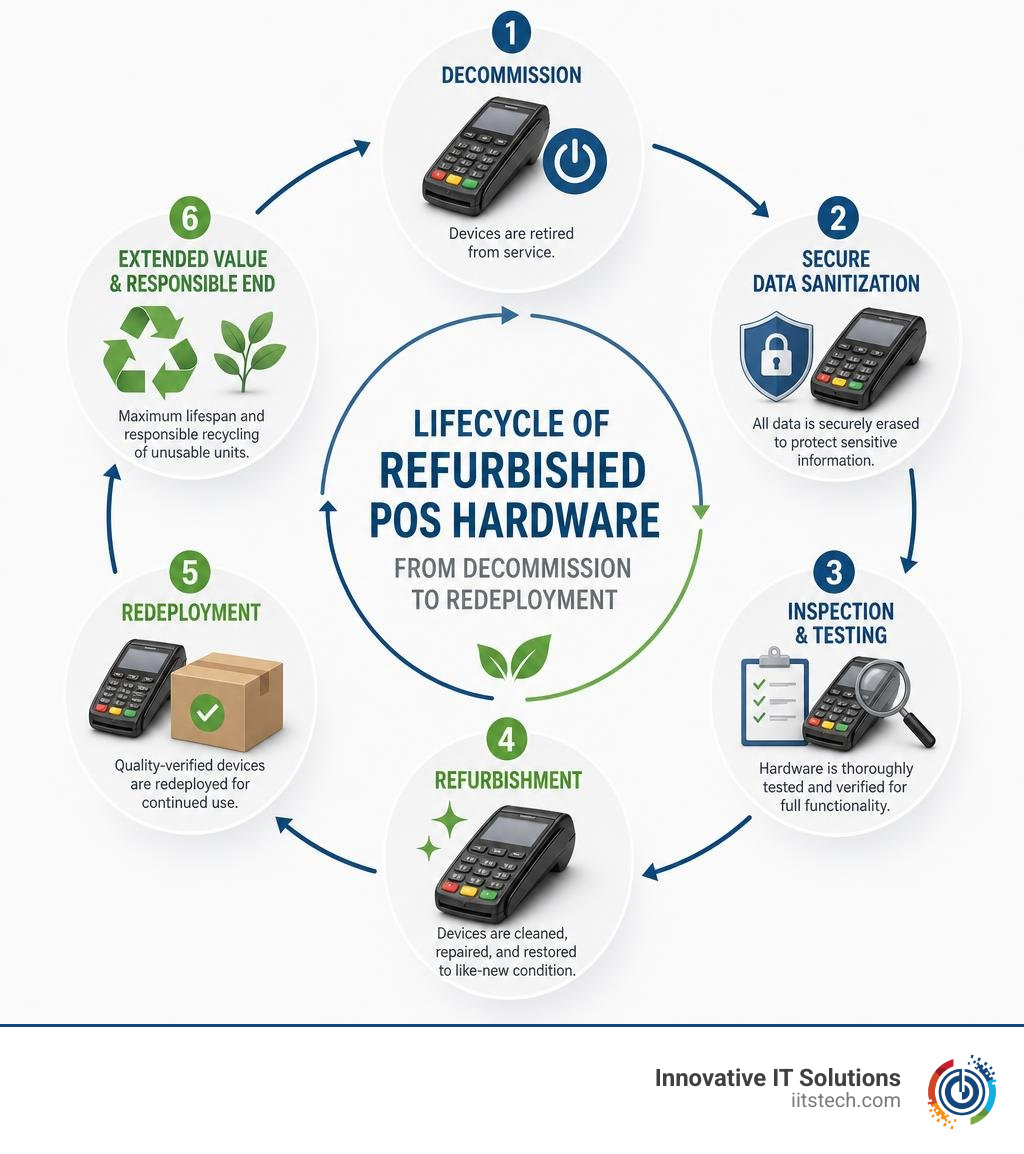
Used credit card terminals terms simplified:
Main Types of Used Credit Card Terminals and POS Hardware
When evaluating the secondary market for payment hardware, it helps to understand that these devices are not just simple card readers. In modern business-grade IT environments, they are sophisticated, network-connected endpoints that interface directly with your local servers, routers, and back-office merchant systems.
Whether you are looking to acquire hardware for a new retail footprint in Oklahoma City or trying to recover value from a decommissioned corporate office in South OKC, identifying the right terminal category is your starting point.

To help navigate the options, we have compiled a comprehensive A Z Guide to Used POS Systems to walk you through the broader ecosystem. However, when focusing specifically on used credit card terminals, the market generally divides into two major deployment categories.
Countertop and Multilane Used Credit Card Terminals
Countertop and multilane terminals are the workhorses of traditional brick-and-mortar retail checkout lanes. Designed for high-volume, fixed-location environments, these devices are built to withstand hundreds of physical interactions a day.
Standard countertop models, such as the widely deployed Ingenico Desk 3500 Refurbished Dial Ethernet WiFi | EMV NFC – All-Star Terminals, offer robust physical build quality and multiple communication pathways. For businesses that rely on legacy systems, dial-up connections are still utilized, but modern enterprise deployments rely heavily on dedicated Ethernet and local Wi-Fi to process payments in seconds.
In larger retail layouts, multilane terminals sit at the end of customer-facing checkout counters. These devices integrate directly with back-office servers and local network switches. When purchasing these units used, it is critical to verify that their physical ports (such as USB, RS232, and Ethernet) are fully functional and that they can communicate seamlessly with your central point-of-sale software. Classic workhorse units like the remanufactured Verifone VX510 Omni 3730 (M251-000-33-NAA) – Terminal are still sought after for basic, reliable entry-point configurations because of their durable 32-bit microprocessors and high-speed thermal printers.
Mobile and Unattended Payment Readers
As business models adapt to tableside service, outdoor events, and self-service kiosks, the demand for mobile and unattended used terminals has surged.
Mobile terminals utilize Wi-Fi, Bluetooth, or cellular networks (3G/4G/5G) to process transactions anywhere on or off the premises. This flexibility is perfect for pop-up markets and field service technicians operating throughout Oklahoma. These devices are designed to support modern tap-to-pay transactions, mobile wallets (like Apple Pay and Google Pay), and dynamic QR codes displayed on high-resolution screens.
Unattended terminals, on the other hand, are engineered for self-service kiosks and ticketing booths. A prime example of this technology in the secondary market is the Nayax VPOS Touch Credit Card Reader – Vend Guys. These rugged, weather-resistant units are designed to operate without human supervision, featuring built-in telemetry systems that send real-time transaction and inventory data back to your central servers. Because they are exposed to the public, buying these units used requires careful physical inspection of the casing, card slots, and mounting brackets to ensure they remain completely tamper-proof.
Refurbished vs. New: Cost, Reliability, and Security Standards
For any financial officer or IT director, the decision to purchase used credit card terminals comes down to balancing cost savings against operational risk. Let’s look at how refurbished and used terminals stack up against brand-new hardware.
| Feature | New Terminals | Certified Refurbished Terminals | Used (As-Is) Terminals |
|---|---|---|---|
| Average Cost | Full Retail ($300 – $1,000+) | 30% to 50% Savings ($150 – $350) | 60% to 80% Savings ($50 – $150) |
| Warranty | Standard 1-Year Manufacturer | 90-Day to 1-Year Vendor Warranty | None or 14-Day Return Policy |
| Reliability | Excellent (Factory Fresh) | High (Tested & Parts Replaced) | Variable (Untested) |
| Security Keys | Clean / Ready to Inject | Clean / Factory Reset | Risk of Processor Lock/Old Keys |
| Cosmetic State | Flawless | Cleaned / Minor Scuffs | Scratches, Dents, Wear |
While a brand-new terminal like the Square Terminal retails for around $299 before taxes and fees, sourcing quality refurbished units allows businesses to scale their checkout lanes at a fraction of the cost. If you are managing a multi-location rollout, learning How to Upgrade Your Checkout Lane with Quality Refurbished POS Hardware can help you redirect capital toward other critical IT infrastructure projects, such as server upgrades or network security enhancements.
Security Compliance for Used Credit Card Terminals
Saving money should never come at the expense of data security. When dealing with credit card data, compliance is non-negotiable. Every merchant terminal must comply with strict industry standards to protect sensitive financial information and limit business liability.
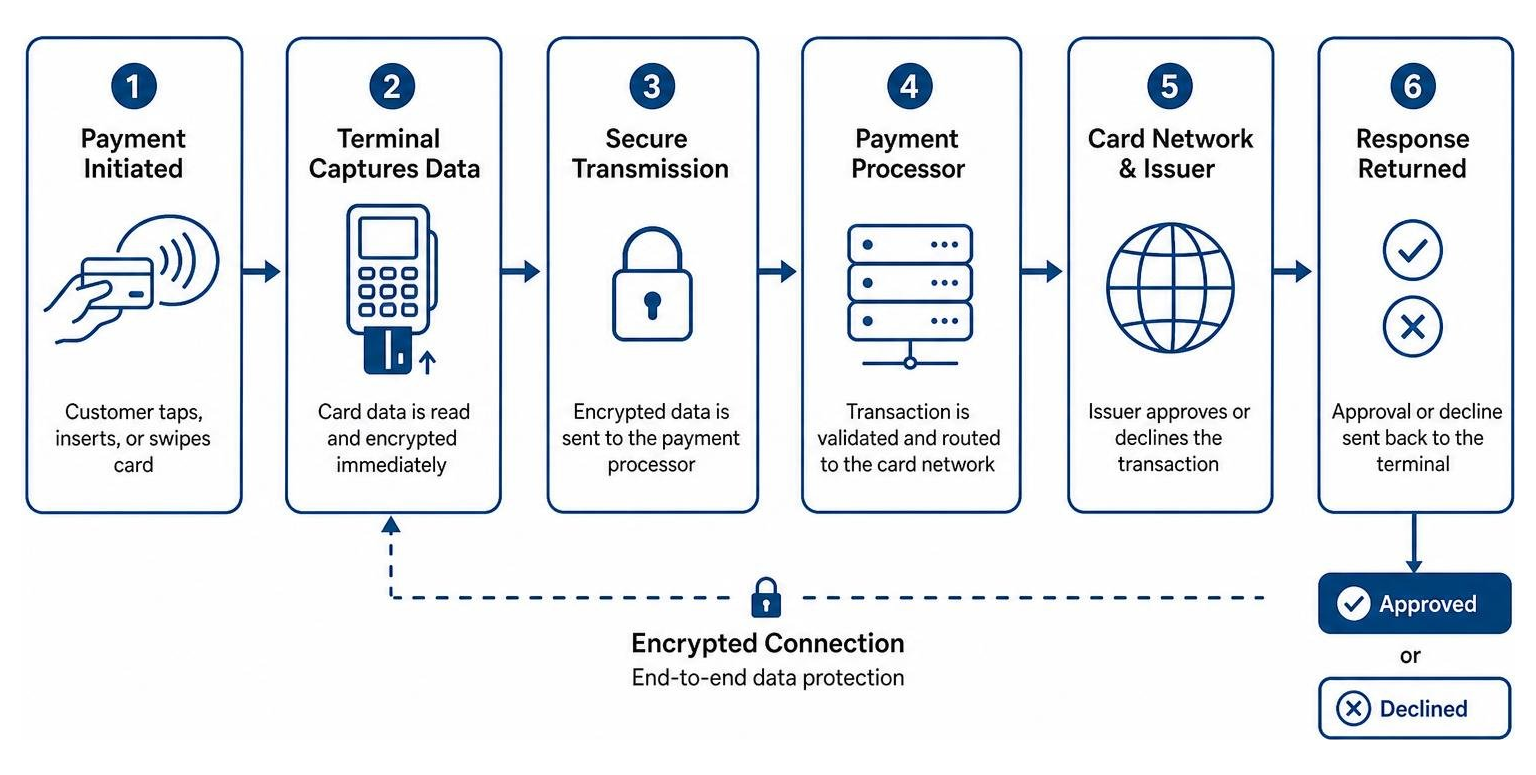
When buying used credit card terminals, you must verify three primary security standards:
- PCI PTS (Payment Card Industry PIN Transaction Security): This standard ensures that the physical device is tamper-resistant and that PIN entry is fully encrypted. Older used terminals may carry expired PCI approvals. While they might still physically read cards, using an expired terminal can void your merchant compliance, leading to heavy fines in the event of a data breach.
- EMV Compliance (Chip Cards): Ensure the used terminal has a fully functional EMV chip slot. Chip-based transactions protect your business from the “liability shift,” which holds merchants financially responsible for fraudulent transactions if they swipe a chip card instead of dipping it.
- NFC (Near Field Communication): With more than 80% of payment terminals shipped in recent years supporting contactless payments, NFC capability is essential. It enables secure, touch-free payments from physical cards, mobile devices, and wearable tech.
Security also extends to how you handle your old hardware. Just as you must secure the terminals you buy, you must safely dispose of the units you retire. Understanding Why Do You Need to Destruct Expired Credit Card and old payment tokens is a critical part of maintaining a secure physical chain of custody within your organization.
Warranty, Support, and Refurbishment Standards
To ensure your refurbished hardware performs reliably, it is important to understand the refurbishing process. A reputable reseller does not just wipe down a machine and put it back in a box.
At Innovative IT Solutions, our process for preparing New Refurbished IT Equipment involves comprehensive technical diagnostics. Each terminal undergoes hardware testing of the magnetic stripe reader, EMV slot, contactless antenna, and physical keypad. Internal batteries—which maintain the terminal’s security keys—are tested and replaced if they show signs of degradation. Finally, the terminal’s physical housing is sanitized, old merchant configurations are erased, and the firmware is updated to the latest secure version.
Always confirm the warranty and return policies before purchasing. Reliable vendors typically offer a 90-day to 1-year warranty on refurbished units, giving you ample time to deploy and test the hardware on your local network.
Processor Compatibility and Integration with Business-Grade IT Infrastructure
A common pitfall when buying used credit card terminals is assuming that any device will work with any payment network. In reality, payment terminals are highly specialized network endpoints that must integrate securely with your merchant gateway, local network routers, and back-office servers.
If you are upgrading your local network infrastructure, you can discover The Business Benefits of Selling Your Used IT Equipment to offset the costs of acquiring compatible payment hardware.
Verifying Gateway and Payment Processor Compatibility
Before purchasing any used terminal, you must verify compatibility with your payment processor. Many processors lock their terminals to their proprietary networks. A terminal that is “locked” to a specific processor cannot be reprogrammed to work with another, turning a cheap online purchase into an unusable paperweight.
- Key Injection: Payment terminals require specific security keys to encrypt PIN data. This process, known as key injection, must be performed in a secure facility. You must confirm that your processor supports the specific terminal model and is capable of injecting their proprietary encryption keys into it.
- Local Merchant Services: If your business operates in Oklahoma, working with established local institutions like Merchant Services | Oklahoma Card Processing Services – BancFirst can help you verify terminal compatibility before making a purchase.
- Network Integration: Modern terminals must be configured to communicate securely through your local firewalls and network switches. When integrating refurbished terminals, your IT team will need to assign secure local IP addresses and verify that the correct outbound ports are open for payment gateway communication.
If you are unsure whether to upgrade or replace legacy devices, evaluating whether Is It Better to Recycle or Resell Old IT Equipment can help you make an informed financial and operational decision.
Sourcing Used POS Hardware Safely
Buying payment hardware from unverified third-party auction sites carries significant security and operational risks. These devices may contain malicious software (skimming programs) designed to steal cardholder data, or they may simply be physically damaged beyond repair.
Working with an authorized IT Asset Disposition (ITAD) partner ensures that the hardware you receive has been legally obtained, thoroughly sanitized of all previous data, and physically inspected for tampering. If you are looking to liquidate your own corporate payment assets, consulting The Ultimate Guide to Asset Recovery will help you maximize your return while maintaining strict data security compliance.
Frequently Asked Questions about Used Credit Card Terminals
When businesses in Oklahoma City and South OKC look to optimize their payment hardware lifecycles, they often come to us with similar questions. Here are the most common concerns we address:
What is the difference between a refurbished and a used terminal?
A used terminal is typically sold “as-is” by its previous owner with no guarantee of functionality, cleanliness, or security compliance. It may still contain the previous merchant’s data and configuration keys.
A refurbished terminal has undergone professional testing, cosmetic cleaning, component replacement (such as new internal batteries or screens), and a complete factory reset. It is updated with clean firmware and is ready to be programmed by your payment processor.
How do I ensure a used terminal is not blacklisted or locked?
Before buying, ask the seller for the terminal’s exact serial number and model details. You can provide this information to your payment processor to verify that the device is not registered as stolen, blacklisted, or locked to an incompatible merchant network.
Additionally, sourcing your hardware from reputable programs, such as the Where to Sell Used POS Equipment – Discount Credit Card Supply network, provides peace of mind that the equipment has been properly cleared for resale.
Can used terminals support modern contactless and mobile wallet payments?
Yes, provided the model you select includes a built-in NFC (Near Field Communication) antenna. Popular refurbished models like the Ingenico Desk 3500 and various modern POS Systems, Credit Card Machines & Terminals fully support tap-to-pay cards, Apple Pay, Google Pay, and Samsung Pay. Always verify the specific hardware specs of the model number you are purchasing to ensure NFC is active.
Conclusion
Upgrading your retail checkout lanes or managing your corporate payment infrastructure does not have to require a massive capital investment. By incorporating certified refurbished and used credit card terminals into your deployment strategy, you can achieve significant cost savings while maintaining high standards of reliability and security.
However, the key to success lies in secure data destruction, professional testing, and proper IT asset management. At Innovative IT Solutions, we specialize in helping businesses across Oklahoma City, South OKC, and the wider Oklahoma region navigate the complexities of IT asset disposition (ITAD). Our NIST and DoD-compliant, zero-landfill processes ensure that your retired hardware is recycled or resold securely, providing maximum financial return with zero environmental impact.
If you have surplus POS hardware or payment terminals to retire, we invite you to Sell Your Gear through our secure asset recovery program. And if you are looking to expand your current POS footprint with high-quality, professionally verified hardware, you can Purchase the Ingenico Lane 8000 POS in Good Condition directly from our inventory.
Let us help you optimize your business-grade IT hardware lifecycle safely, securely, and sustainably. Reach out to our team in Oklahoma City today to get started!


