
Smart Savings: A Practical Buyer’s Guide to Refurbished Cash Registers
Find a Reliable Refurbished Cash Register for Less
Deploying a refurbished cash register system built on business-grade computer hardware offers enterprise checkout capability without the steep capital expense of brand-new machines. Modern retail environments require dedicated computing power, robust local storage, and seamless back-office server integration. Choosing professionally tested POS computer systems ensures your checkout lanes maintain reliable uptime, rapid processing speeds, and strict data security protocols.
Key POS computing setups include:
- Integrated POS computer terminals featuring high-efficiency processors, solid-state drives, and dedicated peripheral controller buses
- Modular retail workstations engineered to interface directly with on-premises inventory database servers
- Enterprise multi-lane computer systems paired with network-attached controllers, high-speed interfaces, and commercial-grade power supplies
Commercial refurbished units undergo rigorous component-level diagnostics, thermal testing, and full firmware updates. For enterprise IT managers, certified data sanitization and documented hardware validation are essential standards when procuring pre-owned hardware.
I am Mike Haden, founder and Director of Business Development at Innovative IT Solutions, with 14 years of experience in secure IT asset disposition, computer hardware testing, data sanitization, and technology resale. That background helps businesses evaluate refurbished cash register computing hardware with an eye toward reliability, value recovery, and responsible lifecycle management.
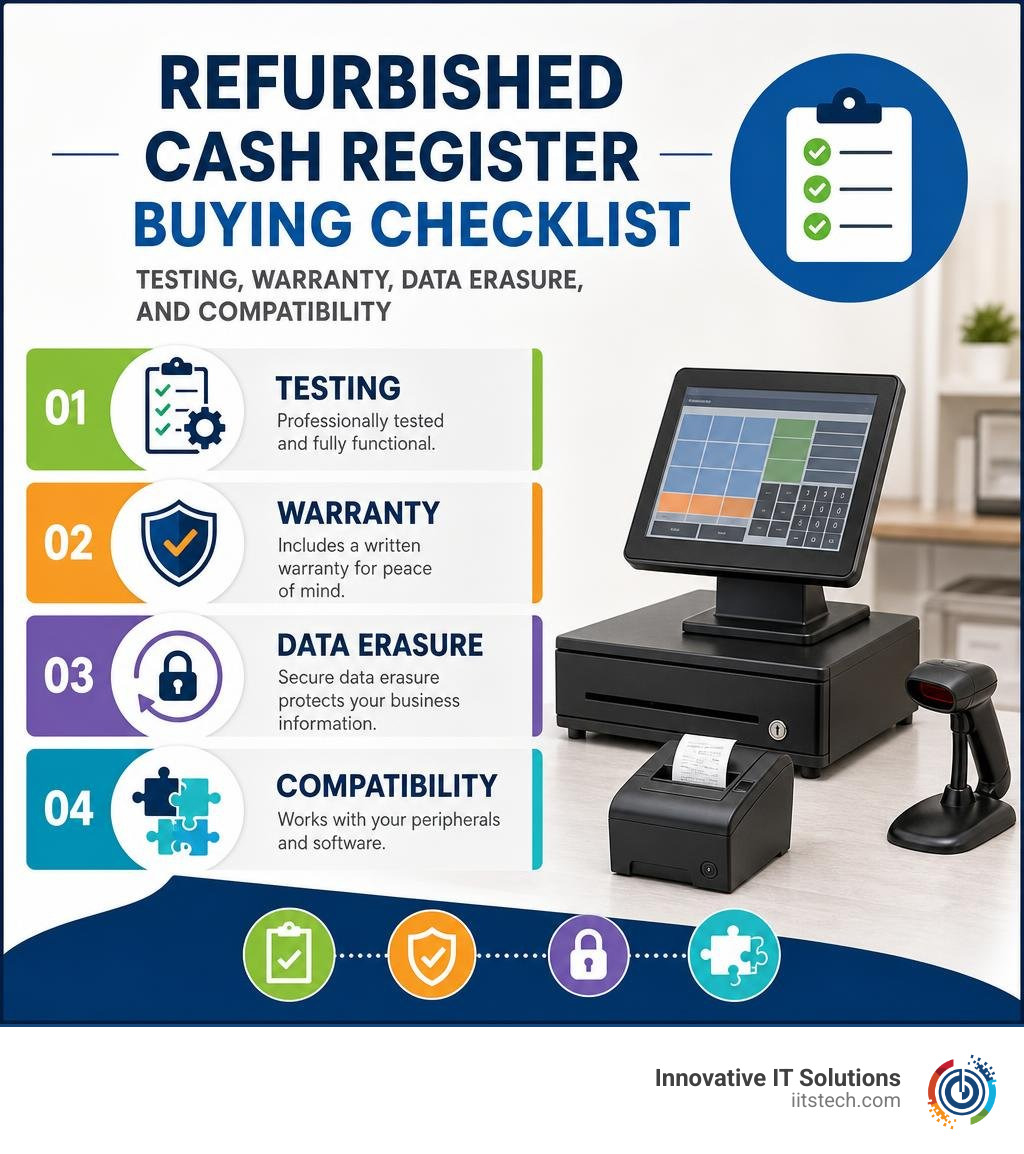
Key terms for refurbished cash register:
Why Investing in a Refurbished Cash Register Makes Smart Business Sense
Managing checkout lanes across multiple retail or commercial storefronts requires high-performing front-end electronics. However, outfitting every lane with brand-new terminals significantly strains capital budgets. Opting for professionally restored hardware delivers enterprise-level capability while protecting capital reserves. When comparing refurbished vs new IT equipment, the primary advantage is obtaining enterprise-class build quality at a fraction of the cost, preserving funds for core business operations.
Commercial point-of-sale environments demand heavy-duty construction. Unlike consumer-grade gadgets, business-grade IT hardware features reinforced steel chassis, spill-resistant keypads, and industrial power components designed for continuous duty cycles. By choosing restored commercial models, companies avoid the brittle components of budget entry devices and deploy hardware built to endure millions of keypresses and drawer cycles.
Refurbishing checkout systems also supports corporate sustainability goals by keeping functional electronics in service and reducing e-waste. Responsibly reconditioning commercial equipment extends hardware lifecycles, keeps toxic heavy metals out of municipal waste streams, and minimizes the carbon overhead tied to manufacturing new microchips.
Evaluating Total Cost of Ownership and Reliability
A common concern with pre-owned hardware is operational reliability. However, enterprise refurbishment follows stringent diagnostic protocols that often surpass standard factory batch sampling. Professional technicians subject components to intensive burn-in testing to identify and replace marginal capacitors, aging printheads, or worn logic boards.
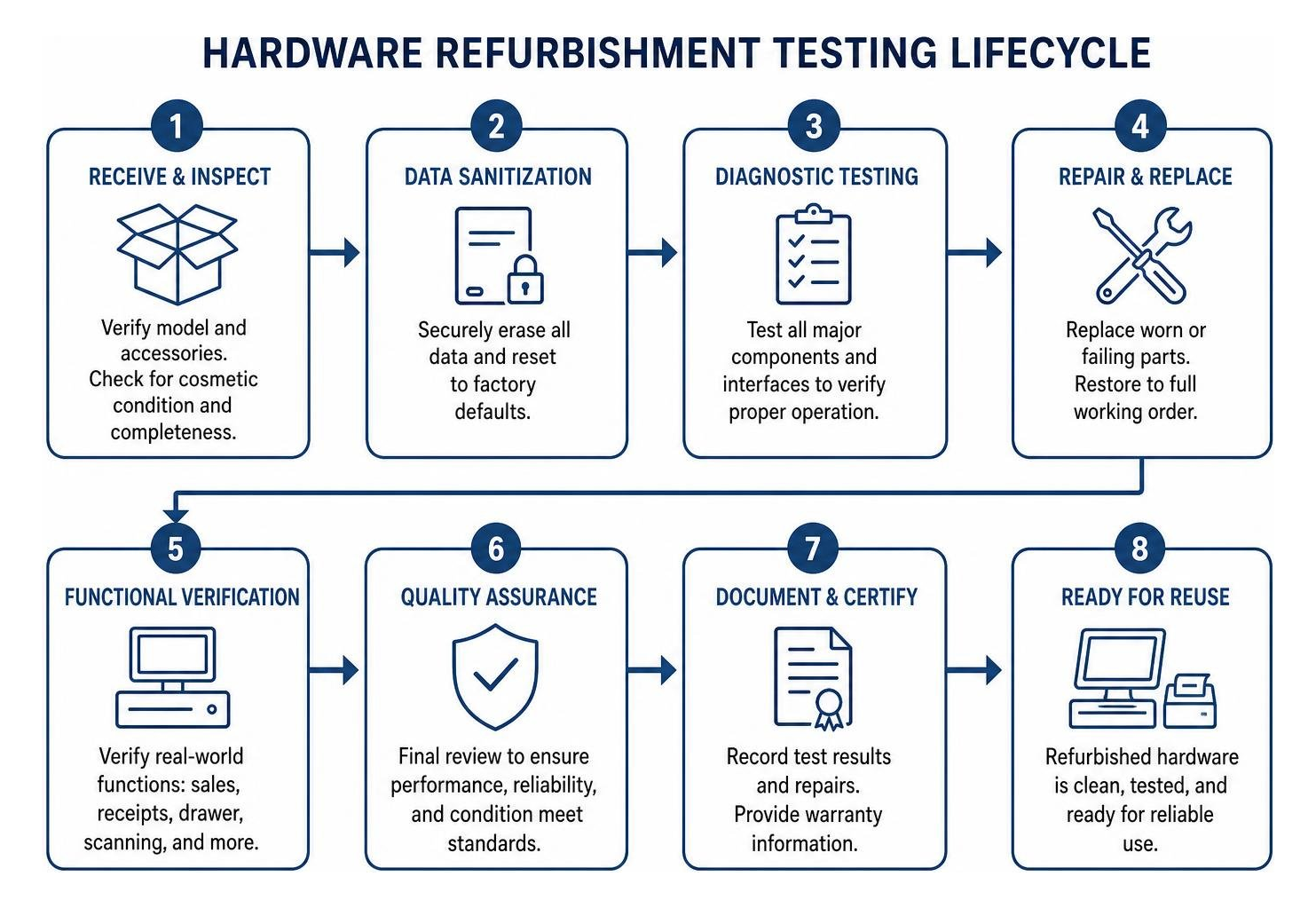
This rigorous evaluation helps eliminate early-life component failures. Exploring our A-Z guide to used POS systems shows that commercial point-of-sale hardware yields lower long-term maintenance costs when built around standardized, modular architectures. Business owners benefit from reliable front-end systems backed by steady server component reliability without the steep initial price tag.
Top Categories and Types of Point-of-Sale Hardware
Point-of-sale hardware configurations vary based on transaction complexity, store footprint, and IT server infrastructure. Selecting the right architecture ensures smooth transaction workflows, system scalability, and dependable enterprise reporting.
Compact POS Computer Workstations and All-in-One Terminals
All-in-one POS computers combine motherboards, embedded processors, memory, solid-state storage, and integrated touch displays into a space-efficient footprint. These commercial-grade computing terminals are optimized for high-reliability front-end transaction processing:
- Energy-efficient quad-core processors engineered for continuous retail duty cycles without thermal throttling.
- Industrial solid-state storage (SATA or NVMe SSDs) delivering instant boot speeds and high-speed data caching.
- Standardized I/O connectivity, including powered USB ports, RS-232 serial channels, and gigabit Ethernet controllers for secure local network communication.
- Direct compatibility with back-office database servers, enabling real-time local caching during network disconnects.
These business-grade computer terminals eliminate recurring hardware licensing fees and offer stable Linux or Windows IoT Enterprise OS support for customized store applications.
Advanced POS Terminal Bundles and Hybrid Systems
High-volume operations often need deeper inventory management, multi-lane coordination, and real-time database tracking. In these environments, deploying used POS terminals and modular computer bundles offers the necessary software versatility and connectivity.
These setups feature commercial-grade computers paired with high-performance peripherals, including USB or hands-free laser barcode scanners, heavy-duty external cash drawers, pole-mounted customer displays, and back-office server connections. This architecture easily links to local or cloud databases for live inventory adjustments and automated purchase orders.
| Feature / Metric | Compact All-in-One POS Computers | Modular POS Server & Terminal Bundles |
|---|---|---|
| Typical Cost Range | $350 – $950 | $600 – $1,950+ |
| Core Architecture | Embedded x86/ARM Industrial Motherboard | Business-grade computer workstation / server tier |
| Storage & Memory | 8GB–16GB RAM / 128GB–512GB Enterprise SSD | Expandable ECC RAM / RAID Enterprise Storage |
| OS & Management | Windows IoT / Embedded Linux | Enterprise OS with centralized server management |
| Network Connectivity | Gigabit LAN / Dual-Band Wi-Fi | Dual Gigabit LAN / Server clustering support |
| Database Integration | Direct client-server database synchronization | Real-time centralized back-office server sync |
| Ideal Deployment | Quick-service counters, specialty retail, kiosks | Multi-lane grocery, high-volume retail, enterprise branches |
Essential Features to Inspect Before Buying
Purchasing restored IT hardware requires verifying that every computing component and peripheral interface matches your transaction throughput and network environment.
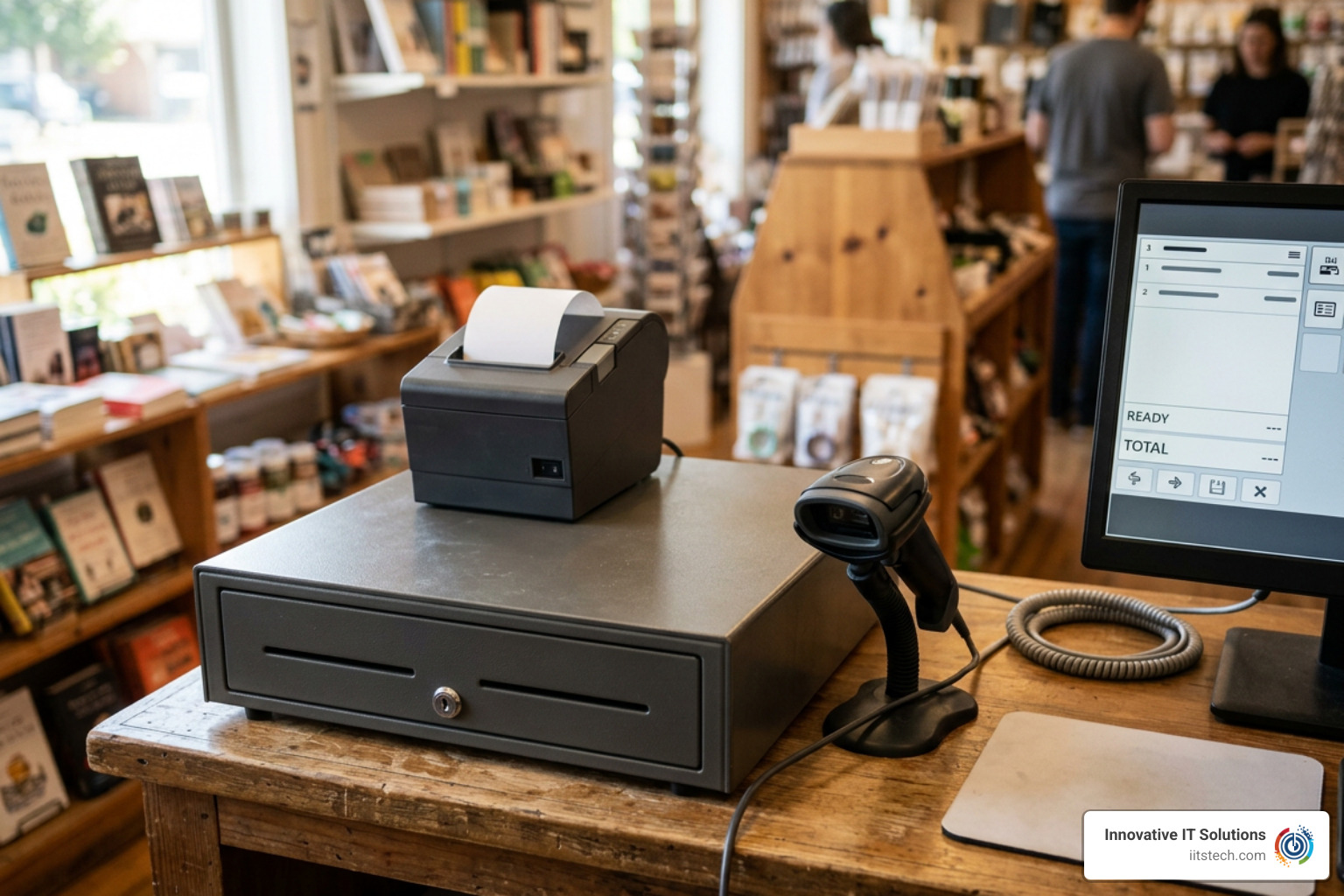
Selecting the Right Refurbished Cash Register Features for Your Store
Key computer hardware and architecture specifications to evaluate include:
- Thermal Printing Capabilities: Avoid legacy dot-matrix hardware and ensure dedicated POS computer printing ports (Powered USB or 24V serial) are intact. Integrating dedicated refurbished receipt printers delivers clean, high-speed output across busy lanes.
- Processor and RAM Capacity: Ensure the computer unit features at least 8GB to 16GB of DDR4 RAM and commercial multi-core processors to smoothly run complex inventory databases and modern POS software suites.
- Storage Health and Data Redundancy: Inspect solid-state drive health using S.M.A.R.T. diagnostics to verify drive longevity, low write-wear cycles, and fast read/write speeds for local transaction caching.
- Expansion and Server Interface Ports: Confirm adequate RS-232, powered USB, DisplayPort/HDMI, and Gigabit Ethernet connections for unified communication with store servers.
Essential Components, Drawers, and Peripheral Compatibility
Checkout hardware relies on seamless communication across connected peripherals. When planning how to manage upgrading checkout lane hardware, verify interface standards and peripheral health:
- Cash Drawers: Heavy-gauge steel drawers should include a 4-bill/5-coin or 5-bill/8-coin removable tray, robust roller bearings, and a 3-position lock (Manual Open, Auto-Fire, and Locked). Confirm that the trigger uses a standard RJ11/RJ12 modular kick-out port.
- Scanning Peripherals: Check compatibility for standard 1D/2D handheld or omnidirectional presentation scanners via RS-232 serial or USB connections.
- Display Modules: Ensure clear visual feedback with a backlit operator display alongside an adjustable pop-up customer display to maintain pricing transparency.
- Power Supplies and Key Sets: Confirm that the purchase includes the original AC power adapter, manager keys (MA/OP/REG/PGM), drawer lock keys, and initial paper rolls.
How to Evaluate Condition, Warranties, and Vendor Trustworthiness
Buying refurbished hardware delivers great value when sourced from reputable suppliers with transparent grading, strict component testing, and warranty terms.
Verifying Condition Grades and Warranty Protection for a Refurbished Cash Register
Refurbished business systems generally fall into three tiers:
- Open-Box Returns: Units returned quickly with minimal use, complete packaging, and near-flawless cosmetics.
- Demo & Rental Stock: Systems used in short-term trade shows or corporate training, offering solid mechanical life with minor surface marks.
- Factory/Dealer Refurbished: Equipment that has been professionally disassembled, cleaned, fitted with new wear parts (such as thermal print rollers or keypad membranes), and fully certified under rigorous functional testing.
Review warranty coverage carefully before purchasing. High-quality restored machines typically carry 90-day parts-and-labor coverage or up to a 1-year warranty, alongside a 30-day Dead-On-Arrival (DOA) replacement policy. For businesses that outgrow their equipment, our sell your gear program helps recover residual value when upgrading infrastructure.
Setup Assistance, Programming, and Data Security Standards
Setting up a cash register requires configuring sales tax rates, department assignments, PLU tables, and receipt header graphics. Many dealers provide PC-link utilities that let managers configure menus on a computer and load them via SD card or USB.
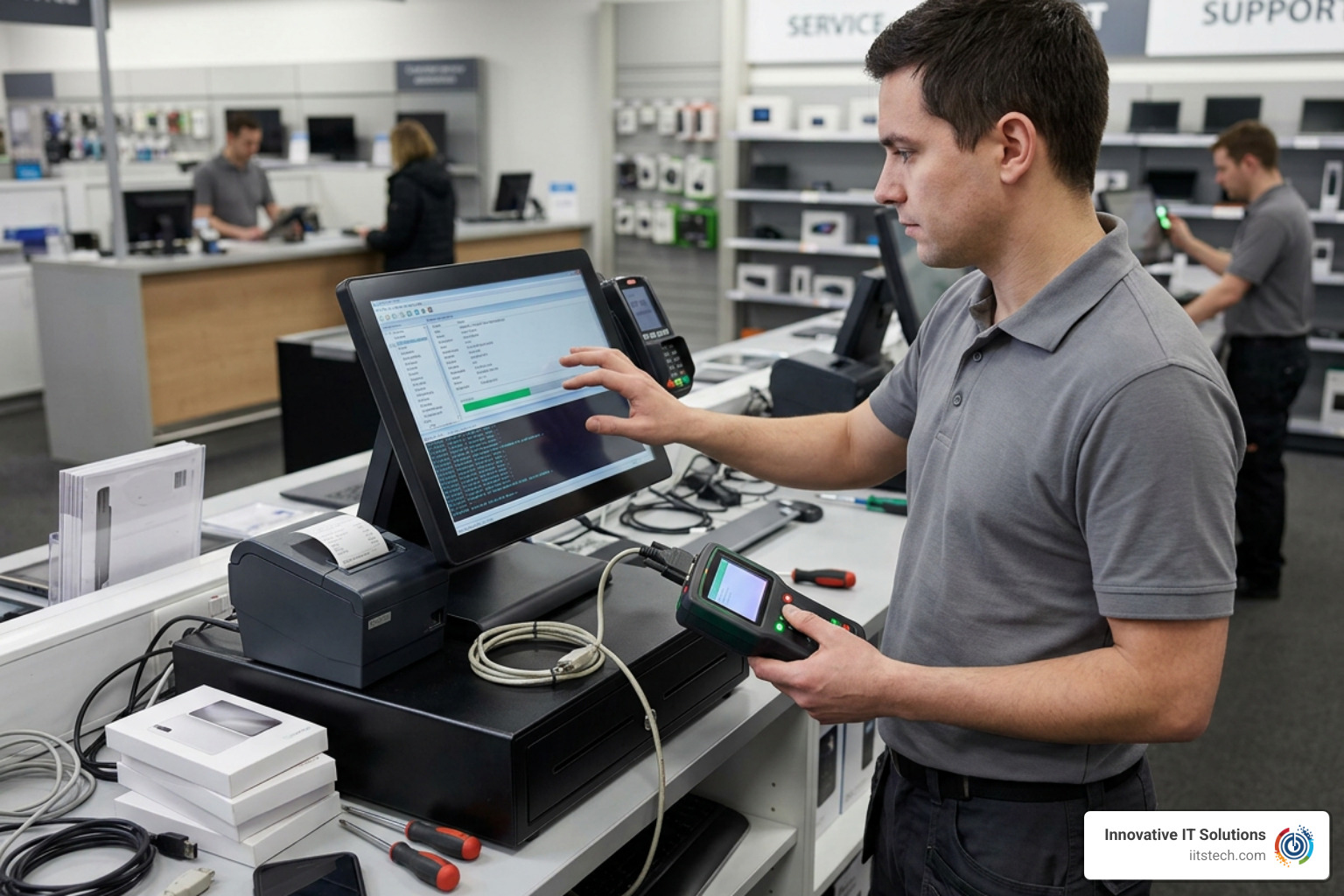
Data security is equally critical during hardware transitions. Before any terminal or business computer is reconditioned, technicians must follow NIST Special Publication 800-88 guidelines for media sanitization. This process wipes legacy transaction logs, payment histories, and clerk access codes, ensuring the system enters service in a secure, factory-default state.
Frequently Asked Questions About Cash Register Procurement
What is the standard warranty on refurbished point-of-sale registers?
Reputable refurbishers provide a 90-day parts-and-labor warranty, with select tier-1 models offering up to 1 year of coverage. Many suppliers also offer a 30-day DOA replacement window for immediate equipment exchanges if a unit encounters shipping damage.
How much can a business save compared to purchasing new units?
Purchasing restored computer systems and POS hardware typically saves businesses between 20% and 50% compared to buying brand-new retail IT hardware. For example, enterprise commercial terminals retailing new for $1,200 to $1,800 frequently sell between $500 and $850 when professionally restored, offering significant savings for multi-lane operations.
What peripheral accessories are included with restored checkout hardware?
A complete refurbished POS computing package generally includes:
- The base commercial terminal or POS computer unit
- Dedicated AC power cable or certified external power supply
- Motherboard I/O interface connectors and interface cables
- Verified SSD storage loaded with clean factory-sanitized firmware
- Quick-start installation documentation and driver utilities
Conclusion
Sourcing reliable, cost-effective point-of-sale equipment does not require overspending on brand-new hardware. By choosing a high-grade refurbished cash register system built on business-grade computers and server-ready components, business owners secure industrial durability, robust peripheral compatibility, and smooth checkout performance while keeping equipment expenses under control.
At Innovative IT Solutions, our Oklahoma City facilities provide enterprise-class IT asset disposition (ITAD), secure NIST-compliant data sanitization, and dependable equipment remarketing. Explore our wide selection of commercial systems in our online shop or view certified refurbished payment terminals to equip your checkout lanes with reliable hardware today.


