
How to Get Cash for Retired Server Circuit Boards
For circuit board recycling for cash, start by separating server motherboards, memory modules, and expansion cards from lower-value scrap. Keep an inventory, protect any components that may hold data, and ask a qualified IT asset disposition (ITAD) provider for a quote. Compare the expected payout with any data destruction, shipping, and processing costs before you approve the sale.
Boards with more gold-plated contacts can be worth more, but grade, weight, and current metal prices all affect the offer. For businesses, a documented chain of custody matters as much as the payout.
I’m Mike Haden, founder of Innovative IT Solutions. For 14 years, I’ve helped businesses recover value from retired IT equipment and manage secure, responsible disposal—the same priorities that guide circuit board recycling for cash.
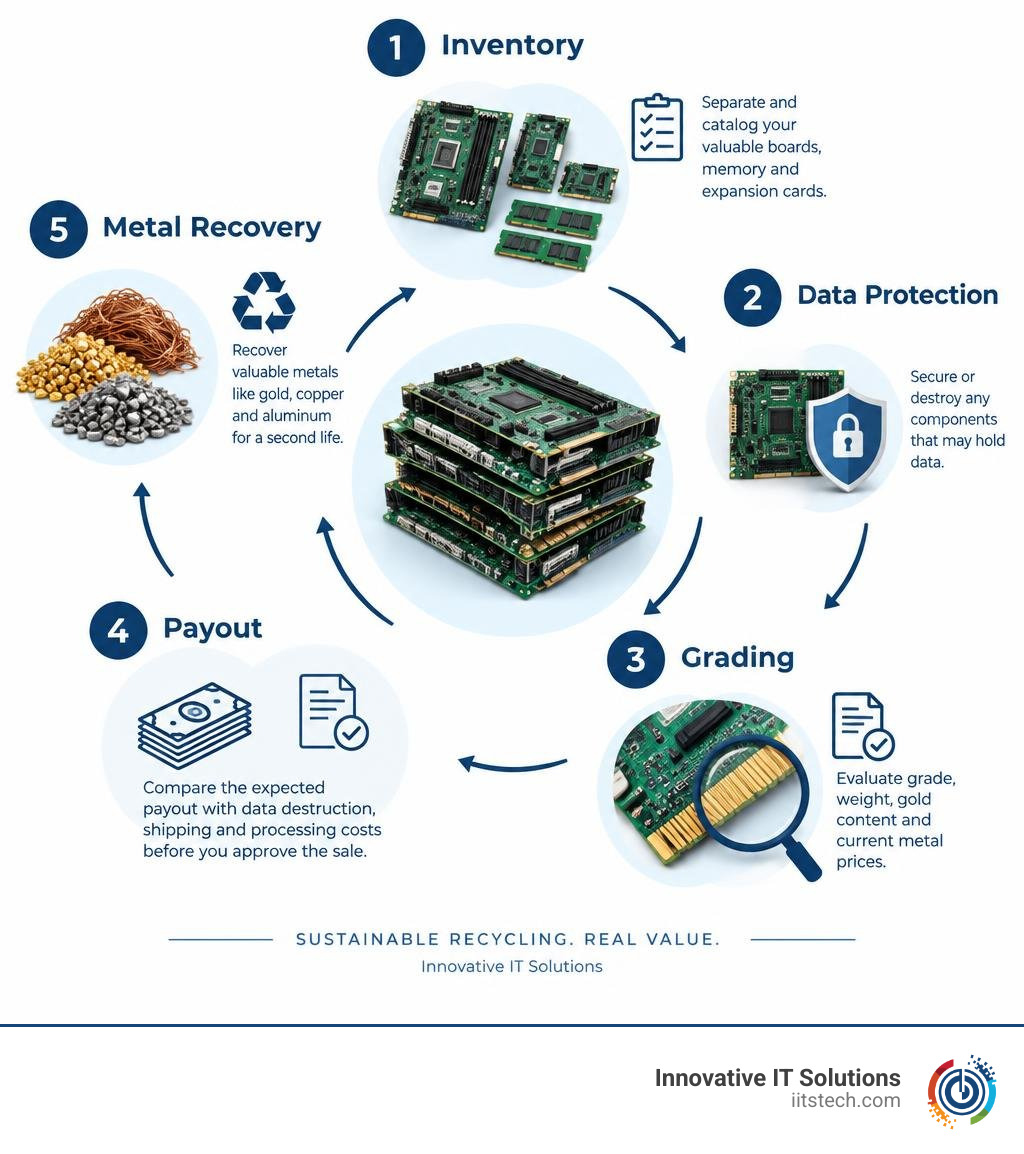
Circuit board recycling for cash terminology:
The Business Guide to Circuit Board Recycling for Cash
When enterprise hardware reaches the end of its useful life, corporate IT closets and data centers quickly become storage lockers for obsolete gear. Letting high-density printed circuit boards (PCBs) collect dust is a missed financial opportunity. Knowing how to recycle your printed circuit boards allows your enterprise to transform retired computer infrastructure into tangible working capital.
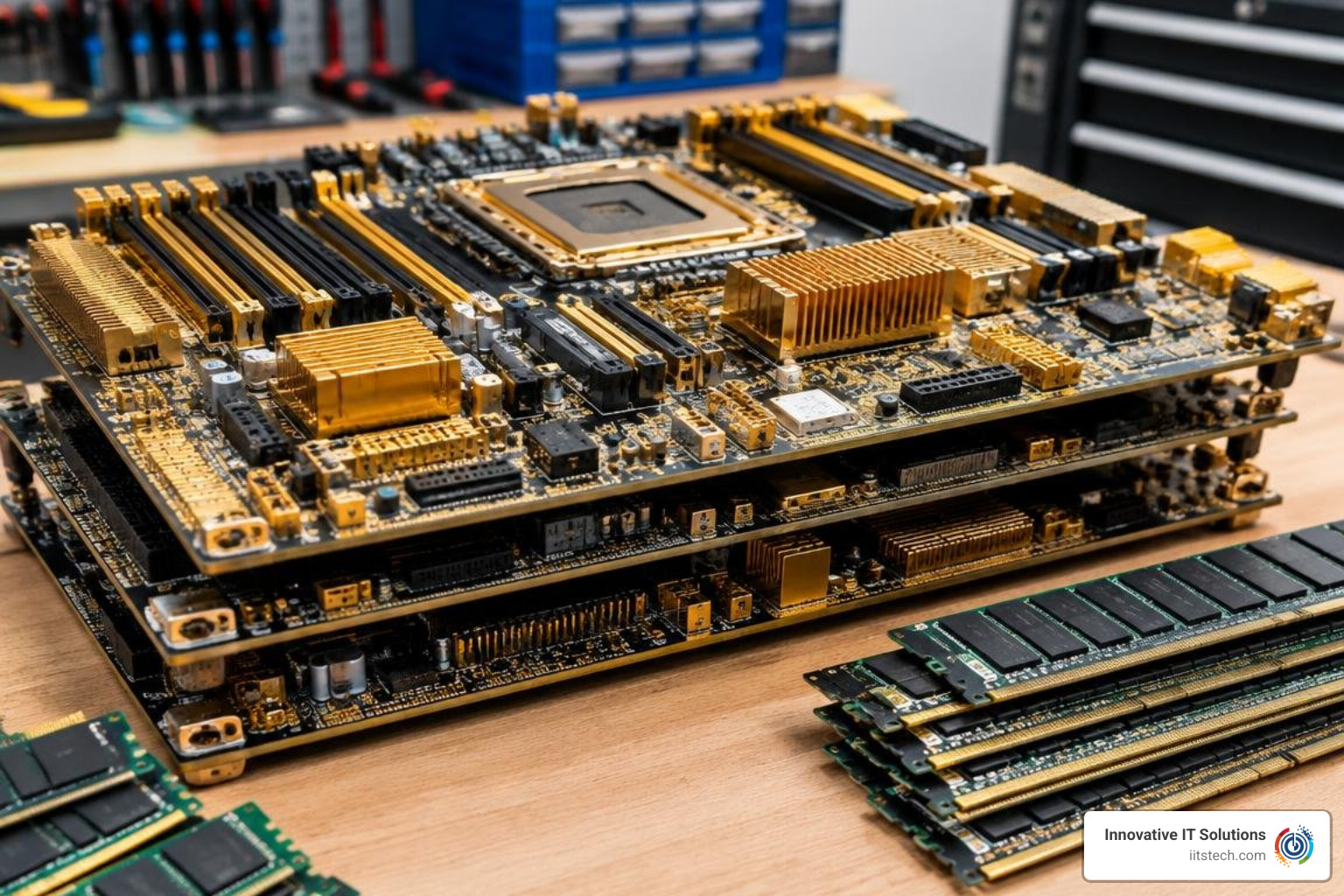
Circuit boards manufactured for commercial computers, multi-socket enterprise servers, and data center hardware contain rich concentrations of non-ferrous and precious metals. Modern circuit board reclamation extracts high-purity gold, silver, copper, and palladium. Instead of letting these assets depreciate into total write-offs, establishing a strategic reclamation workflow helps capture top commodity value while maintaining corporate sustainability goals.
| Scrap Board Category | Typical Hardware Sources | Dominant Precious Metals | Relative Value Tier |
|---|---|---|---|
| High-Grade Server | Dual/Quad CPU server motherboards, telecom backplanes | Gold, Palladium, Silver, Copper | Top Dollar / Premium Yield |
| Memory & Processing | Server RAM modules, gold-cap CPUs, daughtercards | Concentrated Gold, High Palladium | Maximum Value per Pound |
| Mid-Grade Computer | Standard desktop motherboards, peripheral cards | Gold flash, Copper, Silver | Moderate Yield |
| Low-Grade Peripheral | Power distribution boards, single-layer backplanes | Copper, Aluminum, Tin | Base Scrap Value |
The global electronic waste recycling market was valued at $49.4 billion in 2022 and is projected to expand to $143.9 billion by 2032. Even so, historical data indicates that only 17.4% of e-waste generated globally has been properly collected and recycled. Recovering these materials through a structured, compliant process ensures your company reclaims its fair share of value.
High-Grade Server Hardware vs. Standard Computer Boards
Not all printed circuit boards are created equal. In the scrap recycling industry, boards are categorized into strict grading tiers based on their precious metal content and structural complexity. Standard commercial desktop boards contain thin copper layers and light gold flash on select connectivity pins.
In contrast, enterprise server motherboards, enterprise memory sticks, and telecommunication backplanes feature thick gold plating across extensive PCI express rails, multi-layer internal copper grounding planes, and dense surface-mount components.
Dual-socket and quad-socket server boards use heavy gold-plated contact pins within the CPU sockets to maintain clean signal integrity under demanding datacenter workloads. Similarly, enterprise server RAM features gold edge fingers along both sides of the substrate. If you want to see a visual breakdown of how scrap buyers grade components, check out this helpful video guide on identifying scrap board values.
Precious Metal Yields and Commodity Market Dynamics
The economic driver behind printed circuit board reclamation is “urban mining.” High-grade circuit boards contain up to 40 times more gold than raw gold ore extracted directly from conventional mines. The average value of precious metals in a single ton of sorted enterprise circuit boards is estimated at $3,000 to $4,000, depending on fluctuating global spot prices.
Refining secondary electronic scrap requires significantly less energy and chemical processing than primary ore extraction. By channeling retired computing hardware through sustainable asset recovery programs, companies tap directly into daily commodity spot pricing for gold, copper, and palladium, offsetting the cost of future hardware upgrades.
How to Prepare and Sort Enterprise Hardware for Maximum Value
To maximize your financial payout, scrap boards must be prepared and sorted before they are sent to a processing facility. ITAD providers and scrap smelters determine purchase offers based on net metal weight and labor requirements. Delivering unsorted, dirty boards loaded with heavy steel brackets results in lower grading and reduced payouts.
Why Circuit Board Recycling for Cash Yields High ROI on Server Hardware
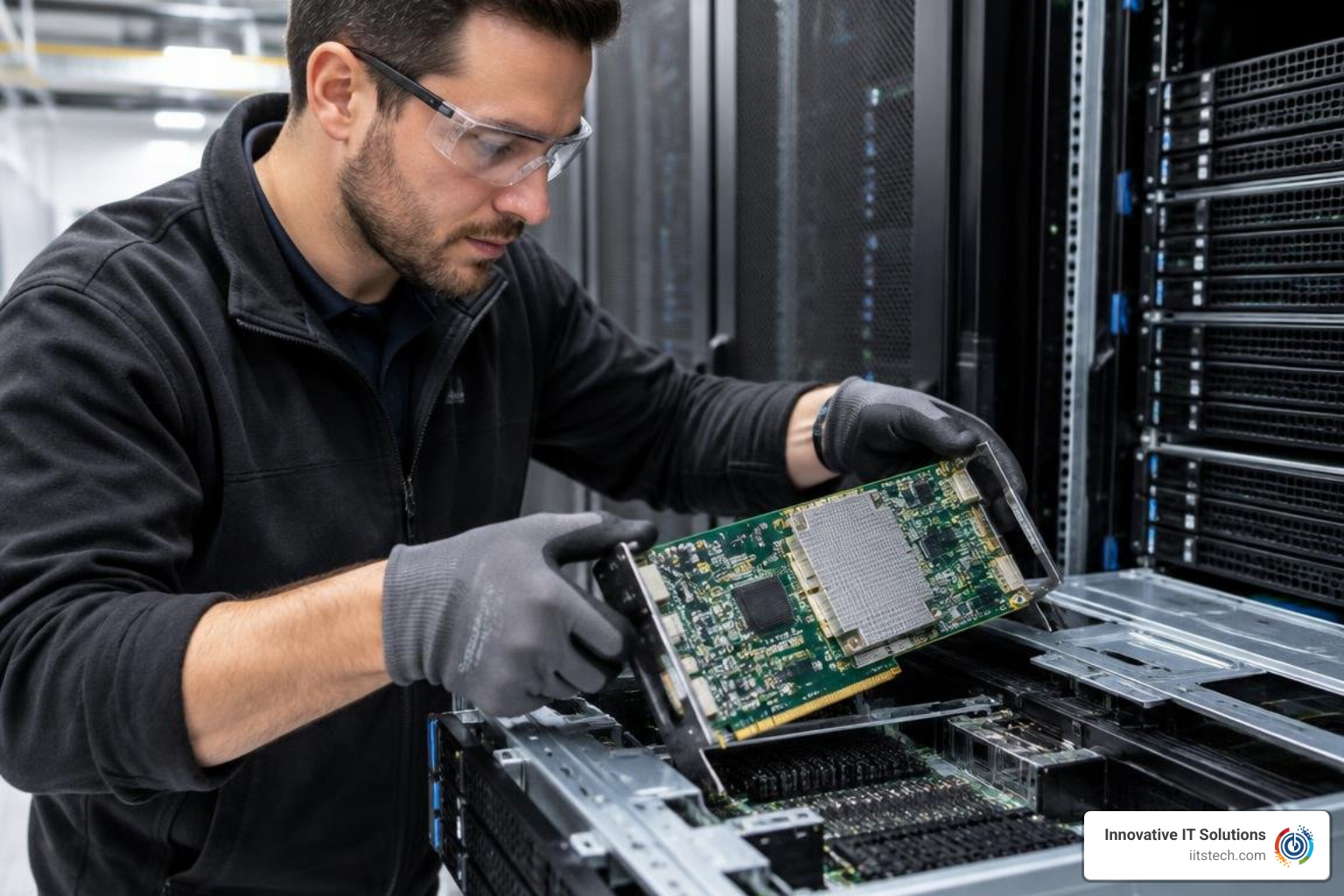
Enterprise hardware refreshes produce substantial volumes of high-density scrap. When decommissioning legacy data center racks, server chassis yield dozens of high-value components, including dual-socket system boards, RAID controller daughtercards, enterprise RAM, and high-speed network interface cards (NICs).
Rather than treating decommissioned servers as bulky junk, organizations that choose to liquidate enterprise hardware can recover substantial budget through component separation.
Step-by-Step Sorting and Depopulation Process
To secure the highest possible tier when turning in circuit boards for cash, follow this standard sorting workflow:
- Disassemble the Server Chassis: Extract all internal boards from the sheet-metal server rack casings. Keep structural steel and aluminum framing separate from bare boards.
- Remove Large Aluminum and Copper Heatsinks: Heavy cooling heatsinks add non-precious tare weight. Unclip or unscrew heatsinks from CPUs and chipsets, sorting them into clean aluminum or copper scrap bins.
- Depopulate High-Value Sub-Components: Detach CPUs and RAM modules from the main system boards. Because CPUs and memory sticks carry significantly higher per-pound valuations than the base motherboard, keeping them separated prevents downgrade averaging.
- Isolate and Remove Lithium CMOS Batteries: Coin-cell lithium batteries present chemical and fire hazards during mechanical shredding. Always pop out CMOS batteries and handle them according to universal waste protocols.
- Sort Boards by Grade Tier: Group high-grade server motherboards, mid-grade peripheral cards, and low-grade power supply boards into separate gaylord boxes or anti-static bins.
- Package and Consolidate for Freight: Stack sorted boards neatly on heavy-duty pallets, wrapping them securely to prevent shifting during transit to your processing facility.
Choosing the Right Disposition Channel and Managing Vendor Selection
Handling enterprise hardware scrap involves more than finding the highest bidder. Enterprise computers and datacenter infrastructure regularly house sensitive business information, proprietary data, and regulated hazardous elements. Selecting the right downstream vendor guarantees financial returns without introducing security or regulatory vulnerabilities.
Finding Certified ITAD and Recycling Providers
When evaluating scrap purchasers, look for facilities holding third-party certifications like R2 (Responsible Recycling) and e-Stewards. Certified providers adhere to zero-landfill mandates, enforce transparent downstream tracking, and provide clear settlement assays based on real-time market indexes.
Working with certified vendors ensures that your organization remains compliant with all federal disposal guidelines. Developing clear enterprise IT asset disposition strategies ensures that your asset recovery delivers verifiable returns alongside auditable compliance records.
Integrating Data Destruction with Scrap Board Recycling
Scrap circuit boards often feature on-board flash storage, NVMe chips, or embedded solid-state modules containing enterprise data. Recycling scrap hardware should never compromise information security.
Before boards are pulverized for metal recovery, all non-volatile memory chips must undergo certified sanitization or physical shredding meeting DoD 5220.22-M and NIST 800-88 guidelines. Partnering with an ITAD firm that delivers certified data destruction protocols guarantees that you receive an auditable Certificate of Destruction alongside your scrap settlement check.
Regulatory Compliance and Environmental Considerations
Circuit boards contain hazardous substances alongside precious metals, including lead solders, brominated flame retardants, and cadmium. Improper disposal exposes organizations to severe penalties under the Resource Conservation and Recovery Act (RCRA) and Environmental Protection Agency (EPA) standards.
When toxic e-waste is improperly landfilled, heavy metals can leach into local groundwater tables, creating lasting ecological damage. By partnering with zero-landfill recyclers and participating in initiatives aligned with the City of OKC waste reduction initiatives, businesses protect the environment while maintaining strict corporate Environmental, Social, and Governance (ESG) performance.
Frequently Asked Questions About Scrap Circuit Board Recycling
Which enterprise circuit boards have the highest scrap cash value?
Server motherboards, telecom backplane cards, and enterprise memory (RAM) sticks carry the highest per-pound scrap values. These components use higher gold-plating thickness on connection pins and bus interfaces, as well as dense arrays of palladium-bearing monolithic ceramic capacitors (MLCCs).
How are precious metals extracted from recycled computer boards?
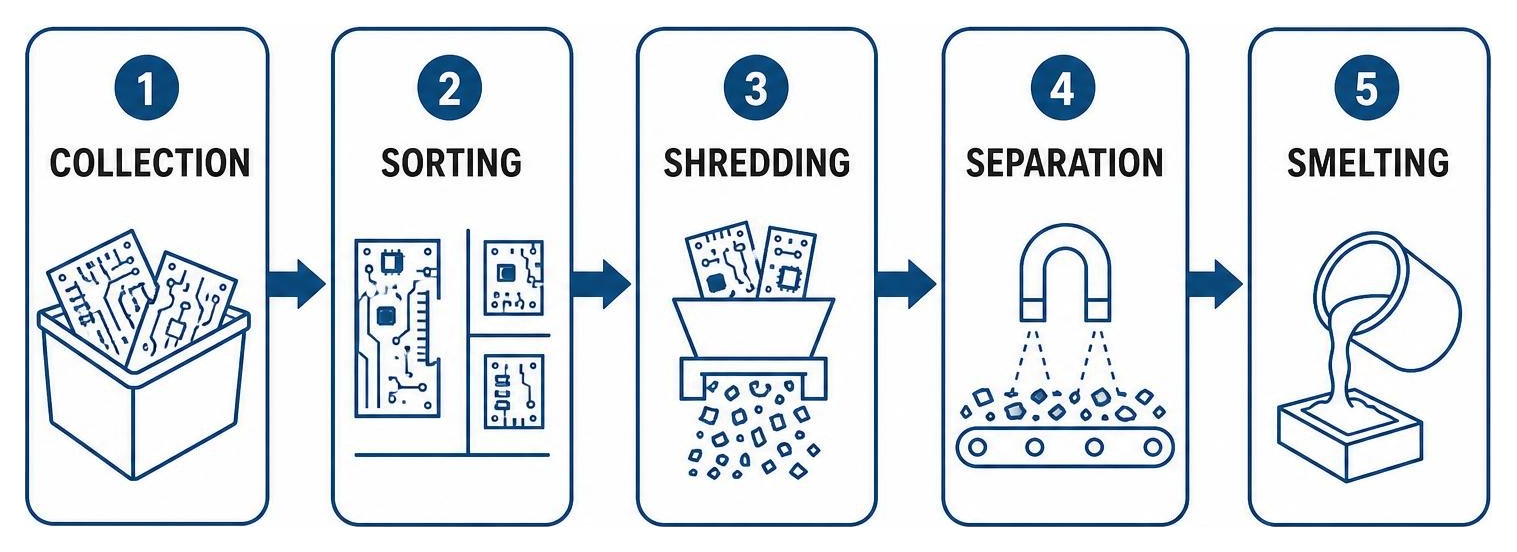
Processing facilities use a sequence of mechanical shredding, magnetic separation, and electrostatic sorting to separate ferrous metals, plastics, and non-ferrous metals. The concentrated circuit board fraction then undergoes hydrometallurgical leaching or pyrometallurgical smelting to refine high-purity gold, silver, copper, and palladium.
Do businesses need to remove storage chips before selling boards for scrap?
If the board features surface-mounted flash storage, embedded solid-state memory, or non-volatile EEPROMs holding proprietary company data, it must undergo verified physical shredding or certified sanitization. Reputable ITAD vendors perform this destruction in-house and provide a serialized Certificate of Destruction prior to scrap refining.
Conclusion
Recycling enterprise circuit boards for cash is a practical, value-driven strategy for businesses looking to recover capital from decommissioned server rooms and outdated IT hardware. By understanding scrap grades, stripping non-precious weight, and separating memory and processor components, your business can maximize revenue recovery while keeping toxic waste out of local landfills.
At Innovative IT Solutions, we deliver secure, compliant ITAD solutions for businesses throughout Oklahoma City, South OKC, and the wider Oklahoma region. Our zero-landfill, NIST- and DoD-compliant processes ensure maximum ROI, complete data destruction, and total regulatory compliance. Ready to turn your retired computer and server hardware into working revenue? Explore our commercial electronics recycling services today to request a custom valuation for your retired enterprise assets.


