
Stop Trashing Old Tech and Recycle Your Printed Circuit Boards
Why Circuit Board Recycling Matters for Retired Enterprise IT
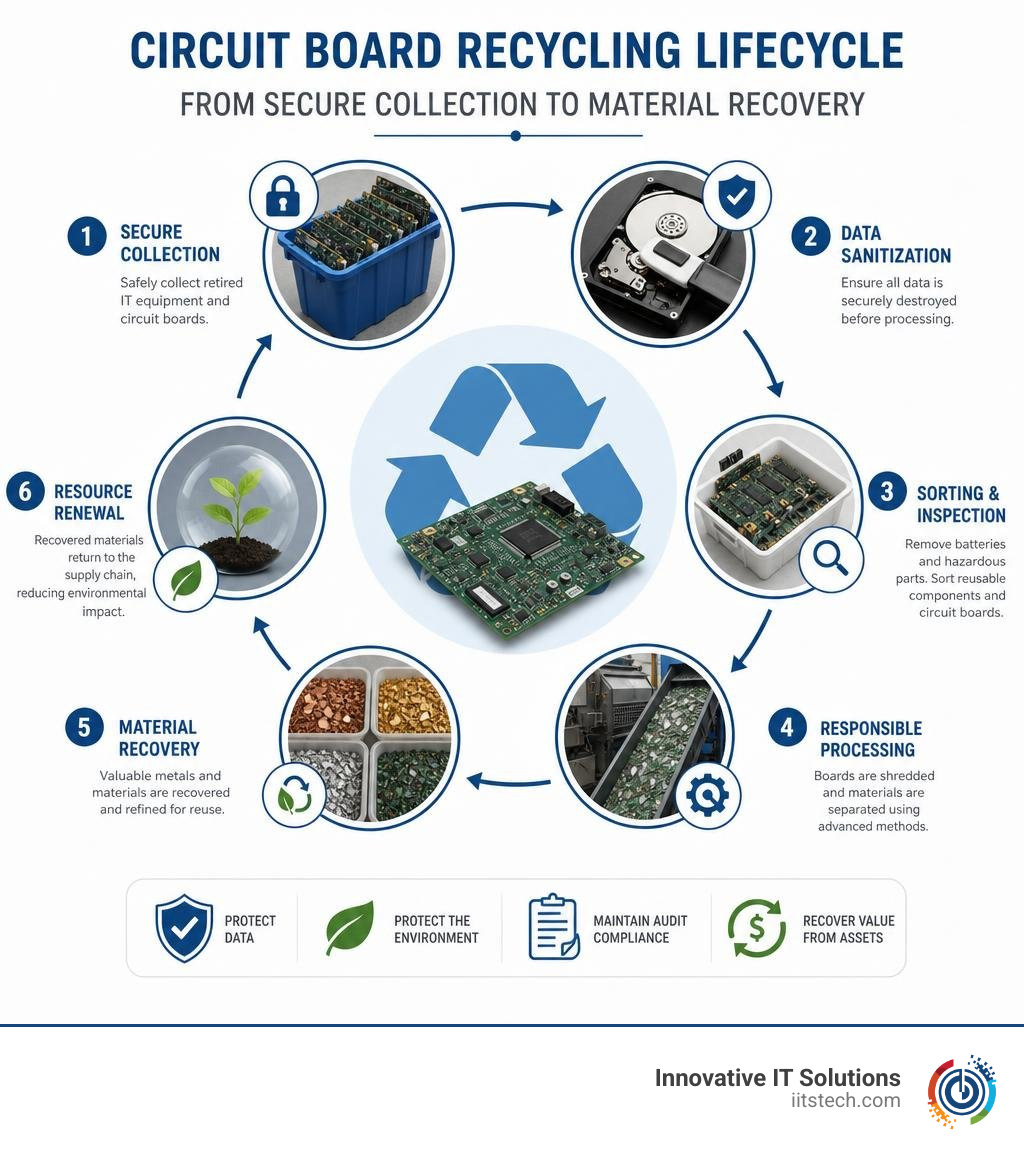
Circuit board recycling starts with secure IT asset disposition, data sanitization, and sorting. For retired computers, servers, and related components, keep batteries and mercury-containing parts separate, document chain of custody, and send boards to a qualified recycler that can reuse equipment where possible and recover metals from the rest.
Printed circuit boards contain copper, tin, gold, silver, palladium, plastics, glass fiber, and other materials. Their metal concentrations can be far higher than those in mined ore. Yet only 17% of global e-waste is formally processed. The result is lost value, avoidable pollution, and more pressure on raw-material supply chains.
For IT managers, the goal is not simply to discard decommissioned server hardware. It is to protect sensitive data, meet environmental obligations, preserve audit records, and recover value from reusable assets and material streams. Establishing enterprise-grade electronic recycling programs allows companies to identify certified facilities for commercial electronics recycling and safely convert obsolete or broken electronics for cash back into their operational budgets.
I am Mike Haden, Founder and Director of Business Development at Innovative IT Solutions. Over 14 years in IT asset disposition, I have helped organizations manage secure technology recovery, data destruction, resale, and circuit board recycling through documented, responsible processes.
Regulatory Frameworks for Enterprise Circuit Board Recycling
Managing end-of-life enterprise IT equipment requires strict adherence to environmental laws. The Resource Conservation and Recovery Act (RCRA), administered by the United States Environmental Protection Agency (USEPA) under Title 40 of the Code of Federal Regulations (40 CFR), governs the handling, storage, and disposal of industrial electronic waste. For organizations decommissioning computer and server equipment, understanding these federal mandates is essential to maintain compliance and avoid costly regulatory penalties.
When organizations retire large volumes of server blades, storage arrays, and network cards, improper disposal can quickly push a business into a higher hazardous waste generator category. Selecting verified enterprise e-waste disposal standards guarantees that materials are processed through legal exclusions, minimizing liability while maintaining a comprehensive audit trail.
Classification of Unused, Used, and Shredded Boards
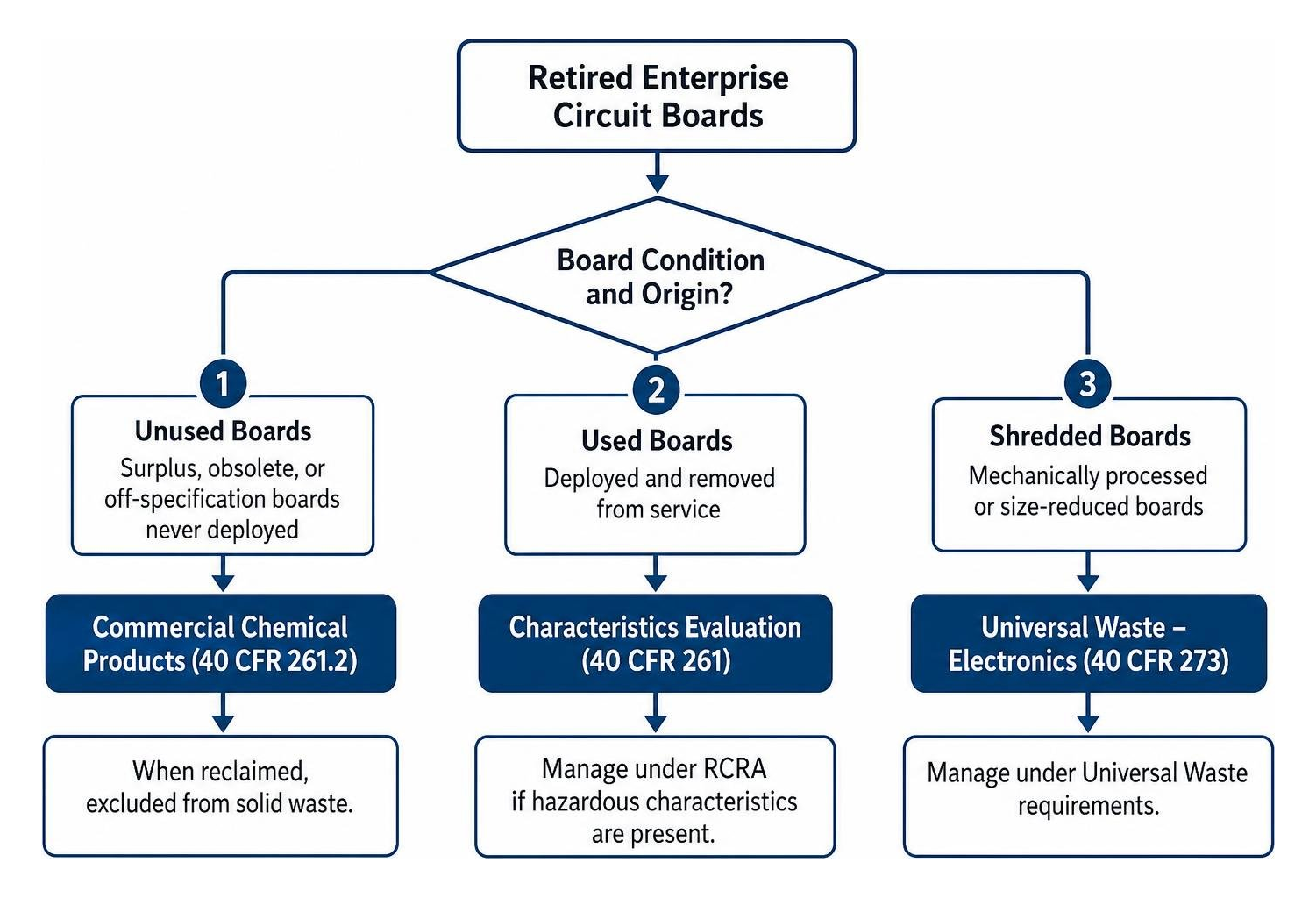
The USEPA establishes clear distinctions regarding how scrap printed circuit boards are regulated based on their physical condition and origin:
- Unused Commercial Chemical Products (40 CFR 261.2): Surplus, obsolete, or off-specification bare boards and circuit assemblies that have never been deployed are classified as Commercial Chemical Products (CCPs). When reclaimed, these materials are excluded from the definition of solid waste, freeing the generator from hazardous waste handling burdens.
- Whole Used Boards and Scrap Metal Exemption (40 CFR 261.6(a)(3)(iii)): Whole used circuit boards pulled from retired enterprise servers and workstations qualify for the scrap metal exemption, provided they are destined for legitimate material recovery and have hazardous accessories segregated.
- Shredded Circuit Boards (40 CFR 261.4(a)(14)): Pulverized or shredded circuit boards are excluded from the definition of solid waste if they are stored and transported in sturdy, non-leaking containers prior to recovery and are free from prohibited components such as mercury switches, mercury relays, nickel-cadmium batteries, and lithium cells.
State Regulations and Universal Waste Standards
While federal RCRA rules establish baseline protections, state-level environmental frameworks can implement additional compliance criteria. Several states incorporate specific IT components into their Universal Waste rules, simplifying collection logistics while imposing stringent downstream transparency standards.
By utilizing comprehensive ITAD frameworks that segregate toxic chemistry at the point of decommissioning, businesses maintain full compliance with state mandates, support corporate environmental governance, and eliminate the risk of illegal downstream dumping.
Advanced Mechanical and Physical Separation Technologies
Physical separation processes form the initial industrial tier of high-efficiency PCB recycling. Rather than relying immediately on energy-intensive smelting or corrosive chemical treatments, modern processing facilities use physical mechanisms to liberate metals from non-metallic matrixes based on differences in density, conductivity, and magnetic properties.
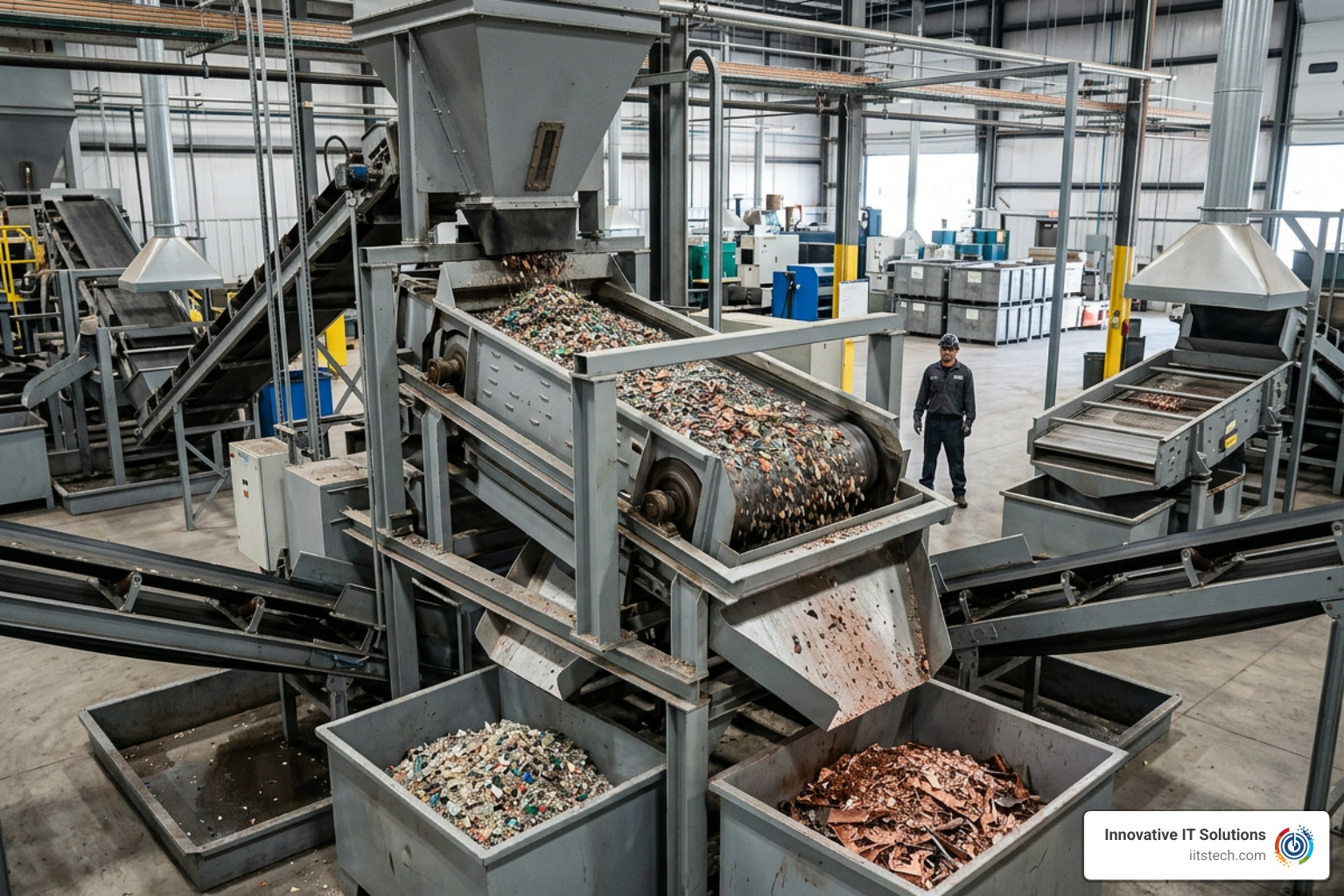
Prior to separation, decommissioned computer boards and server motherboards undergo two-stage mechanical comminution. Initial shredding reduces assemblies to coarse fractions, followed by cryogenic grinding. Chilling the composite boards below their glass transition temperature prevents polymer smearing, reduces particle agglomeration, and yields clean liberation of fine copper tracks and solder joints at particle sizes below 1 mm. Life cycle assessments highlight the environmental efficiency of physical separation, as detailed in research on eco-efficient circuit board processing.
| Separation Technique | Primary Operating Principle | Target Fraction | Metal Recovery Yield (%) | Non-Metallic Purity (%) |
|---|---|---|---|---|
| Electrostatic Corona | Electrical conductivity & charge decay | Conductive metals (Cu, Al, Sn) | 95.0% – 98.5% | > 99.0% |
| Gravity Shaking Table | Specific gravity differentials | Heavy metals & alloys | 88.0% – 93.0% | 85.0% – 90.0% |
| Cyclofluid Separation | Centrifugal force & fluid drag | Medium-density particulates | 82.0% – 87.0% | 80.0% – 86.0% |
| Froth Flotation | Surface hydrophobicity differences | Fine metallic concentrates | 78.0% – 84.0% | 75.0% – 82.0% |
Electrostatic and Gravity Separation Methods in Circuit Board Recycling
Electrostatic drum separation represents the benchmark physical recovery technology for enterprise IT circuit boards. Ground materials are fed onto a grounded rotating drum inside a high-voltage corona discharge field. Conductive metal particles immediately shed their charge to the grounded roll and are thrown into a discharge bin via centrifugal force.
Non-conductive polymer and glass particles retain their electrostatic charge, pinning them to the roll until brushed off into a separate hopper. Industrial operations achieve an output yield of approximately 25.1% metals and 72.5% non-metallic plastics, with only 2.4% middlings requiring recirculation. Gravity shaking tables and cyclofluid systems can subsequently separate base copper from lighter aluminum and heavy lead-tin fractions.
Repurposing the Non-Metallic Fraction for Polymer Composites
The non-metallic fraction (NMF) of printed circuit boards accounts for roughly 70% of total board mass, primarily consisting of thermoset FR-4 epoxy resin and woven fiberglass. Traditionally landfilled, pulverized NMF powder can be repurposed as a functional reinforcement filler in industrial polymer composites, including polypropylene, silicone, and epoxy matrices.
- Mechanical Reinforcement: Adding 2.5% to 5.0% micro-ground NMF filler increases the Shore hardness and wear resistance of polymer castings without degrading ultimate tensile strength.
- Interfacial Bonding: Because recovered FR-4 particles are chemically inert, using silane coupling agents (such as KH-550) establishes covalent bridging between the crosslinked epoxy filler and the surrounding polymer matrix, increasing composite tensile strength by up to 15%.
- Environmental Screening: De-dusted NMF powders must undergo standard phytotoxicity and leaching tests to verify the stabilization of residual brominated flame retardants before incorporation into commercial composite products.
Chemical, Electrochemical, and Thermal Recovery Processes
Once physical pre-treatment concentrates the metallic fractions, chemical and metallurgical technologies extract and refine individual elements. Deploying hydrometallurgical leaching and electrowinning avoids the massive carbon footprint and hazardous gas emissions historically associated with primary pyrometallurgical smelting, directly mitigating corporate electronic waste impact.
Low-Energy Electrochemical Depopulation and Tin Recovery
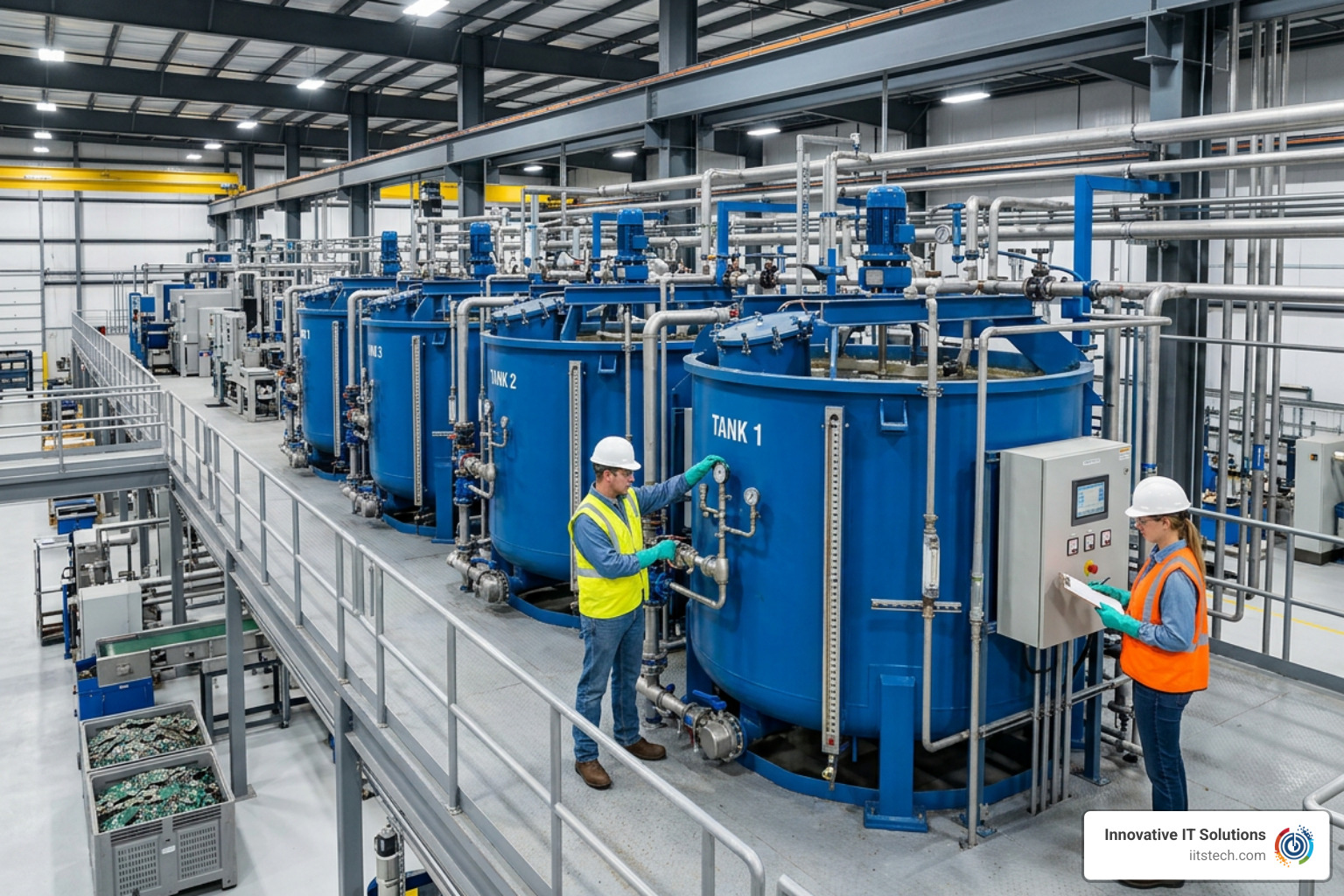
Recovering intact surface-mount integrated circuits (ICs) before board destruction preserves component value and simplifies downstream refining. Recent innovations introduce low-energy electrochemical depopulation utilizing a methanesulfonic acid ($CH3SO3H$) electrolyte bath, as shown in a study on low-energy electrochemical depopulation of waste circuit boards.
Waste circuit boards placed into an anode basket undergo selective anodic dissolution of the tin-lead solder joints. As solder dissolves, surface-mount processors, memory chips, and passive components gently detach from the bare copper laminate board with depopulation efficiencies reaching 90% under constant current conditions (87.5% under constant anodic potential). Simultaneously, high-purity metallic tin deposits onto the cathode with a current efficiency exceeding 92%, consuming an exceptionally low 140 to 340 kWh per ton of recovered tin.
Leaching Precious Metals: Deep Eutectic Solvents and Bioleaching
Hydrometallurgical circuits traditionally dissolved base and precious metals using aggressive inorganic acids (nitric, sulfuric, and hydrochloric acids). Modern operations are transitioning toward closed-loop green chemistry routes:
- Deep Eutectic Solvents (DES) and Ionic Liquids (IL): Choline chloride-based eutectic mixtures selectively dissolve copper, zinc, lead, and tin with extraction efficiencies exceeding 90% at mild operating temperatures, avoiding toxic $NOx$ or $SO2$ emissions.
- Selective Staged Leaching: Multi-stage extraction first leaches base metals using dilute organic solutions or ferric chloride ($FeCl_3$), followed by gold and palladium dissolution using non-toxic thiosulfate or glycine formulations, as outlined in advancements in critical material recovery from circuit boards.
- Bioleaching: Acidophilic chemolithotrophic bacteria (Acidithiobacillus ferrooxidans) generate biogenic ferric iron to oxidize copper matrices at ambient temperatures, providing an ultra-low-energy reclamation path for low-grade scrap streams.
Solder Reclamation and Next-Generation Design-for-Recycling (DfR)
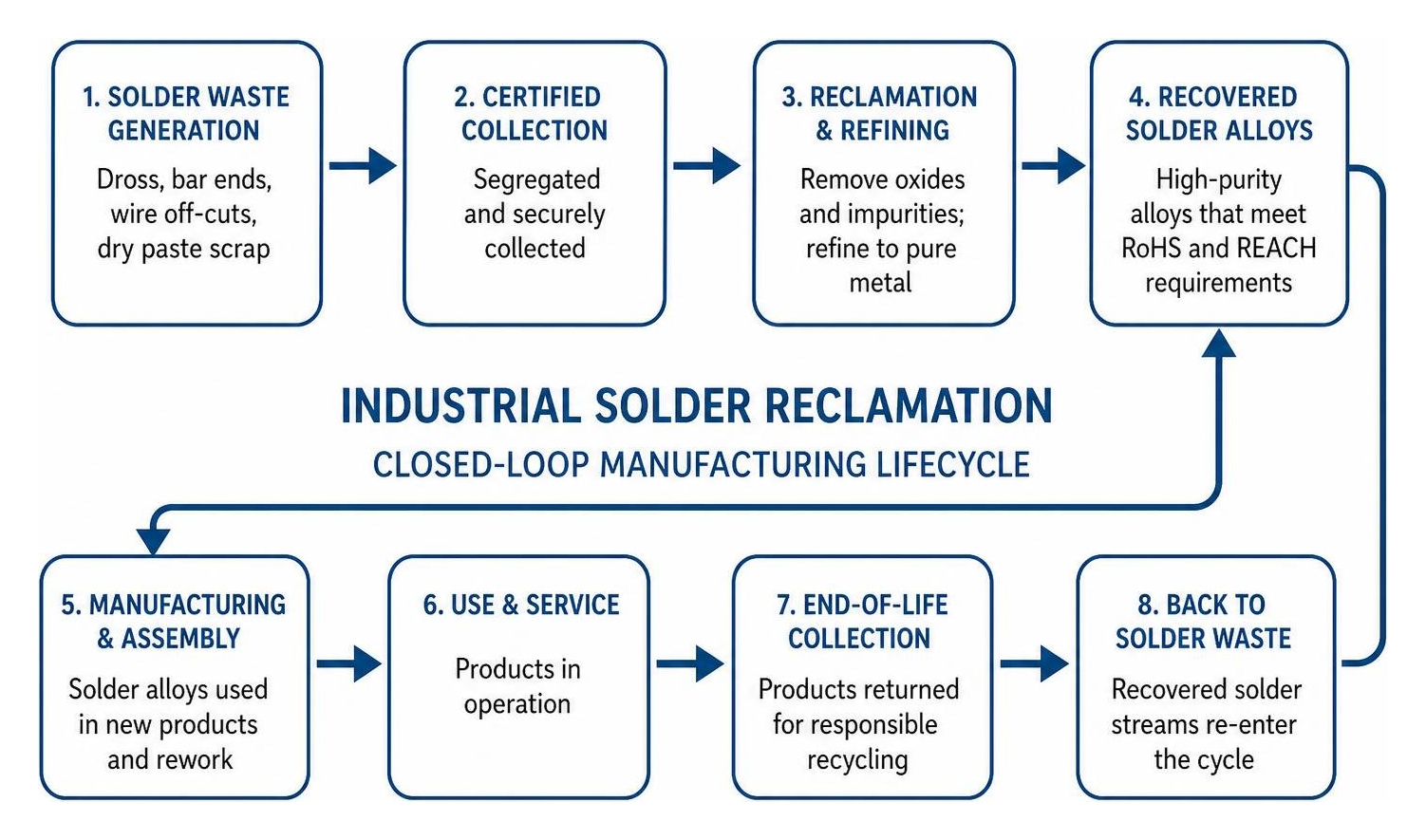
Solder alloys represent both an operational challenge and a major reclamation opportunity during IT hardware recycling. Enterprise manufacturing and rework operations generate substantial volumes of solder dross, paste residues, and bar ends that must be safely recycled to satisfy RoHS and REACH mandates.
Certified Solder Dross and Alloy Reclamation
Certified solder reclamation programs allow enterprise electronics manufacturers and service centers to process solder waste streams securely:
- Accepted Solid Waste Streams: High-purity solder dross (oxides skimmed from wave-soldering pots), bar ends, wire off-cuts, and dry solder paste scrap are converted into refined pure metal alloys. Flux pastes and wet chemical residues containing no recoverable metals are excluded to ensure operational safety.
- Compliance and Lot Traceability: Closed-loop programs provide full audit manifests detailing reclaimed weights, metal assay purities, and environmental chain-of-custody documentation, ensuring complete compliance with federal and state recycling rules.
- Financial Offset: High-purity tin, silver, and copper reclaimed from manufacturing scrap provide financial credits that directly reduce raw material procurement expenses.
Circular Circuit Board Recycling with Biodegradable PHBV Substrates
To eliminate the long-term waste challenges of halogenated FR-4 boards, researchers have developed circular manufacturing frameworks using bio-based, biodegradable substrates, outlined in sustainable design and recycling in electronics manufacturing. Polyhydroxyalkanoate biopolymers—specifically poly(3-hydroxybutyrate-co-3-hydroxyvalerate) (PHBV)—serve as transient substrates for printed conductive tracks.
By pairing additive inkjet printing of conductive silver nanoparticle inks with Ultra-Precise Deposition (UPD) for component bonding, manufacturers eliminate subtractive wet etching, which currently wastes 70,000 tons of copper annually worldwide. At end-of-life, aqueous ferric chloride ($FeCl_3$) leaches 87% of silver tracks in minutes without toxic acids. The PHBV substrate is fully depolymerized or industrially composted, achieving an overall material recovery rate of 99% and reducing lifecycle environmental impacts by 90% compared to traditional FR-4 processing.
The Economic Value Driving Enterprise Printed Circuit Board Recovery
The business case for recycling retired computer and server hardware is anchored in urban mining fundamentals. Global generation of electrical and electronic waste reached 62.3 million metric tons (Tg) in 2022, carrying an embedded raw material value of USD $57 billion. Projections indicate global volumes will expand to 74.7 Tg by 2030 and 110 Tg by 2050.
Enterprise server motherboards, daughterboards, and telecom backplanes contain metal concentrations tens to hundreds of times richer than high-grade natural ores. Processing high-grade server scrap avoids primary ore extraction, conserves water, and secures valuable raw materials, delivering clear financial and environmental benefits of IT asset recycling.
| Element | Average Assay Mass in PCB (%) | Recoverable Value Per Ton of PCB (USD) | Primary IT Component Location |
|---|---|---|---|
| Gold (Au) | 0.10% | $84,556 | CPU sockets, edge connectors, bonding wires |
| Silver (Ag) | 0.20% | $1,928 | Solder alloys, conductive adhesives, traces |
| Copper (Cu) | 20.00% | $1,770 | Ground planes, power layers, heat spreaders |
| Palladium (Pd) | 0.005% | $1,532 | Multi-layer ceramic capacitors (MLCCs) |
| Tin (Sn) | 4.00% | $1,139 | Component solder joints, surface finishes |
| Platinum (Pt) | 0.0015% | $454 | Specialized IC contact surfaces, sensor elements |
| Nickel (Ni) | 2.00% | $305 | Under-plate barrier layers, pin plating |
| Aluminum (Al) | 2.00% | $51 | Chip heat sinks, electrolytic capacitor casings |
| Lead (Pb) | 2.00% | $39 | Legacy solder formulations |
| Zinc (Zn) | 1.00% | $30 | Internal structural alloys, brass standoffs |
Frequently Asked Questions About Circuit Board Recycling
How does physical separation reduce the environmental impact of circuit board recycling?
Physical separation processes like cryogenic pulverization and electrostatic drum classification eliminate initial chemical reagents and high-temperature thermal combustion. Using physical separation as an upstream pre-treatment cuts the overall global warming potential of PCB processing by approximately 70% compared to direct metallurgical smelting, while yielding clean metal streams (25.1%) and recyclable plastics (72.5%).
Are enterprise circuit boards classified as hazardous waste under USEPA regulations?
Under federal USEPA RCRA rules, whole scrap circuit boards sent for materials recovery are exempt from hazardous waste classification under the scrap metal exemption (40 CFR 261.6(a)(3)(iii)), provided batteries and mercury switches are removed. Shredded boards stored in rigid, sealed containers are excluded from the definition of solid waste under 40 CFR 261.4(a)(14). Unused surplus boards are treated as Commercial Chemical Products under 40 CFR 261.2.
What is the financial return on precious metals recovered from server motherboards?
Enterprise server motherboards yield significant financial value because they contain high concentrations of precious metals. A single ton of mixed enterprise motherboards contains roughly $84,556 in gold, $1,928 in silver, $1,770 in copper, and $1,532 in palladium. This high concentration allows organizations retiring bulk data center hardware to offset logistics costs and secure substantial material recovery returns.
Conclusion
Maximizing value from decommissioned IT assets requires a structured, compliant approach to electronics disposition. Rather than viewing retired server motherboards, expansion cards, and computer hardware as electronic scrap, enterprise organizations must leverage proven asset disposition frameworks that prioritize environmental protection, data security, and materials recovery.
At Innovative IT Solutions, based in Oklahoma City, we provide enterprise organizations with fully documented IT asset disposition services. Our zero-landfill, EPA-compliant processes guarantee complete RCRA alignment, full lot audit trails, and certified NIST- and DoD-compliant data destruction. Partner with us for certified enterprise electronics recycling to secure your corporate data, meet sustainability mandates, and unlock the value in your retired IT infrastructure.


