
How to Sell Used Wireless Adapters and Retired Server Tech
To sell used wireless adapters from business computers, record each model and serial number, check for damage, and test that it works. Before selling the computers they came from, erase their storage and saved network settings. Then compare prices for matching used parts and give buyers clear test results. Use the same inventory, testing, and pricing steps for retired server components.
I’m Mike Haden, founder and director of business development at Innovative IT Solutions, with 14 years of experience in IT asset disposition. I help organizations sell used wireless adapters and other retired business hardware while keeping data security and asset records in view.
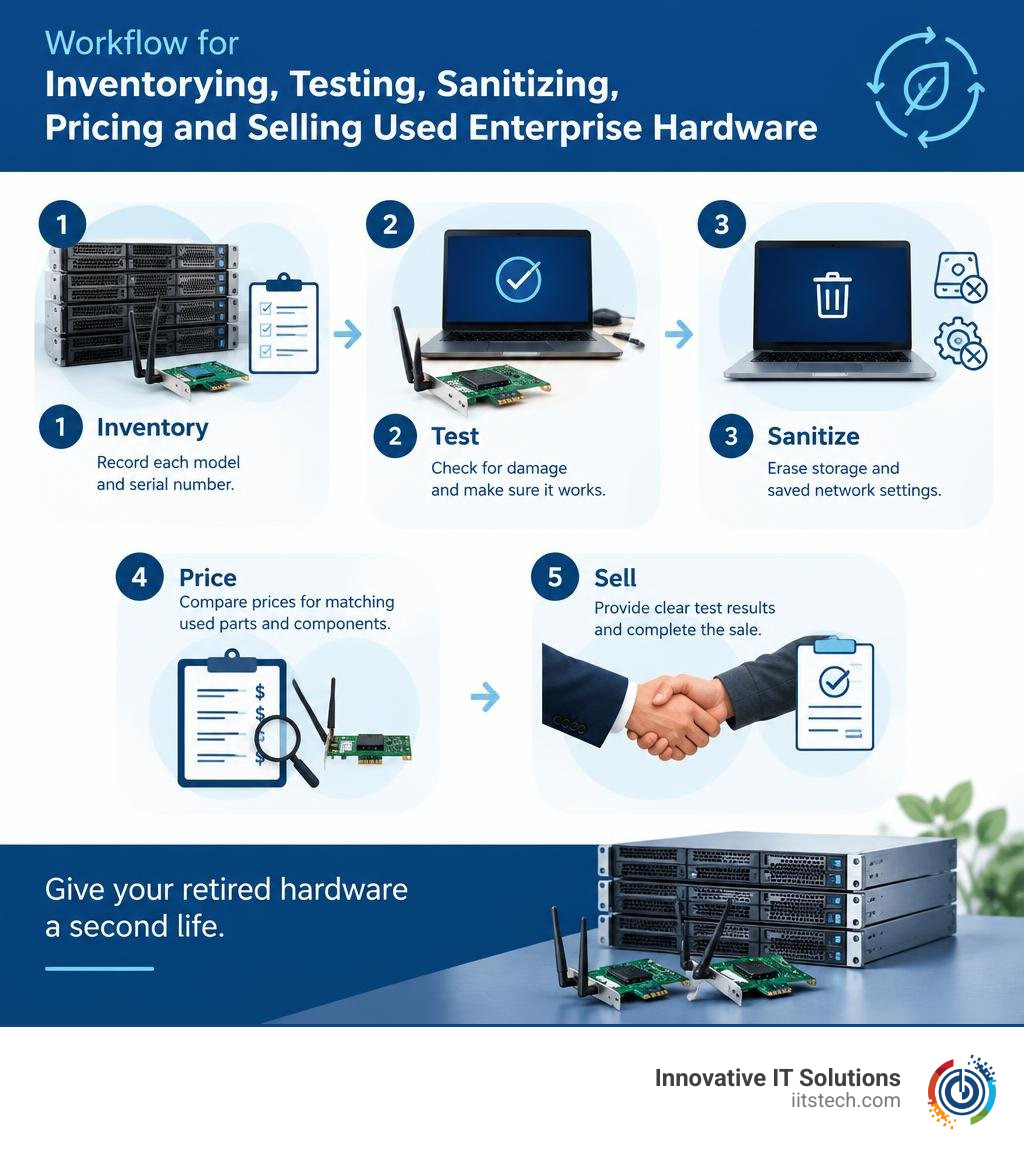
Essential sell used wireless terms:
Identifying High-Value Enterprise Server Hardware
When it comes time to refresh your data center or office infrastructure, knowing which assets yield the highest return on investment is key. Not every piece of equipment carries the same resale value on the secondary market. By focusing on modular, high-demand components, you can significantly offset the cost of newer infrastructure.
The core components that consistently retain strong value include:
- Enterprise Multi-Core Processors (CPUs): Server-grade processors, especially high-core-count models designed for virtualization and intensive workloads, remain in steady demand across secondary enterprise markets.
- High-Density Server Memory (ECC RAM): High-capacity Registered ECC DDR4 and DDR5 memory modules are universally needed by growing businesses looking to expand existing server capacity without buying entirely new chassis.
- Enterprise Storage Drives: High-end NVMe solid-state drives, enterprise SAS SSDs, and high-capacity nearline SAS hard drives command top dollar once properly wiped.
- Network Interface Cards and Wireless Modules: Business workstations, edge servers, and modular chassis often contain modular connectivity equipment. When companies refresh their client fleets or remote office nodes, knowing how to properly test, catalog, and sell used wireless interface cards or enterprise wireless adapters alongside core compute tech helps maximize your total liquidation return.
- Power Supply Units (PSUs) and RAID Controllers: Redundant platinum and titanium-rated server power supplies and high-performance RAID controllers always find eager enterprise buyers.
Understanding how to balance individual component liquidation against entire chassis resale is fundamental for maximizing value from obsolete IT equipment.
Evaluating Condition and Authenticity
Before any enterprise server hardware enters the resale pipeline, accurate grading and authentication are mandatory. Enterprise buyers demand absolute reliability; unverified hardware will quickly lead to returned shipments and broken buyer trust.
- Visual and Cosmetic Grading: Examine all chassis, heatsinks, fan assemblies, and connectors. Grade the cosmetics accurately—ranging from Grade A (minor rack scuffs, pristine pins/ports) to Grade C (bent PCIe brackets, heavy surface wear).
- Serial Number and Part Number Verification: Cross-reference hardware serial numbers against OEM manufacturer databases. Genuine enterprise equipment features crisp, standardized labeling, regulatory compliance marks, and verifiable MAC addresses.
- Counterfeit Detection: Secondary markets can see cloned enterprise components or relabeled lower-tier CPUs. Inspect PCB traces, font alignments on silicon heat spreaders, and firmware signatures during boot to confirm authenticity.
- Port and Interface Diagnostics: Test every physical network port, PCIe slot connection, backplane connector, and memory channel. Bent pins or degraded solder joints must be flagged immediately.
Determining Fair Market Value
Pricing retired IT hardware accurately prevents it from sitting idle in a warehouse while losing value each month. Enterprise IT equipment typically follows aggressive depreciation schedules, but market spikes for specific memory generations or processor chipsets can create profitable selling windows.
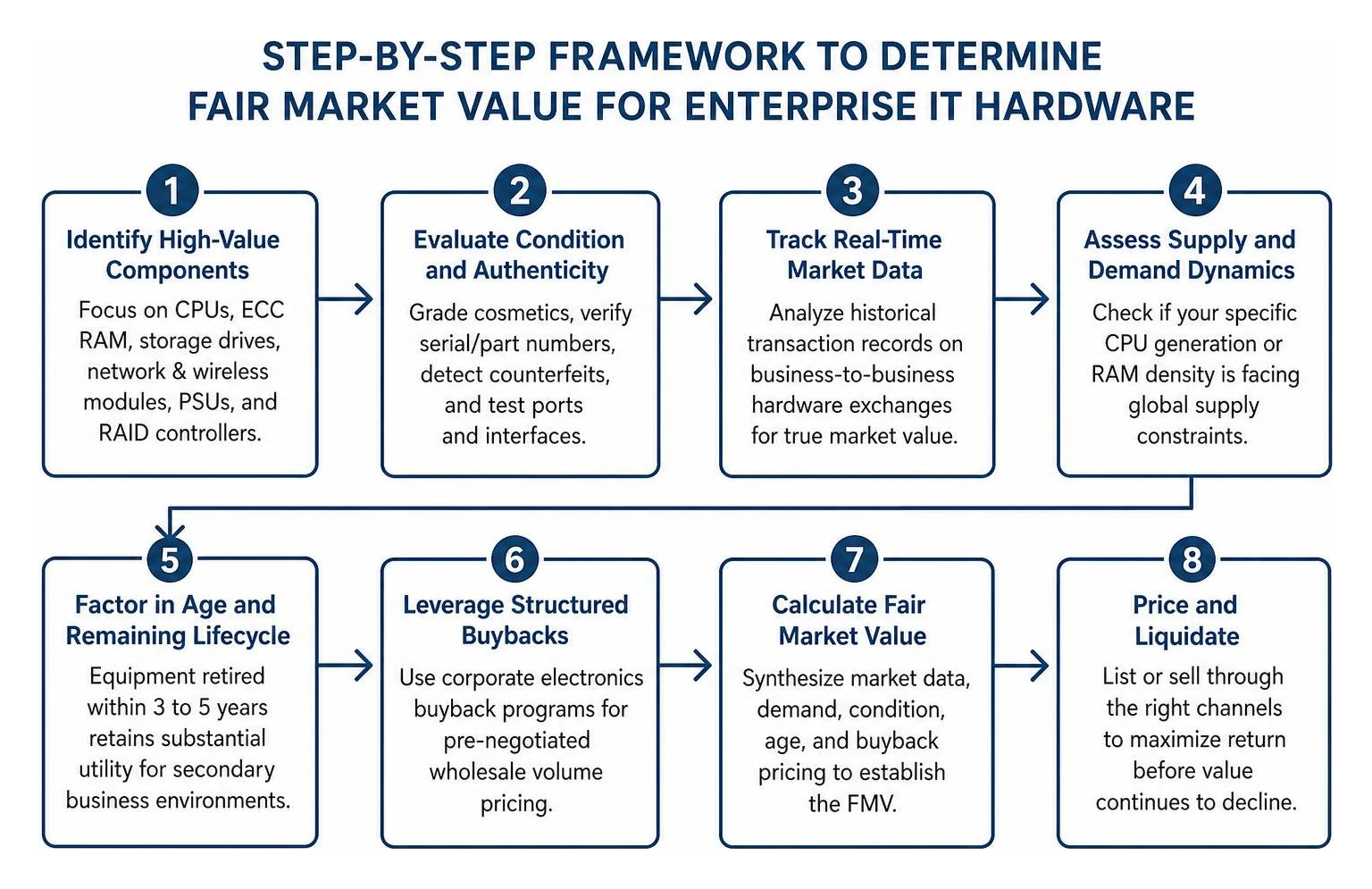
To establish fair market value (FMV):
- Track Real-Time Secondary Market Indices: Analyze historical transaction records on business-to-business hardware exchanges rather than asking prices on retail marketplaces.
- Assess Supply and Demand Dynamics: Check whether your specific CPU generation or RAM density is experiencing global supply constraints.
- Factor in Component Age and Remaining Lifecycle: Equipment retired within 3 to 5 years retains substantial utility for secondary business environments.
- Leverage Structured Buybacks: Utilizing dedicated corporate electronics buyback programs ensures you receive pre-negotiated wholesale volume pricing without dealing with individual listing volatility.
Sanitization, Compliance, and Data Security Protocols
Data security is the single most critical factor when decommissioning corporate IT assets. Releasing retired drives or mainboards with residual data or corporate network configurations exposes your organization to severe regulatory penalties and reputational risk.

Every organization must adhere to standard data sanitization protocols, such as NIST SP 800-88 Rev. 1 guidelines, which detail overwriting, cryptographic erasure, and physical destruction standards. Following safe IT asset disposition practices protects both your balance sheet and your legal compliance.
Erasing Configurations and Stored Credentials
Data sanitization involves more than simply formatting operating system drives. Modern server architectures and integrated network modules store vital corporate credentials across multiple non-volatile memory chips:
- Baseboard Management Controllers (BMC/iDRAC/iLO): Dedicated management processors store administrative passwords, static internal IP schemes, active directory paths, and SSL certificates. Perform complete factory resets to clear non-volatile RAM.
- Network Interface Cards and Wireless Adapters: Ensure persistent flash configurations, saved SSID profiles, RADIUS authentication certificates, and custom MAC overrides are fully purged.
- RAID Controllers and Host Bus Adapters: Clear array metadata, foreign configurations, and cache vault modules before disconnecting drives.
- Audit Logging: Maintain a serialized chain of custody log verifying the precise timestamp, sanitization method, and technician ID responsible for clearing each controller.
Maintaining Regulatory and Environmental Compliance
Zero-landfill compliance and strict adherence to EPA guidelines are non-negotiable for enterprise organizations. When certain components reach true end-of-life and can no longer be refurbished, responsible handling protects our shared environment.
Working with certified enterprise asset recovery professionals ensures that all non-functional hardware is broken down into base commodities (aluminum, copper, circuit boards) in full compliance with state and federal environmental laws, backed by certified Certificates of Recycling and Data Destruction.
How to Sell Used Server Hardware for Maximum ROI
Liquidating bulk server gear requires a structured logistics and sales strategy. Disorganized pallets of mixed components yield significantly less value than neatly staged, tested, and batched inventory.
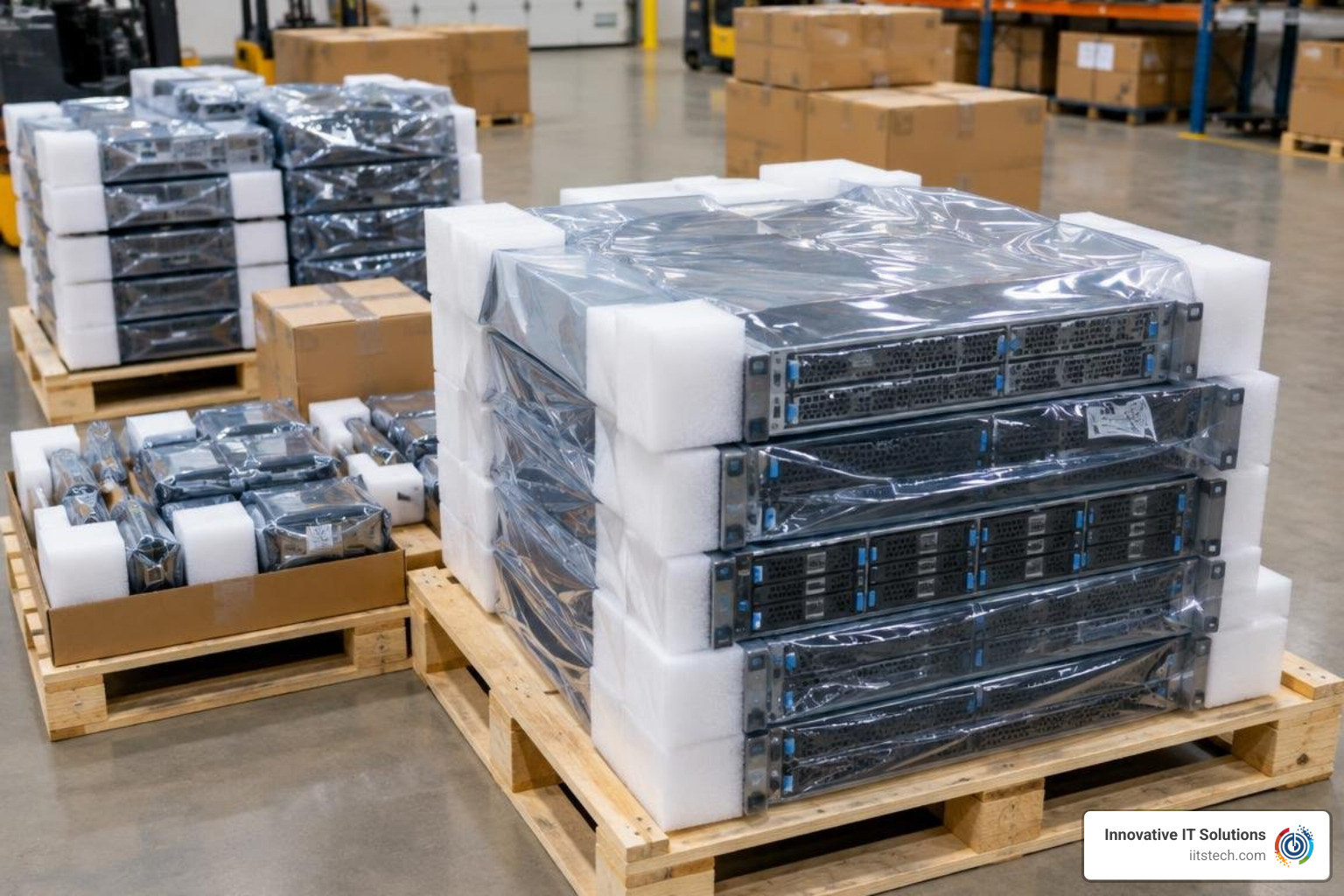
To get the highest return:
- Catalog Complete Configurations: Group matching systems together. A lot of 20 identical 1U dual-socket servers with matching RAM and drive configurations will always command higher pricing from corporate buyers than mismatched standalone units.
- Package for Secure Transport: Enterprise chassis and expansion cards are sensitive to electrostatic discharge (ESD) and shock. Always use anti-static bags for loose cards, CPUs, and RAM, alongside custom-fit foam packaging or securely strapped server pallets.
- Choose the Right Liquidation Path: For single items, private listings might work, but when you are managing enterprise infrastructure, specialized channels—such as selling used Cisco equipment and enterprise servers directly to vetted ITAD providers—yield fast payouts and eliminate post-sale support headaches.
Evaluating ITAD Buyback Programs
Choosing the right IT Asset Disposition (ITAD) partner makes the difference between an effortless liquidation and a logistical nightmare.
| Evaluation Metric | Basic E-Waste Recycler | Direct Peer-to-Peer Resale | Certified ITAD Partner (e.g., Innovative IT Solutions) |
|---|---|---|---|
| Data Sanitization | Basic clearing or shred-only | Seller’s sole responsibility | NIST/DoD-compliant, serialized certification |
| Pickup Logistics | Drop-off or local freight | Seller handles packaging/postage | White-glove pack and ship, nationwide freight |
| Value Recovery | Scrap weight value only | High gross, high fees/returns | Maximum fair market value buyback |
| Chain of Custody | Minimal or informal | None | Complete serialized documentation |
| Turnaround Time | Immediate | Weeks to months | Rapid turnaround with prompt settlement |
Essential Steps to Test and Sell Used Server Tech
To streamline your decommission and offloading process, implement this straightforward testing sequence:
- Benchtop Power Verification: Connect the system to a clean power source to verify that redundant power supplies fire up without fault lights.
- POST & Diagnostic Boot: Boot the hardware into diagnostic utilities to verify that all CPU sockets, memory channels, and PCIe expansion buses report healthy status codes.
- Component-Level Stress Testing: Run burn-in memory tests and SMART health diagnostics across all attached solid-state and mechanical drives.
- Firmware Normalization: Flash system firmware and BIOS back to stable, non-customized baseline versions.
- Pack and Bundle: Group components with their corresponding accessories (rack rails, power cables, mounting brackets) to present complete, deployment-ready kits.
For a deeper dive into whole-system disposition workflows, consult our comprehensive IT equipment sales guide.
Frequently Asked Questions About Selling Used Server Equipment
How do enterprise data privacy regulations affect offloading server hardware?
Regulations like HIPAA, GDPR, and PCI-DSS hold businesses legally accountable for data breaches occurring on retired hardware. If client information, internal network layouts, or stored keys are recovered from sold equipment, the original owner faces massive compliance fines. Partnering with an ITAD specialist that issues tamper-evident Certificates of Sanitization mitigates this corporate liability entirely.
What server components hold the highest resale value?
High-density ECC DDR4/DDR5 RAM, enterprise-tier NVMe SSDs, and high-core-count processors consistently capture the highest percentage of original value. High-end network connectivity cards and modular enterprise controllers also yield consistent, reliable returns.
What should businesses consider when choosing an ITAD buyback program?
Key considerations include serialized chain-of-custody tracking, certified data sanitization standards, zero-landfill environmental policies, and the speed of valuation and payout. Reviewing the broader business benefits of selling used IT equipment can help your leadership team build a repeatable asset disposition strategy.
Conclusion
Decommissioning enterprise hardware does not have to be an operational burden or an environmental liability. With a structured approach to component testing, data sanitization, and fair market evaluation, your retired servers and computing assets can generate significant capital returns while keeping your organization completely secure and compliant.
At Innovative IT Solutions, we provide turnkey IT asset disposition, serialized NIST-compliant data destruction, and zero-landfill electronics recycling. Based in Oklahoma City and serving enterprise clients across the region, our team ensures you capture the maximum value from your hardware refresh cycles.
Ready to clear out surplus hardware and maximize your return? Contact us today to sell your gear and simplify your decommission workflow.


