
Why Businesses Can’t Afford to Ignore the Value in Their Old Hardware
When it’s time to sell used IT equipment, most IT managers underestimate what’s sitting in their server rooms — and what it’s costing them to leave it there.
Here’s how to sell used IT equipment (quick answer):
- Create an inventory — list every asset with make, model, serial number, and condition
- Get quotes — contact a certified ITAD vendor for a line-item valuation (usually within 24-48 hours)
- Schedule pickup — reputable buyers handle logistics, palletizing, and freight at no cost to you
- Data destruction — all storage is wiped or shredded to NIST 800-88 standards with full documentation
- Get paid — payment is typically issued within 48-72 hours of verification via ACH or wire transfer
The numbers tell a stark story. Globally, $62 billion in recoverable value is lost every year because organizations don’t know how to monetize retired hardware. Enterprise equipment loses 3 to 5% of its value every single month it sits idle. And with 62 million tonnes of e-waste generated in 2022 — only 22.3% of which was properly recycled — the pressure to act responsibly has never been higher.
For IT managers at mid-sized enterprises, the challenge isn’t just financial. It’s also about compliance. Retired servers, laptops, and storage arrays often hold sensitive data protected under HIPAA, GDPR, or PCI-DSS. A single mishandled decommission can expose your organization to an average data breach cost of $4.88 million.
The good news? There’s a clear, well-documented path to recovering real value from decommissioned hardware — securely, compliantly, and without the logistics headache.
I’m Mike Haden, Founder and Director of Business Development at Innovative IT Solutions. Over the past 14 years, I’ve helped businesses sell used IT equipment responsibly through our R2v3-certified ITAD process, processing over a million pieces of enterprise hardware while delivering healthy returns through our revenue sharing program. This guide covers everything you need to make smart, compliant decisions about your retired IT assets.
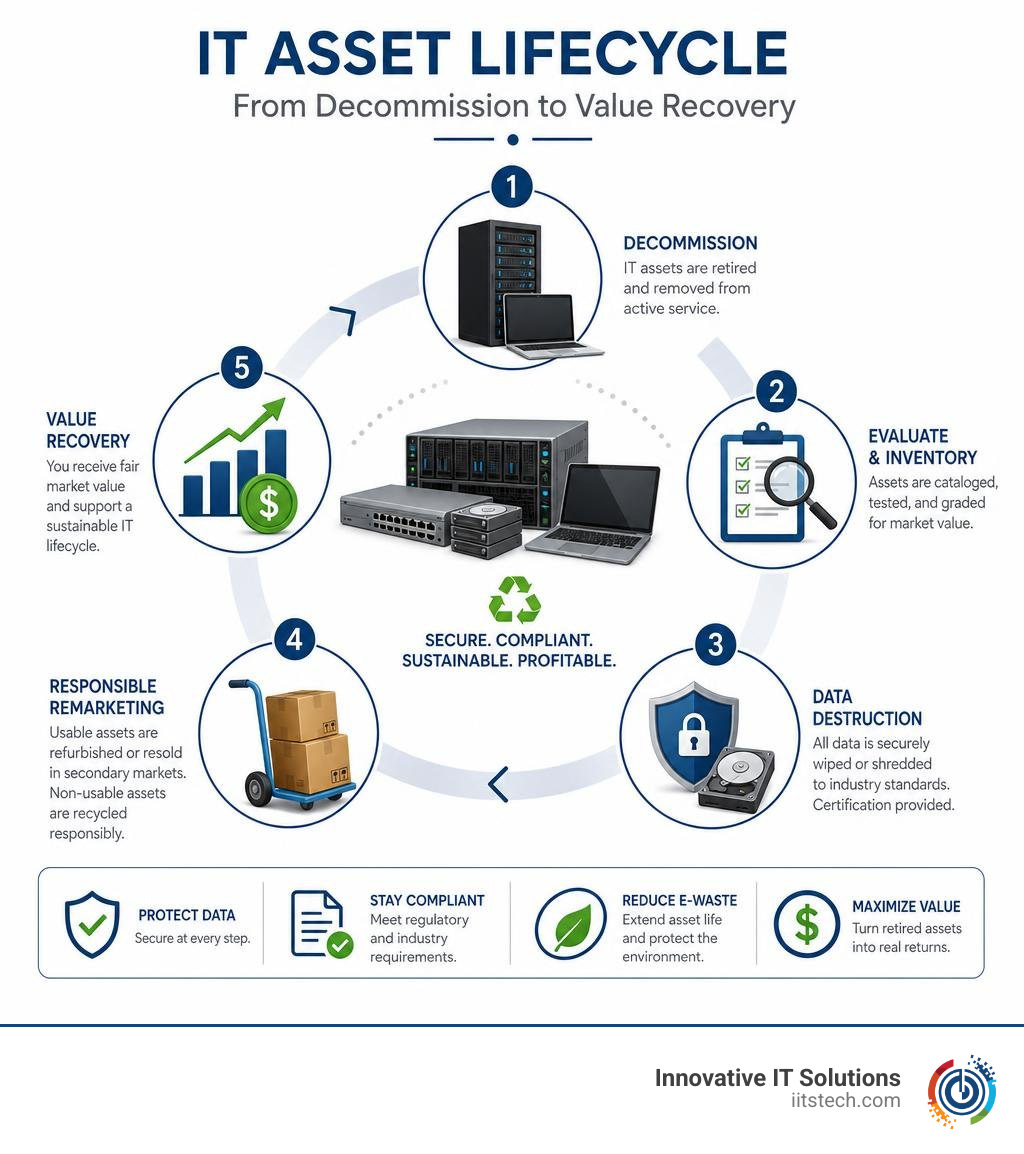
What Types of Business Hardware Can You Sell?
When preparing to sell used IT equipment, many organizations are surprised by the variety of hardware that holds secondary market value. While consumer electronics depreciate to zero almost instantly, enterprise-grade gear is built to last. It is highly sought after by secondary markets, refurbishers, and businesses looking to stretch their budgets.
To maximize your return, it helps to understand what we buy and how different categories perform on the secondary market. You can also explore The Pros of Used Cisco Equipment to see why refurbished enterprise-grade gear remains highly desirable.
Enterprise Servers and Storage Arrays
Enterprise servers and high-capacity storage systems represent the gold standard of value recovery. Whether you are decommissioning a single rack in South OKC or clearing out a massive data center in downtown Oklahoma City, these assets are highly liquid. We routinely purchase:
- Rack and Blade Servers: 1U, 2U, and 4U systems from major manufacturers.
- Storage Arrays: SAN and NAS systems, expansion shelves, and controllers.
- Key Components: High-density server RAM (DDR4 and DDR5), Intel Xeon and AMD EPYC CPUs, enterprise-grade SSDs (SATA, SAS, NVMe), and high-capacity HDDs.
In 2026, server memory and enterprise storage are commanding premium prices due to global manufacturing shifts and the high resource requirements of modern software stacks.
How to Sell Used IT Equipment in the Networking Category
Networking hardware is incredibly resilient and holds its value far longer than standard computing nodes. Because core routing and switching technologies do not change overnight, older generations of enterprise networking gear remain highly functional for secondary users.
If you want to Learn How to Sell Your Used Cisco Equipment Easily, focusing on the most common lines is key. The secondary market has a massive appetite for:
- Managed Switches: Fixed-configuration and modular switches, particularly Cisco Catalyst (e.g., 9000-series, 3850s) and Nexus platforms. Cisco maintains approximately 25% of the used equipment market, making it the easiest brand to liquidate.
- Enterprise Routers: Core and edge routers capable of handling heavy corporate traffic.
- Security Appliances & Firewalls: Next-generation firewalls and VPN concentrators.
- Wireless Infrastructure: Controller-based wireless access points (APs) and dedicated wireless controllers.
Corporate Laptops, Desktops, and Workstations
When your organization goes through a fleet refresh, disposing of hundreds of employee laptops individually is a logistical nightmare. However, selling them in bulk to a certified partner is highly profitable.
- Enterprise Laptops: Business-class notebooks (such as Lenovo ThinkPads, Dell Latitudes, and HP EliteBooks) are highly prized because they are durable and easy to refurbish.
- High-End Workstations: Systems used for CAD, engineering, or software development command great prices due to their robust processors and dedicated graphics.
- Apple Devices: MacBooks, iMacs, and iPads hold their residual value significantly better than Windows-based hardware. Even three-year-old Apple devices can claw back a substantial portion of their original purchase price.
How to Determine the Value of Your Used IT Assets
Determining the exact value of your retired hardware isn’t a guessing game. It requires a clear understanding of market dynamics, depreciation curves, and technical specifications.
Key Valuation Factors: Age, Brand, and Configuration
Unlike standard corporate assets that depreciate over a straight five-year line, enterprise IT hardware depreciates dynamically. On average, standard enterprise equipment depreciates at a rate of 15% to 25% per year (or roughly 3% to 5% every month it sits in a warehouse).
The most critical valuation factors include:
- The “Generation Cliff”: The moment a manufacturer releases a new generation of hardware (such as a new generation of server CPUs or DDR memory), the resale value of the previous generation drops sharply.
- Configuration and Completeness: A server complete with its original rails, dual power supplies, drive caddies, and bezels is worth significantly more than a bare-bones chassis.
- Brand Reputation: Tier-1 brands like Cisco, Dell, HP, and Apple command a premium because secondary buyers trust their build quality and long-term reliability.
High-Demand Hardware in 2026
In July 2026, the secondary IT market is experiencing unprecedented demand for specific hardware categories. If your inventory contains any of the following, you can expect exceptionally high payouts:
- AI/ML Hardware: High-performance GPUs (especially NVIDIA enterprise models like the H100, A100, or L40S) are in extremely short supply. In some cases, these assets sell near or even above their original wholesale price.
- NVMe Storage: High-capacity enterprise NVMe SSDs have largely replaced traditional SAS drives in high-performance environments, driving up secondary market demand.
- DDR5 Server Memory: As businesses upgrade their virtualization infrastructure, high-density DDR5 RAM modules are highly sought after.
The Best Channels to Sell Used IT Equipment
Where you choose to sell your hardware determines your financial return, your administrative workload, and your level of legal risk.
| Selling Channel | Best For | Data Security & Compliance | Payout Speed | Effort Required |
|---|---|---|---|---|
| Certified ITAD Vendors | Bulk enterprise hardware, regulated industries | Highest (NIST 800-88, R2v3, NAID AAA) | Fast (48-72 hours post-audit) | Lowest (Full-service logistics) |
| Online Marketplaces | Single items, consumer-grade gear | Low (Self-managed wiping required) | Slow (Depends on buyers) | Highest (Listing, packing, shipping) |
| Brokers & Dealers | Quick cash liquidations, non-regulated gear | Medium (Varies by broker) | Rapid (Often upfront) | Medium (Negotiation required) |
| OEM Trade-In Programs | Upgrading with the exact same manufacturer | High (Standard OEM processes) | Very Slow (Applied as future credit) | Medium (Rigid return shipping rules) |
Certified ITAD Vendors vs. Online Marketplaces
For any business with more than a handful of laptops, the choice between a certified IT asset disposition (ITAD) vendor and an online marketplace like eBay is clear.
Online marketplaces can sometimes yield slightly higher gross prices for individual, high-demand items, but they come with massive operational costs. You must catalog, photograph, list, package, and ship every single item. Even worse, you bear 100% of the liability if a drive is not wiped properly, and marketplace transaction fees can eat up 13% to 15% of your final sale price.
Partnering with a certified ITAD vendor like Innovative IT Solutions shifts the operational burden and liability away from your team. We provide a secure, documented chain of custody, bulk liquidation capabilities, and certified data erasure. To learn how to navigate this selection process, read our A Professional Guide to IT Asset Liquidation and Vendor Selection.
Understanding the Limitations of Trade-Ins and Brokers
While OEM trade-in programs and independent broker networks offer alternative paths, they have distinct limitations:
- OEM Trade-Ins: Manufacturers want you to trade in your old hardware for credit toward new purchases. However, these trade-in valuations are typically much lower than fair market value, and you are locked into their specific ecosystem.
- Brokers: Traditional brokers act as middlemen. They buy your gear cheap, find a buyer, and pocket the spread. Direct ITAD buybacks eliminate the middleman, passing those financial savings directly back to your business.
Data Security and Compliance: The Non-Negotiable Requirements
You cannot discuss selling used IT equipment without addressing data security. If your retired hard drives, SSDs, or networking switches (which contain configuration files and local credentials) fall into the wrong hands, the financial and reputational consequences can be devastating.
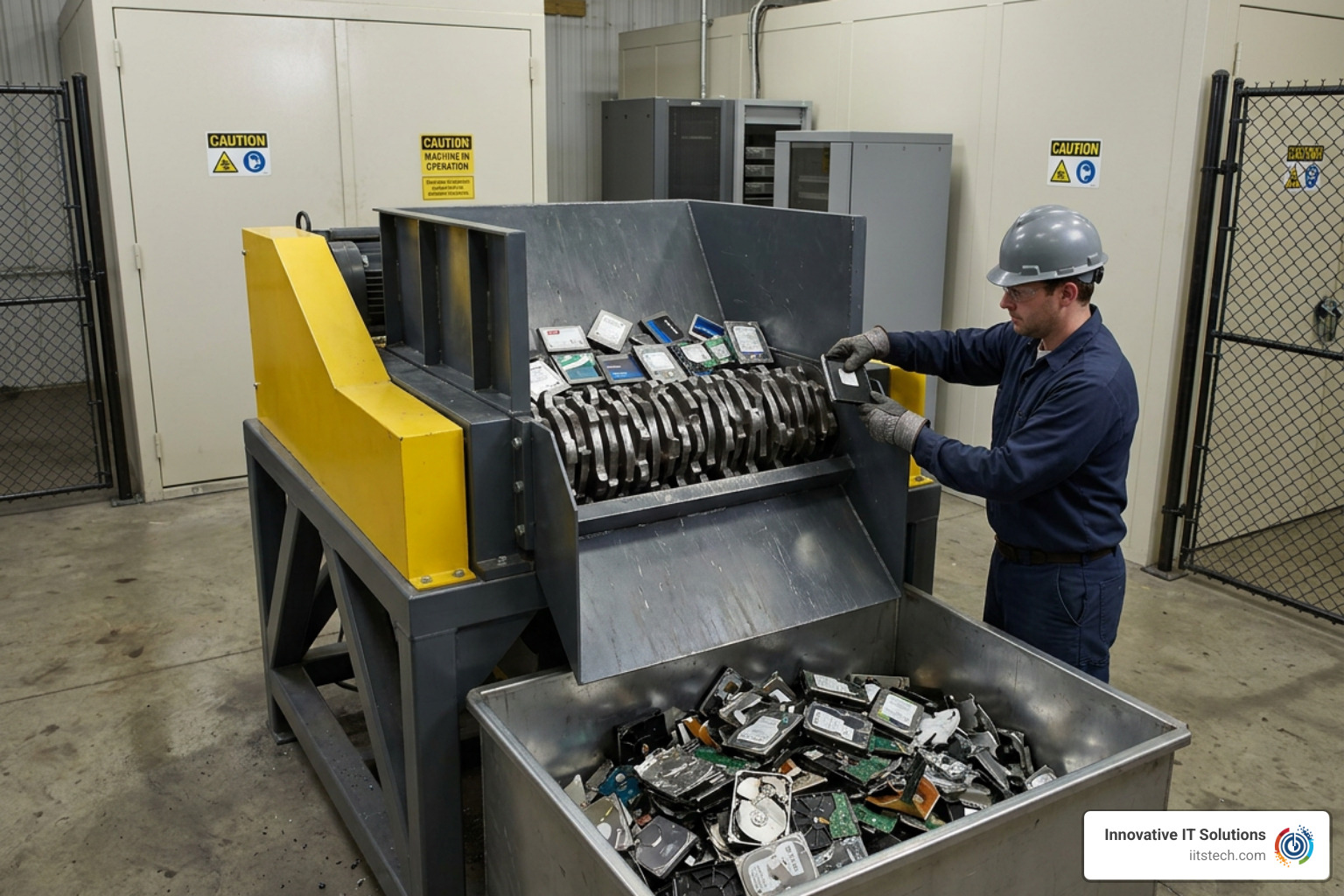
Understanding NIST 800-88 and Sanitization Standards
The gold standard for data destruction is the NIST Special Publication 800-88 Rev. 1 (Guidelines for Media Sanitization). This framework outlines three acceptable levels of data destruction:
- Clear: Overwriting storage media using logical techniques to prevent simple data recovery.
- Purge: Utilizing physical or logical techniques (such as degaussing or advanced cryptographic erasure) to make target data recovery impossible using state-of-the-art laboratory techniques.
- Destroy: Physical destruction of the media (such as industrial shredding, disintegration, or incineration) to prevent any reuse of the drive.
At Innovative IT Solutions, we utilize advanced, ADISA-certified erasure software supporting all major sanitization standards to ensure your drives are safely cleared or purged, allowing you to recover their hardware value without risking your data.
Regulatory Frameworks: HIPAA, GDPR, PCI-DSS, and SOC 2
Depending on your industry, improper disposal of IT assets can lead to massive regulatory fines.
- HIPAA (Healthcare): Requires strict physical and logical safeguarding of electronic Protected Health Information (ePHI) during asset retirement.
- GDPR (Global/European): Article 17 (“Right to Erasure”) requires absolute proof that personal data has been permanently destroyed.
- PCI-DSS (Retail/Finance): Requirement 9.8 mandates that cardholder data on retired assets must be rendered completely unrecoverable.
- SOC 2 (Technology/SaaS): Audits evaluate your documented physical and logical security controls, including how you dispose of retired infrastructure.
To ensure your business remains compliant across all these frameworks, check out our guide on How to Sell Your Used IT Equipment Without Getting Burned.
Essential Documentation: Certificates of Destruction and Serialized Audits
A reputable ITAD provider must provide a verifiable audit trail. When we process your hardware, we generate comprehensive compliance records, including:
- Serialized Inventory Reports: A complete list of every asset processed, tracking its make, model, serial number, and final disposition.
- Certificates of Data Sanitization / Destruction: Legally binding documents proving that the data on each specific drive (identified by serial number) was successfully destroyed or wiped to NIST 800-88 standards.
Step-by-Step Process for Enterprise Asset Recovery
At Innovative IT Solutions, we have spent years refining our asset recovery workflow to make it as simple, secure, and fast as possible for Oklahoma businesses. Here is exactly what the process looks like from start to finish.
Step 1: Inventory and Documentation
The secret to getting a fast, highly accurate quote is proper preparation. Before reaching out, compile a detailed spreadsheet of the equipment you wish to sell.
- What to Include: Manufacturer, exact model number, hardware configuration (CPU, RAM size, storage drive count/capacity), and physical condition.
- Pro Tip: Take clear, high-resolution photographs of the equipment, focusing on manufacturer labels, port configurations, and any physical cosmetic wear. Proper preparation can increase your initial valuation offers by 20% to 30%.
Step 2: Logistics, Pickup, and Chain of Custody
Once you accept our initial valuation, our logistics team takes over. For businesses throughout Oklahoma City, South OKC, and the surrounding regions, we coordinate secure, professional transport.
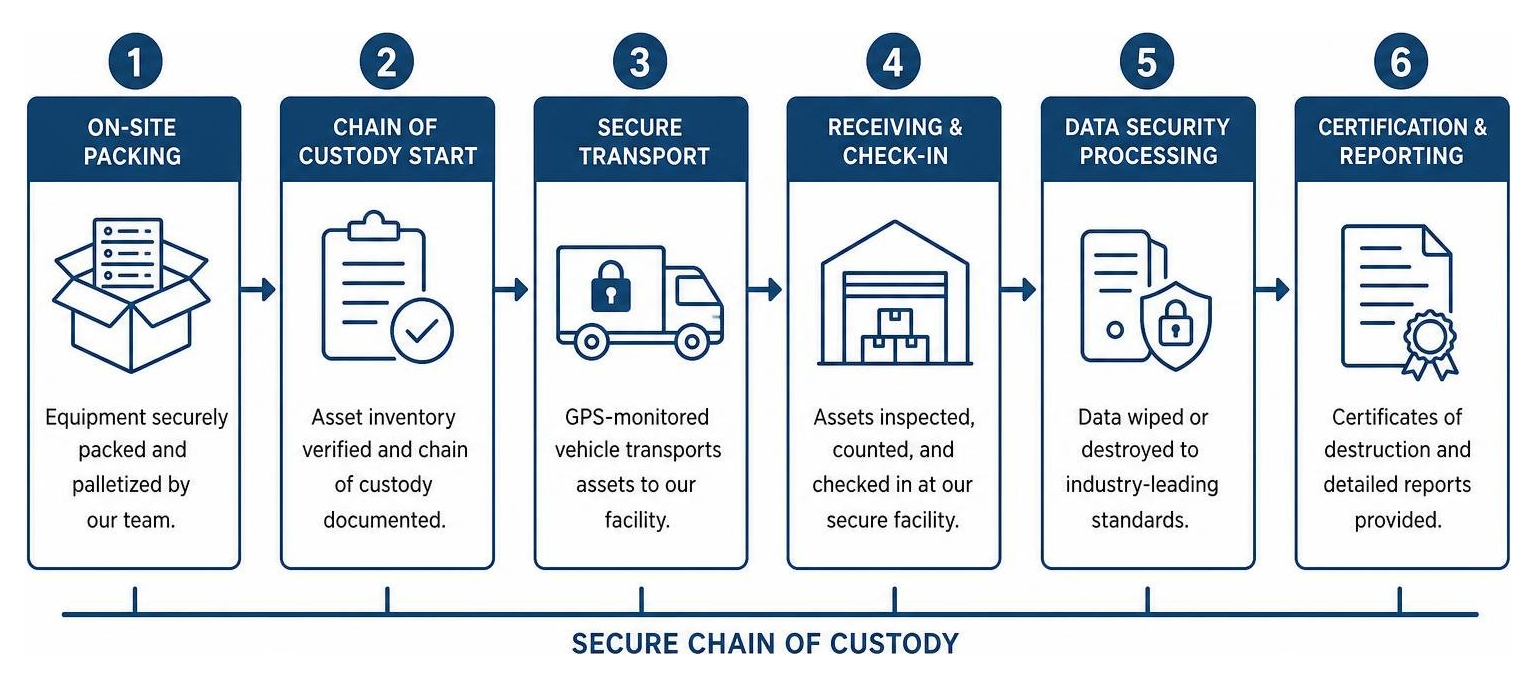
Our logistics services include:
- On-Site Packing & Palletizing: Our trained technicians come directly to your facility, carefully pack your delicate server and networking components, and palletize them securely.
- High-Rise and Corporate Logistics: We are fully insured and experienced in navigating the unique challenges of downtown OKC office buildings, including freight elevator coordination, strict dock schedules, and union building requirements.
- Secure Chain of Custody: From the moment our team touches your hardware, it is tracked, locked, and transported in GPS-monitored vehicles directly to our secure processing facility.
Step 3: Testing, Data Erasure, and Payout
Once your equipment arrives at our facility, our technicians perform a thorough audit:
- Verification: We verify the physical assets against your inventory list.
- Testing: Every component is tested for functionality. Functional hardware is set aside for certified data sanitization and resale, while non-functional components are routed to our EPA-compliant, zero-landfill recycling stream.
- Data Erasure: All storage media is wiped or physically destroyed to NIST 800-88 standards.
- Rapid Payout: Within 48 to 72 hours of completing the audit, we issue your final payout via secure ACH, wire transfer, or business check, along with your official Certificates of Destruction.
Environmental and Financial Benefits of Asset Recovery
Choosing to sell used IT equipment isn’t just a smart financial play — it is also one of the most impactful sustainability initiatives your organization can undertake.

Maximizing Financial Returns and ROI
Enterprise IT budgets are constantly under pressure. By partnering with us for asset recovery, you can unlock significant capital hidden in your server closets.
Our enterprise clients typically recover $30,000+ per IT asset retirement project. This recovered capital can be directly reinvested into your business, helping to offset the cost of your upcoming hardware refresh cycles. To understand how to optimize this process, read our comprehensive guide on Maximizing Value from Obsolete IT Equipment and Asset Recovery.
For more details on how these financial returns can support your business, see The Business Benefits of Selling Your Used IT Equipment.
Circular Economy and Reducing E-Waste
The environmental cost of modern technology is staggering. In 2022, the world generated 62 million tonnes of e-waste, containing toxic materials like lead, mercury, and cadmium.
When you choose to resell your functional hardware rather than dump it in a landfill, you participate in the circular economy. Extending the lifespan of enterprise hardware reduces the demand for raw material extraction and prevents hazardous waste from polluting our ecosystems.
If you are wondering whether it is better to recycle or resell your older hardware, explore our detailed breakdown: Is It Better to Recycle or Resell Old IT Equipment?. And remember, even broken or obsolete gear holds value; learn more in our guide: Don’t Throw It Away – Turn Your Broken Electronics into Cold Hard Cash.
Frequently Asked Questions about Selling IT Hardware
How do I safely sell used IT equipment with sensitive data?
To safely sell used IT equipment, you must partner with an ITAD vendor that utilizes NIST 800-88 compliant sanitization processes. Never rely on standard operating system formatting, which leaves data easily recoverable. Ensure your vendor provides a legally binding, serialized Certificate of Destruction for every hard drive or SSD processed.
What certifications should I look for in an ITAD vendor?
At a minimum, you should only work with vendors holding the following industry certifications:
- R2v3 (Responsible Recycling): The leading global standard for electronics recycling and reuse.
- NAID AAA: The gold standard for secure data destruction, which includes unannounced audits.
- ISO 9001, 14001, and 45001: Standards ensuring quality management, environmental responsibility, and occupational health and safety.
Can we sell leased or financed IT equipment?
No, you cannot sell equipment that you do not legally own. Before starting the buyback process, verify your ownership status and ensure any active financing liens are fully cleared. If you are managing leased hardware, we can assist with secure data sanitization and coordinate the logistics of returning the wiped assets directly to your leasing company.
Conclusion
Leaving your retired IT assets to collect dust in a storage room is a costly mistake. Every month of delay results in a 3% to 5% loss in hardware value, while exposing your business to unnecessary data security and compliance risks.
At Innovative IT Solutions, we make it easy for businesses in Oklahoma City, South OKC, and across the state to turn retired hardware into real capital. Our NIST/DoD-compliant, zero-landfill, and EPA-compliant processes guarantee that your data is completely destroyed, your environmental footprint is minimized, and your financial return is maximized.
Are you ready to clear out your server room and recover your hidden capital?
Sell Your Gear today! Request your fast, no-obligation line-item valuation by visiting our Innovative IT Solutions Asset Recovery Portal.


