
Where to Recycle Server Hardware Near You
If your facilities team is searching for satellite dish recycling near me, the fastest path is a certified commercial electronics recycler or IT asset disposition (ITAD) provider that handles bulky commercial comms equipment alongside retired server hardware. Most municipal drop-off programs will turn away commercial communications hardware and data center arrays, so look for a facility equipped to process business-grade equipment. Ask whether they offer pickup, secure data sanitization for any attached networking gear, and documentation showing how your equipment was handled before you arrange drop-off.
I’m Mike Haden, founder of Innovative IT Solutions, and I’ve spent 14 years helping organizations reuse and recycle retired IT hardware through an R2v3-certified ITAD operation. While satellite dishes and other rooftop comms gear sometimes get decommissioned at the same time as server rooms and data closets, enterprise servers demand dedicated commercial electronics recycling. Navigating certified electronic recycling programs ensures that complex components, including motherboards and dedicated circuit board recycling streams, are handled safely.
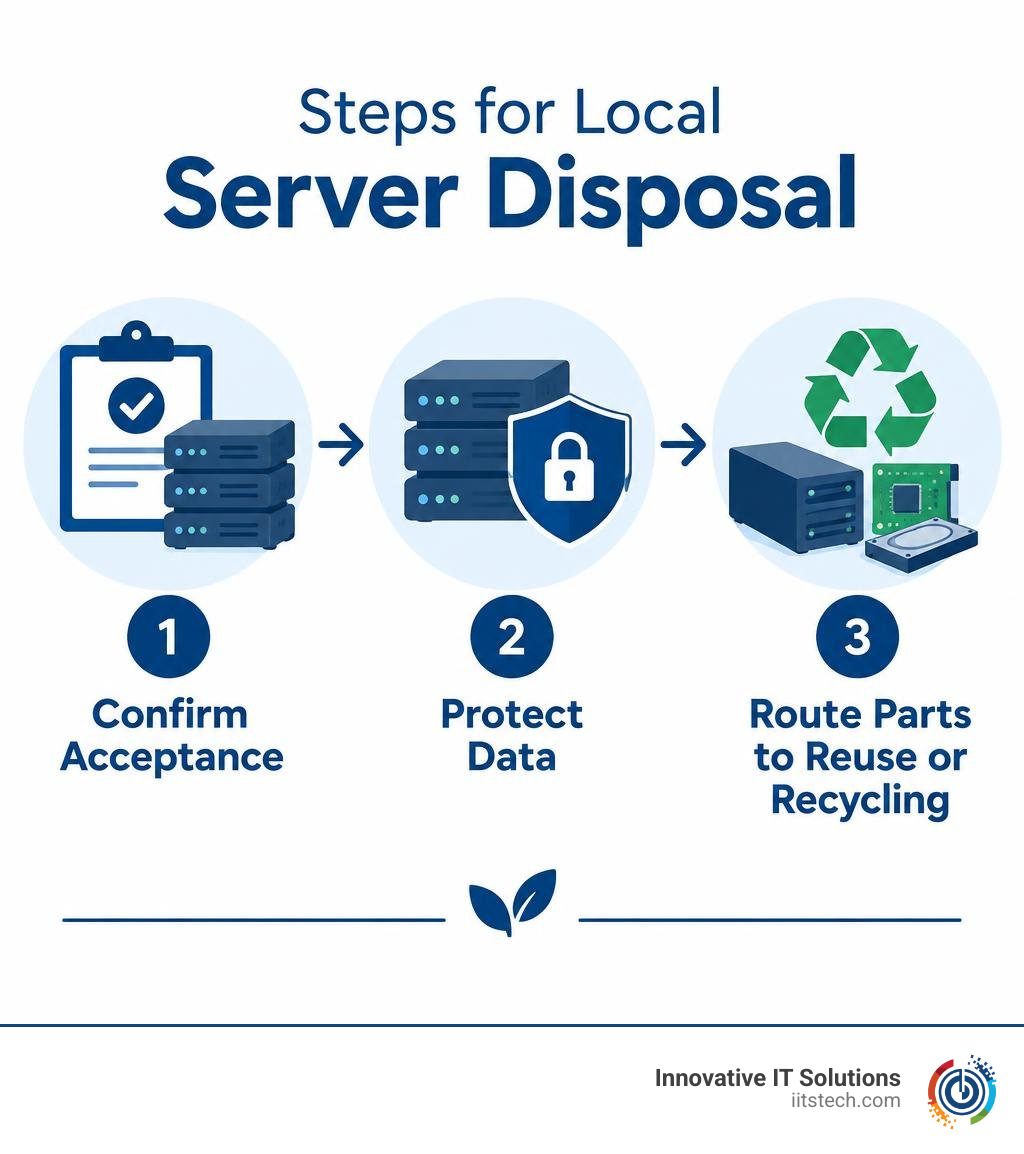
How to Prepare Server Hardware for Safe Disposal

Retiring enterprise infrastructure requires a disciplined approach. Enterprise computers, blade servers, and rackmount chassis house sensitive company data and dense, high-grade recyclable materials. Proper preparation ensures that your company protects proprietary records while maximizing material recovery.
Before shipping equipment off-site or bringing it to a processing depot, follow these foundational preparation steps:
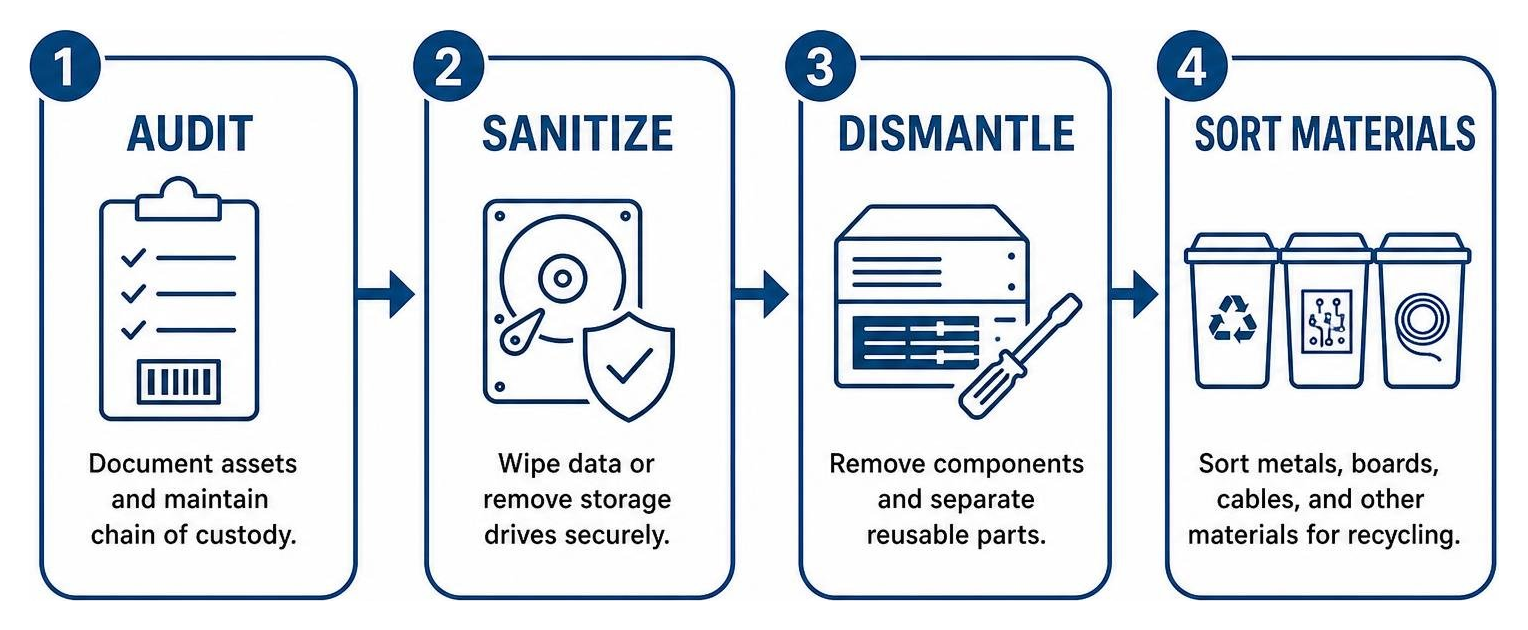
- System Auditing and Asset Tagging: Document the serial numbers, asset tags, model types, and specifications of every computer and server slated for disposal. Maintaining this chain of custody is essential for corporate compliance.
- Data Sanitization and Storage Drive Removal: Decide whether storage media (NVMe drives, SAS HDDs, solid-state arrays) will undergo NIST 800-88 or DoD-compliant software wiping on-site, or if you will physically pull the drives for dedicated mechanical destruction.
- Chassis Disassembly and Separation: Detach server rails, power supply units (PSUs), optical drives, and high-density memory sticks (RAM). Sorting components streamlines the testing of reusable parts and the routing of raw materials.
- Cabling and Peripheral Segregation: Disconnect and bundle internal SAS cables, copper Ethernet lines, high-speed fiber patch cords, and server management modules. Copper cabling represents clean, highly recyclable material streams that should not end up crushed inside a metal frame.
Understanding how to dispose of electronic waste properly prevents hazardous heavy metals from entering regional waste systems and keeps your organization aligned with EPA electronics management guidelines.
| Server Hardware Material / Part | Primary Composition | Recommended Recycling / Processing Pathway |
|---|---|---|
| Server Chassis & Enclosures | Steel, Aluminum, Sheet Metal | Clean scrap metal smelting and recovery |
| Motherboards & Daughterboards | Fiberglass (FR4), Copper, Precious Metals | Smelting / Refining via certified electronics recyclers |
| Server Power Supplies (PSUs) | Steel casing, Copper coils, Capacitors | Commodity recovery or resale if operational |
| Enterprise Storage Drives (HDD/SSD) | Aluminum platters, Rare-earth magnets, Flash memory | On-site mechanical shredding / NIST-compliant sanitization |
| High-Density Server Memory (RAM) | Gold plating, Silicon, Printed Circuit Boards | Direct resale / refurbishment or board-level metal recovery |
| Copper & Patch Cabling | High-grade copper wiring, PVC / plenum insulation | Granulation, wire stripping, and pure copper reclamation |
Best Options for Server Hardware Disposal Near Me
When searching for reliable corporate disposal solutions in Oklahoma City, businesses have several proven pathways. Commercial operations cannot afford to simply drop enterprise IT infrastructure at unverified scrap bins; server hardware demands strict accountability, verified physical security, and documented zero-landfill processing.
Organizations managing decommissioned servers generally select between three core solutions:
- Certified ITAD Providers: Turnkey providers manage the entire lifecycle of retiring hardware, including logistics, serialized inventorying, physical destruction of storage media, and asset recovery value-back programs.
- Commercial Electronics Recyclers: Facilities configured to process enterprise hardware scrap, server chassis, and printed circuit boards safely into clean commodity streams. Reviewing our guide to electronics recycling drop-off locations helps identify facilities capable of handling business-grade volumes.
- Direct Enterprise Drop-Off Facilities: Dedicated business depots where IT managers can deliver palletized systems directly. If you need a regional facility for commercial tech, check our resource on local e-waste depots to verify local acceptance policies before loading your fleet.
ITAD Providers and Electronics Recyclers Accepting Server Hardware
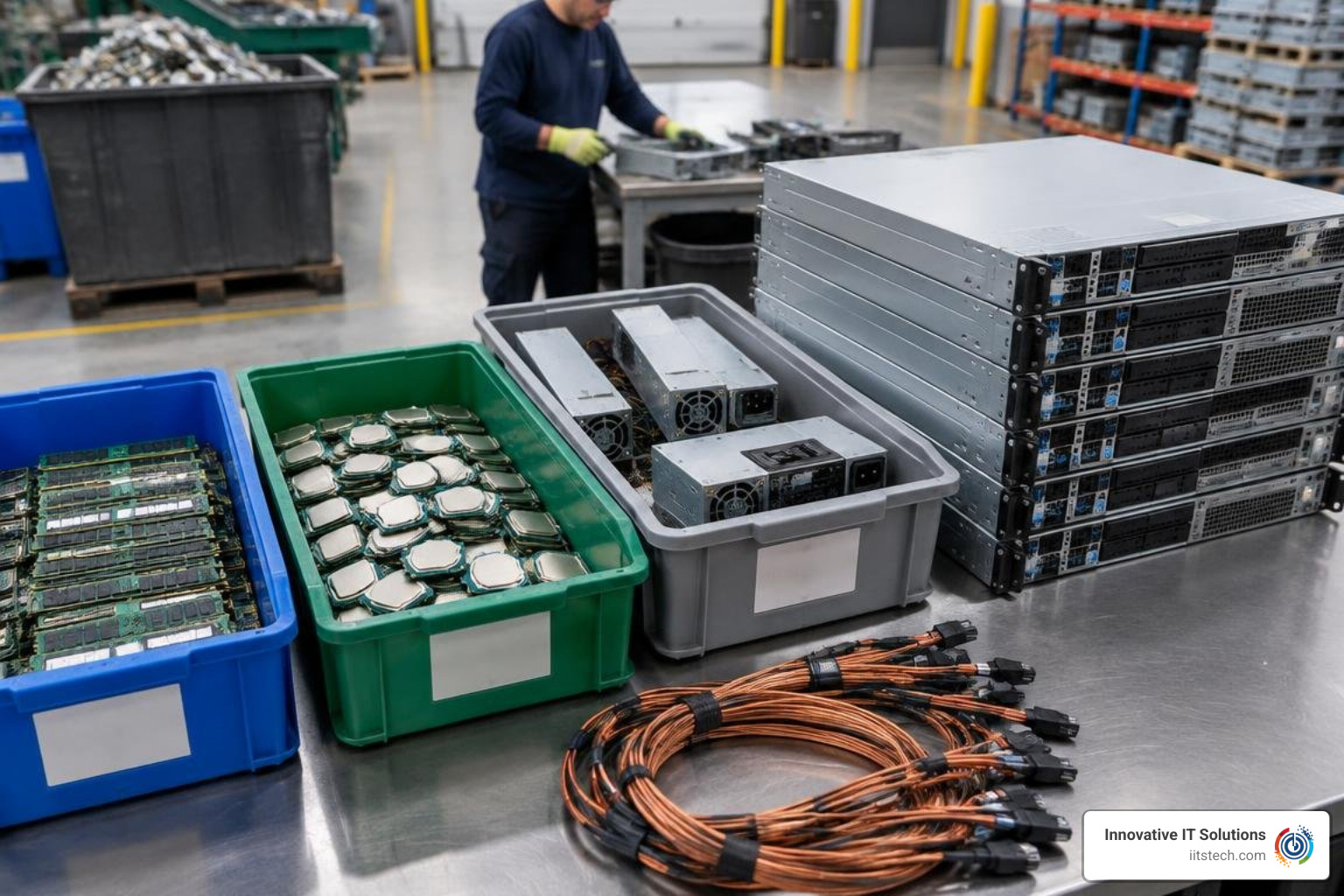
Professional ITAD operations deliver specialized value by separating equipment meant for material recycling from assets viable for refurbishment and secondary-market resale. Modern data centers rotate enterprise servers every three to five years. In many instances, enterprise motherboards, high-capacity DDR4/DDR5 ECC RAM, and high-wattage power supplies retain substantial secondary market value.
When hardware reaches end-of-life and can no longer be redeployed, certified recyclers shred and sort the equipment mechanically:
- Chassis Smelting: Structural aluminum and cold-rolled steel casings are pressed, sheared, and routed to secondary foundries.
- Circuit Board Refining: Enterprise-grade printed circuit boards contain higher concentrations of gold, silver, palladium, and copper than standard commercial boards. Specialized recovery processes extract these raw materials under closed-loop, EPA-compliant standards.
- Zero-Landfill Guarantee: Certified handlers ensure that toxic substances like lead solders and hazardous flame retardants never touch local soil or groundwater.
How to Find Server Hardware Disposal Near Me Using Local Directories
Finding commercial recycling depots across Oklahoma requires evaluating whether a facility accepts bulky enterprise technology. Many municipal recycling operations will turn away heavy server racks, battery backups, and commercial blade enclosures.
To pinpoint the right commercial disposal partner:
- Check Commercial IT Directories: Consult certified directories (such as SERI R2v3 or e-Stewards) to confirm verified handling capabilities for commercial-grade IT infrastructure.
- Verify Drop-Off Requirements: Commercial recyclers frequently require prior appointment scheduling, minimum volume thresholds, or pre-sorted bill-of-lading documentation for palletized IT loads.
- Confirm Security Protocols: Ensure the chosen location provides locked, monitored storage for dropped equipment prior to processing.
Certified ITAD Services and Business Equipment Drop-Off
Working directly with a certified provider removes legal and regulatory liability from your company’s shoulders. When you drop off enterprise computers and server systems at an authorized ITAD facility, you receive:
- Serialized Certificates of Destruction (COD): Legally binding documentation validating that storage drives, solid-state media, and serialized circuit boards were completely destroyed in compliance with NIST 800-88 standards.
- Environmental Compliance Records: Proof that all non-reusable materials were recycled following EPA regulations, protecting your business against improper e-waste disposal fines.
- Asset Value Recovery Statements: Clear financial tracking documenting any capital recouped from refurbished hardware components sold back into enterprise channels.
Professional Removal and Hauling vs. DIY Server Recycling
IT directors and facility managers often face a choice when clearing out a server room: should internal staff dismantle and transport the hardware, or is it better to contract a specialized ITAD logistics team?
Handling server decommissioning internally may appear cost-effective at first glance, but enterprise hardware presents unique physical risks:
- Substantial Unit Weight: Standard 2U, 4U, and enterprise blade servers weigh anywhere from 40 to 120 pounds each, while fully loaded server cabinets exceed 1,500 pounds. Lifting, unmounting, and hauling multiple units without hydraulic server lifts creates severe workplace injury risks.
- Facility and Structural Protection: Moving heavy equipment across raised data center floors, narrow corridors, and freight elevators risks damaging structural tiles, doorframes, and internal power distribution conduits.
- Chain-of-Custody Gaps: Transporting enterprise data drives in unsecured company vehicles exposes your organization to severe data breach liabilities before the assets ever arrive at a recycling depot.
By partnering with professional ITAD teams for commercial pickup, businesses ensure that server racks are decommissioned safely using certified rigging equipment, wrapped in tamper-evident secure transit containers, and transported directly to certified electronics recycling locations.
Frequently Asked Questions about Server Hardware Disposal
Can I put decommissioned server hardware in the regular garbage?
No. Commercial servers and computer components contain hazardous materials—including lead, mercury, cadmium, and brominated flame retardants—that are strictly prohibited from municipal landfills by federal and state environmental regulations. Furthermore, tossing server hardware into regular trash bins creates massive data security risks if data drives remain unsterilized. Businesses facing audit scrutiny can incur severe financial penalties for illegal electronic waste disposal.
Are there drop-off fees for recycling server hardware?
Drop-off fees depend on the age, condition, and configuration of your equipment. Outdated, low-grade hardware or individual, damaged components may carry modest processing fees to cover environmental separation and compliant hazardous waste management. However, functional enterprise computers, complete blade systems, and modern server memory often qualify for asset recovery programs, where component resale values offset or completely eliminate processing costs—often yielding a net financial return to your business.
How should I handle server hardware that is difficult to remove?
When enterprise servers are mounted high on dense server racks, locked behind complex cable harnesses, or located in hard-to-access server rooms, avoid attempting solo removals without proper rigging. Use mechanical server lifts and specialized unmounting tools, and always have at least two technicians present. If the installation poses structural or physical safety risks, engage a professional ITAD removal team equipped with heavy-duty lifting gear, anti-static packing materials, and secure freight transports to safely deconstruct the infrastructure.
Conclusion
Managing retired corporate technology responsibly is a vital operational duty for any modern business. By choosing certified IT asset disposition and professional recycling pathways, you safeguard your company’s proprietary data, maintain complete regulatory compliance, and support a circular economy through advanced materials recovery.
At Innovative IT Solutions, we deliver NIST- and DoD-compliant data destruction, transparent asset tracking, and zero-landfill electronic hardware recycling from our state-of-the-art facilities in Oklahoma City. Contact our team today to explore our comprehensive commercial electronics and IT asset recycling services and discover how we can optimize your organization’s next hardware refresh.


