
Finding the Right Collection Option for Retired Business Hardware
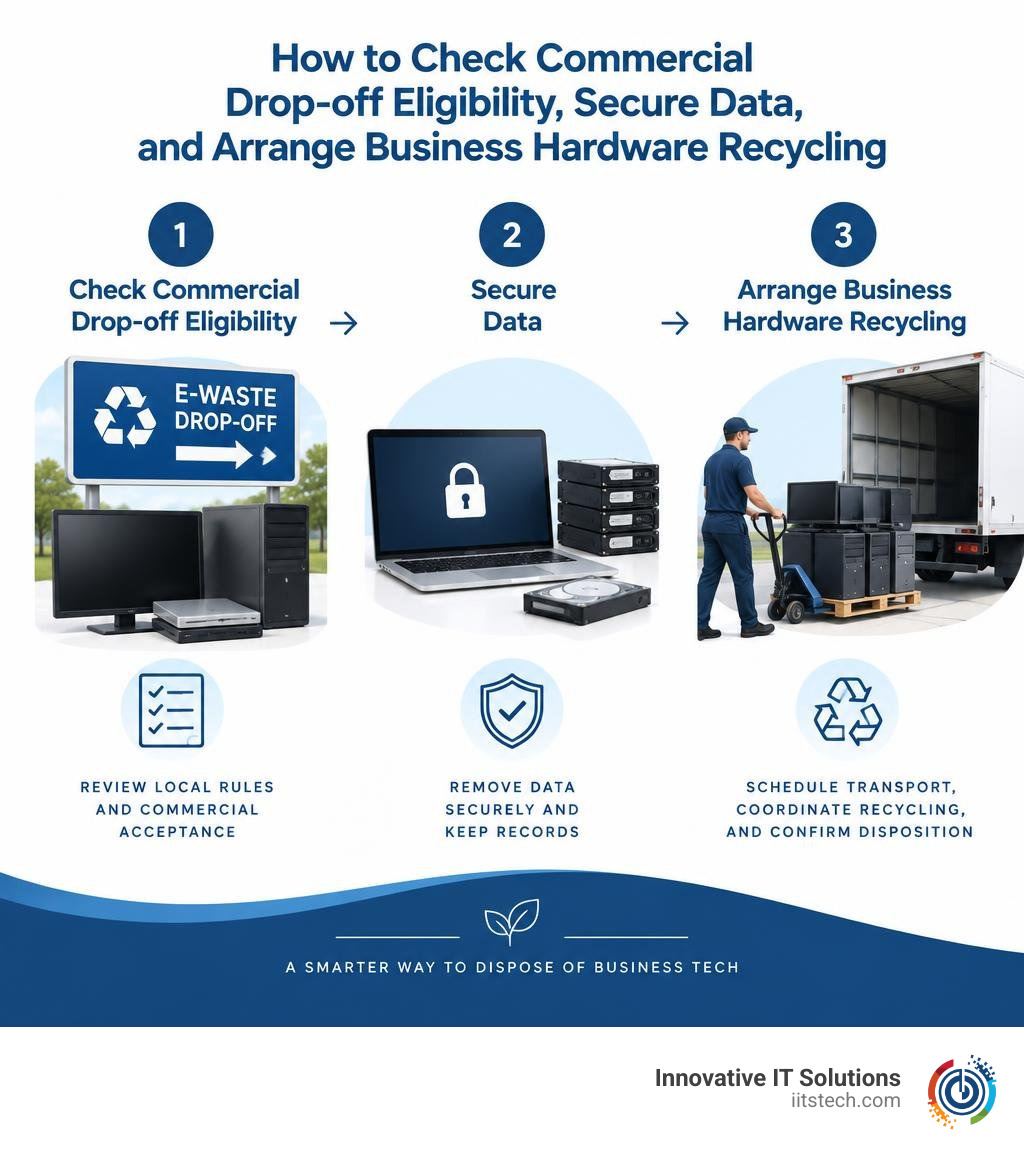
Looking for local electronics collection? A search for free tv recycling may surface general e-waste programs, but businesses retiring computers and servers need a collection option built for commercial equipment. Start with your county’s e-waste drop-off or collection events, but check the rules before you go. A standard program may exclude commercial hardware, limit quantities, or charge for business items. If you’re clearing out business computers or server components, ask whether the site accepts commercial equipment and data-bearing drives. Enterprise IT assets require specialized handling, certified data security, and regulatory compliance.
For a larger IT refresh, the bigger question is not just where the hardware goes. You also need a plan for transport, secure data removal, and records of what happened to each device.
I’m Mike Haden, founder of Innovative IT Solutions. Over 14 years in IT asset disposition, I’ve helped organizations manage retired business hardware; here, I’ll show why a search for local electronics collection may be only the first step toward the right collection plan.
Related content about business electronics collection:
Upgrading Enterprise Hardware: Managing Business Computers and Server Components

When upgrading corporate IT infrastructure, managing the end-of-life lifecycle for enterprise assets is just as critical as rolling out new machines. Companies frequently replace high-performance workstations, rackmount server blades, network switches, and uninterruptible power supplies (UPS). Without a structured disposition strategy, these retired assets quickly clutter storage rooms, tie up capital, and introduce compliance liabilities.
Handling commercial volumes demands a systematic approach that aligns with environmental standards and regulatory mandates. Organizations must evaluate e-waste recycling for businesses to ensure every retired asset—from desktop towers to modular blade enclosures—is processed through legal, secure, and environmentally responsible channels.
Eligibility and Guidelines for Local Computer and Server Hardware Collection
Not every local electronics drop-off accepts commercial-grade infrastructure. Public depots and community collection drives often enforce strict limitations on both the volume and types of business IT assets they can accept.
Before transporting retired business hardware to a collection point, IT managers should verify several critical guidelines:
- Commercial Quantity Thresholds: Public drop-offs often enforce daily caps on the number of items or total weight allowed per organization.
- Accepted Component Types: Standard collection sites might accept desktop PCs and monitors but reject rackmount server chassis, modular storage arrays, or enterprise battery backups.
- Data Security Disclaimers: Public depots generally do not assume liability for remaining data on hard drives or enterprise storage media.
- Proof of Compliance: Municipal sites rarely supply serialized destruction certificates or audit documentation required for corporate regulatory compliance.
Municipal Collection Standards and Commercial Drop-Off Rules
City and county transfer stations establish strict rules to manage electronic waste efficiently. While some local authorities partner with municipal programs to support small business recycling, high-volume IT disposals typically exceed standard public capacity.
Understanding how to dispose of electronic waste through certified channels prevents administrative fines and keeps commercial hardware out of landfills. Many local programs require pre-registration for commercial drop-offs, restrict intake hours, or levy weight-based processing fees for bulk IT hardware. If your organization operates in commercial corridors across Oklahoma City, partnering directly with a dedicated IT asset disposition (ITAD) provider ensures your retired workstations and server infrastructure are processed under fully compliant standards.
Decommissioning Server Racks, Workstations, and Business Computers
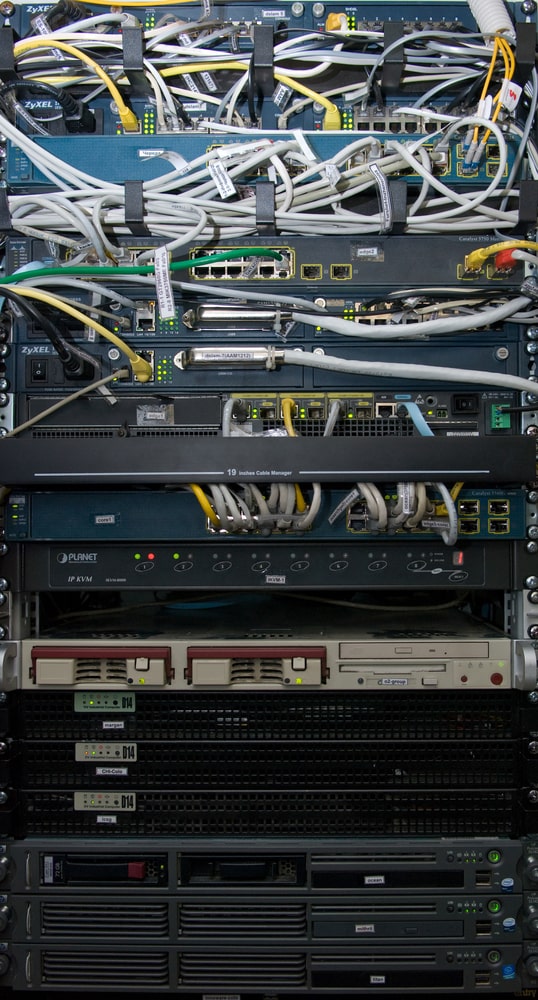
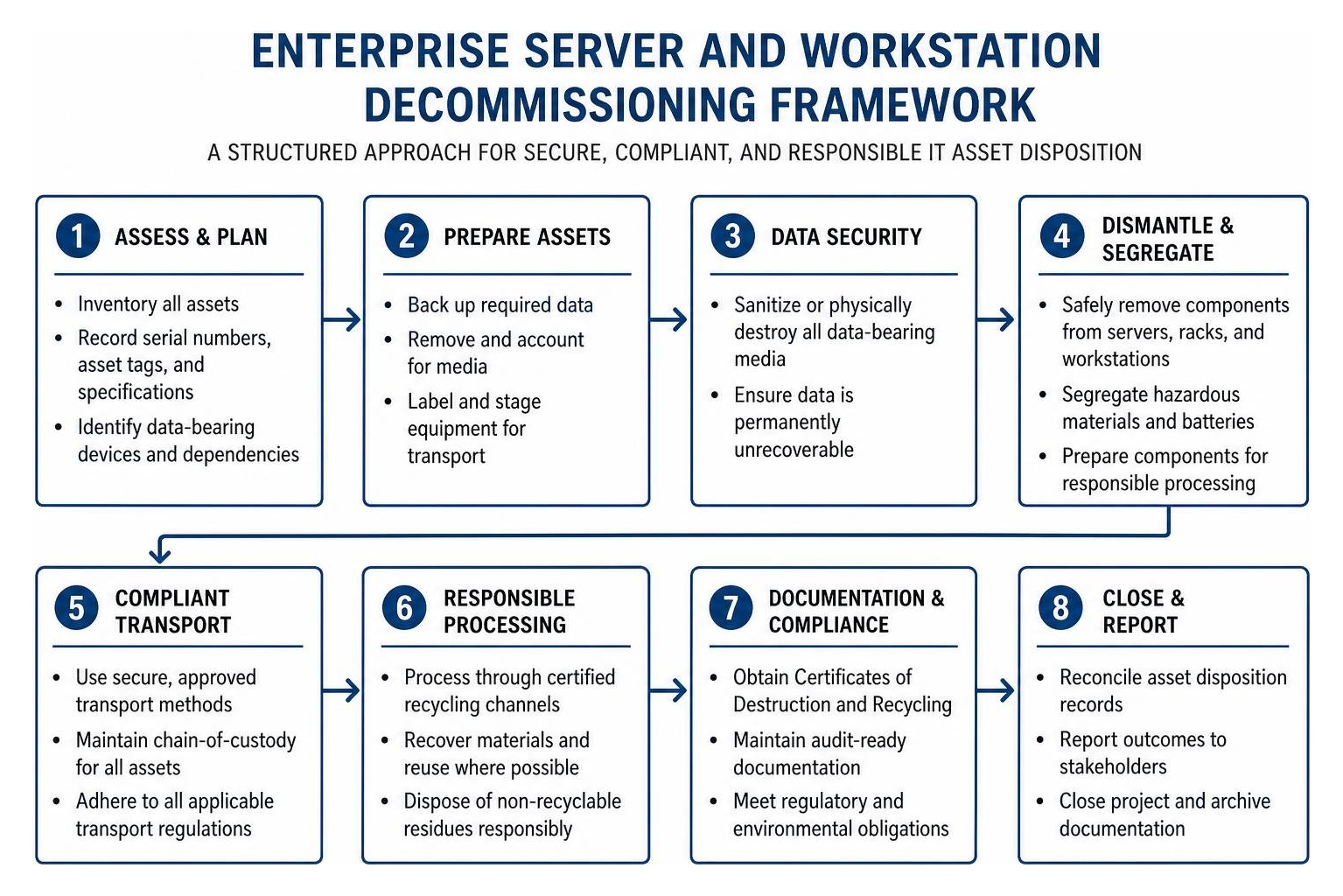
Decommissioning enterprise hardware involves more than merely unplugging cables and loading hardware into a vehicle. Modern data centers and corporate office networks consist of interconnected components requiring careful disassembly, precise asset tracking, and strict physical security controls. Following structured methodologies, such as the steps of electronic recycling, ensures that hazardous components are isolated, valuable materials are recovered, and sensitive data is permanently destroyed.
Preparing Business Computers and Server Components for Collection
Proper preparation streamlines logistics and reduces transit risks when staging business computers and server racks for collection:
- Comprehensive Asset Inventory: Document serial numbers, asset tags, hardware specifications, and original department assignments for all towers, server blades, and network switches.
- Modular Hardware Disassembly: Unmount server blades from rack cabinets, remove expansion cards, and detach rack rails to ensure safe palletization.
- Battery and Capacitor Isolation: Identify internal backup batteries, server CMOS cells, and UPS battery modules to stage them according to safe handling regulations.
- Secure Palletization: Place heavy rack chassis on secure pallets, secure them with commercial stretch wrap, and protect edge connectors to prevent physical damage during transit.
Data Sanitization Protocols for Server Hard Drives and Network Equipment
Data security remains the top priority during hardware retirement. Business computers, enterprise storage arrays, and network switches retain confidential financial records, proprietary trade secrets, customer data, and network configurations.
To mitigate compliance risks under HIPAA, FACTA, and SOX, enterprises must implement rigorous data destruction standards. Relying on simple disk formatting or public drop-offs leaves storage media vulnerable to forensic data recovery. Certified computer hard drive destruction through physical shredding or multi-pass cryptographic erasure conforming to NIST Special Publication 800-88 Rev. 1 and DoD 5220.22-M guarantees complete, irreversible data elimination before hardware undergoes materials recovery.
State Regulations and Compliance for Enterprise IT Asset Disposition
Commercial electronics disposal is heavily regulated at both state and federal levels. Businesses are strictly prohibited from discarding electronic devices containing circuit boards, cathode-ray elements, or heavy metals into standard commercial dumpsters. Compliance with environmental protection standards is mandatory, and non-compliant disposal can result in severe municipal penalties and reputational damage.
Hazardous Materials Management
Enterprise computer hardware and data center infrastructure contain complex assemblies of materials that must be handled with care:
- Leaded Solder and Circuit Boards: Printed circuit boards rely on solder compositions that must not enter municipal waste streams.
- Mercury Backlighting and Switches: Legacy server display interfaces and network components require controlled recovery to prevent vapor release.
- Heavy Metals in Power Infrastructure: Cadmium, hexavalent chromium, and lead found in legacy hardware and power distribution units demand specialized material separation to protect local soil and groundwater reservoirs.
Manufacturer Responsibility Laws and Local Collection Infrastructure
Under Extended Producer Responsibility (EPR) frameworks and state-level electronic waste mandates, manufacturers and enterprise consumers share the responsibility of diverting hazardous technology from municipal landfills. State guidelines outline authorized recovery channels and require detailed accountability for all generated commercial e-waste.
For corporate organizations, maintaining an unbroken chain of custody and retaining verifiable recycling certificates ensures complete alignment with the Environmental Protection Agency’s electronics stewardship standards and state environmental regulations.
Comparing Municipal Drop-Offs vs. Certified Enterprise ITAD Solutions
Selecting between a local municipal collection depot and a dedicated enterprise ITAD provider depends on your organization’s compliance, logistics, and data security requirements.
| Feature / Capability | Public Municipal Collection Sites | Dedicated Enterprise ITAD Solutions |
|---|---|---|
| Primary Target Audience | General municipal drop-offs (non-commercial scope) | Enterprise data centers, corporate IT, & institutions |
| Data Sanitization Standards | Basic or user-managed (no verified sanitization) | NIST 800-88 / DoD 5220.22-M certified erasure or physical shredding |
| Audit & Chain of Custody | Rare or unrecorded | Serialized tracking, video-verified destruction, & audit logs |
| Accepted Volumes | Limited quantities (daily item caps) | Unlimited commercial volumes, bulk pallets, & multi-rack pickups |
| Logistics & Transport | Self-transport required | Secure commercial freight pickup & white-glove data center de-installation |
| Compliance Documentation | Basic drop-off receipt (if offered) | Official Certificate of Destruction & Certificate of Recycling |
| Value Recovery & Resale | None (items processed strictly as raw scrap) | IT asset recovery, component refurbishment, & remarketing returns |
Frequently Asked Questions About Commercial E-Waste and Computer Recycling
Where can organizations access computer hardware drop-offs?
Commercial organizations can use designated regional collection events or municipal transfer stations that maintain commercial e-waste programs. However, for large enterprise volumes or hardware containing sensitive company data, organizations should schedule direct collection with a certified ITAD facility to ensure chain-of-custody tracking.
Are business computers and server components accepted at public collection sites?
Public collection sites generally operate under strict intake policies that exclude commercial IT equipment. While some municipal depots accept limited numbers of standard desktop towers, they frequently turn away high-volume commercial loads, server rack cabinets, network storage arrays, and enterprise power infrastructure due to processing constraints.
How should businesses handle bulk server disposal and logistics?
Bulk enterprise hardware requires freight logistics, including palletizing, strapping, and secure transit. IT teams should work with specialized collection teams capable of handling data center de-installations, serialized inventory tracking, and secure transportation to a certified processing facility.
Conclusion
Retiring corporate computing infrastructure requires a careful balance between environmental responsibility, regulatory compliance, and data security. While standard drop-off points may offer basic collection services, managing business computers and enterprise server environments demands a secure, auditable approach.
At Innovative IT Solutions, we provide comprehensive IT asset disposition, serialized data destruction, and zero-landfill electronics recovery designed specifically for modern organizations. Whether you are clearing out retired desktop workstations, decommissioning server racks, or managing a complete corporate technology refresh across Oklahoma City, our team guarantees full compliance with EPA standards and NIST data security protocols. Contact us today to explore our certified electronics recycling services and streamline your hardware disposition workflow.


