
What Asset Recovery Means for Business IT
Asset recovery has two main meanings: getting value from unused equipment, and reclaiming equipment that was lost or wrongfully taken. For a business, that could mean reusing retired servers, selling surplus computers, or using inventory records to help recover stolen hardware.
In day-to-day IT operations, the three core tasks are identification, redeployment, and disposition: know what you have, check whether it can serve another team, then choose a secure path for anything left over. Recovery of stolen equipment is different. It depends on proof of ownership, tracing, and, when needed, legal action.
I’m Mike Haden, founder and director of business development at Innovative IT Solutions. Over 14 years in IT asset disposition, I’ve helped organizations put the asset recovery meaning into practice through secure handling, reuse, and resale of enterprise technology.
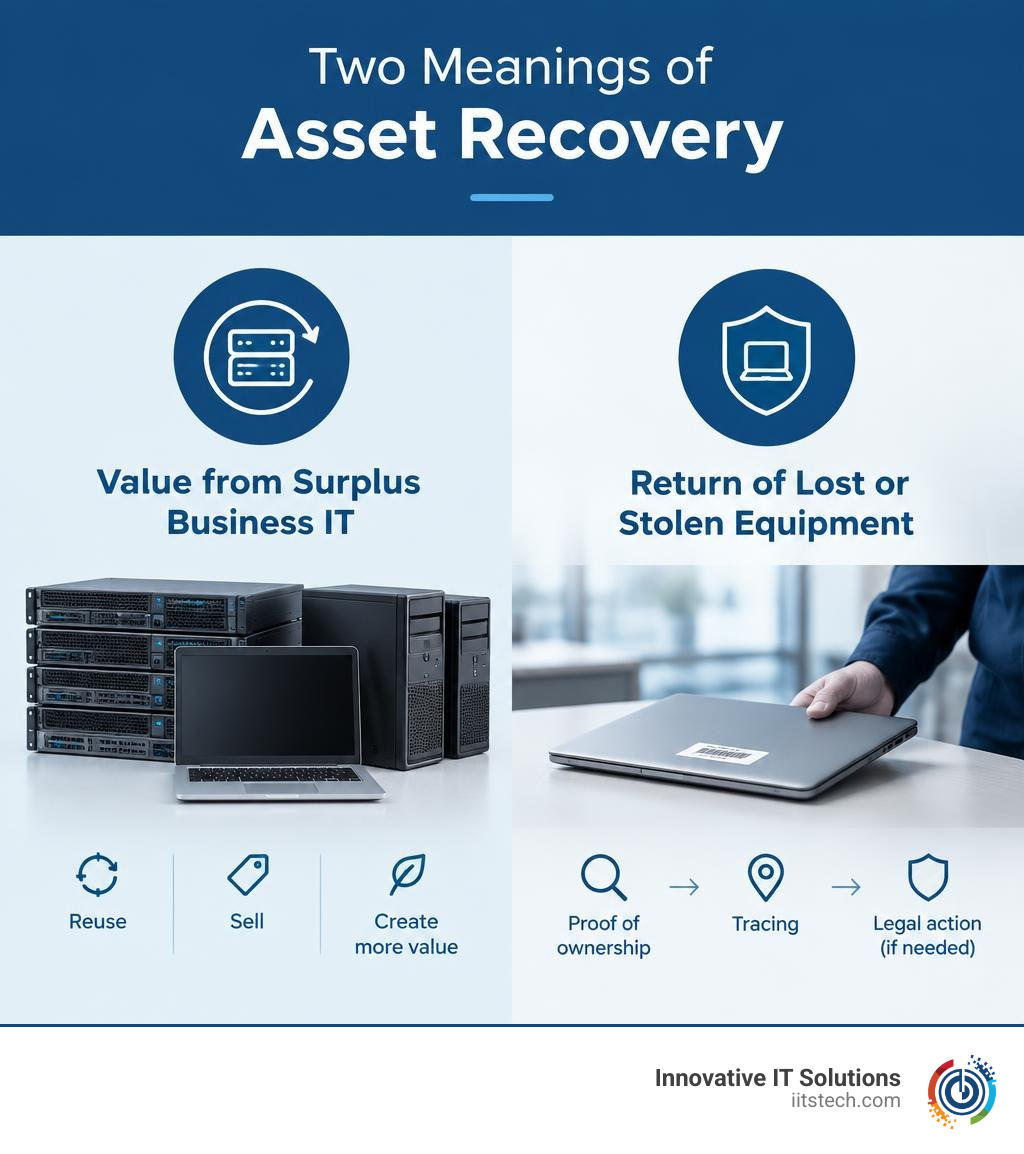
Simple asset recovery meaning word guide:
For a broader legal and operational perspective, the FBI’s asset forfeiture and recovery resources explain how law enforcement approaches the return of misappropriated property.
Clarifying the Asset Recovery Meaning Across Corporate and Legal Contexts
The phrase asset recovery carries significant weight in both enterprise finance and legal enforcement. At its core, the term addresses a fundamental business problem: how to extract maximum residual value from equipment you own, or how to legally regain possession when business-grade IT equipment has been misappropriated, stolen, or lost.
In corporate operations, organizations frequently refer to this discipline as investment recovery or resource recovery. When companies upgrade enterprise computer fleets, consolidate server rooms, or migrate data centers to modern infrastructures, they accumulate surplus hardware. Without a structured program, these retired computers and server components sit idle, depreciating rapidly and occupying expensive corporate footprint.
Conversely, the legal dimension of asset recovery centers on reclaiming property that has been unlawfully taken through corporate embezzlement, theft, or vendor fraud. In this arena, the process relies on serial-number tracing, forensic accounting, robust chain-of-custody records, and formalized legal mechanisms to locate and repatriate physical computing equipment or secure monetary restitution. To understand how organizations systematize both facets, exploring comprehensive asset recovery frameworks helps bridge the gap between financial optimization and corporate governance.
Exploring the Dual Asset Recovery Meaning: Surplus Management vs. Legal Recovery
While both definitions share the goal of restoring economic balance to an enterprise balance sheet, their operational workflows, required skill sets, and governing rules differ entirely.
Commercial surplus management focuses on hardware lifecycles, logistics, testing, sanitization, and market remarketing. Legal recovery operates within statutory frameworks, rules of civil and criminal procedure, and investigative tracing.
| Dimension | Commercial IT Surplus Recovery | Legal IT Asset Recovery |
|---|---|---|
| Primary Trigger | Technology refreshes, data center decommissioning, end-of-lease | Corporate theft, fraud, unlawful conversion, or bankruptcy recovery |
| Core Target | Idle business computers, enterprise rack servers, server components | Missing, stolen, or concealed enterprise IT hardware |
| Primary Method | Internal redeployment, component harvesting, secondary resale, recycling | Serial tracing, forensic investigation, court orders, law enforcement |
| Key Metrics | Residual value recaptured, total cost of ownership (TCO) reduction | Percentage of equipment recovered, financial restitution secured |
| Compliance Focus | NIST 800-88 data sanitization, EPA zero-landfill standards | Rules of evidence, chain-of-custody documentation, statutory claims |
Core Objectives: Deterrence, Restitution, and Economic Value
Regardless of whether an organization is managing retired infrastructure or pursuing misappropriated hardware, executing a structured program satisfies several essential objectives outlined in professional asset recovery processes and objectives:
- Economic Capital Recovery: Unlocking cash flow from obsolete enterprise laptops, workstations, and server components prevents write-downs and funds upcoming IT modernization initiatives.
- Deterrence Against Internal Theft: Rigorous hardware tracking, serial-number logging, and strict access controls eliminate vulnerabilities that tempt bad actors to misappropriate valuable enterprise components like high-density RAM and enterprise processors.
- Restitution and Loss Reimbursement: When equipment is unlawfully diverted, pursuing formal claims ensures the organization recovers the physical gear or receives financial compensation reflecting fair market or replacement value.
- Regulatory and Environmental Compliance: Ensuring all end-of-life IT assets follow verified, secure disposal pathways prevents data breaches and eliminates the legal risks of electronic waste violations.
The Three Pillars of Corporate and IT Asset Recovery

In corporate environments, managing retired computing hardware centers on three distinct, sequential phases: identification, redeployment, and disposition. Together, these three pillars ensure that no piece of business hardware is prematurely discarded while value remains locked inside.
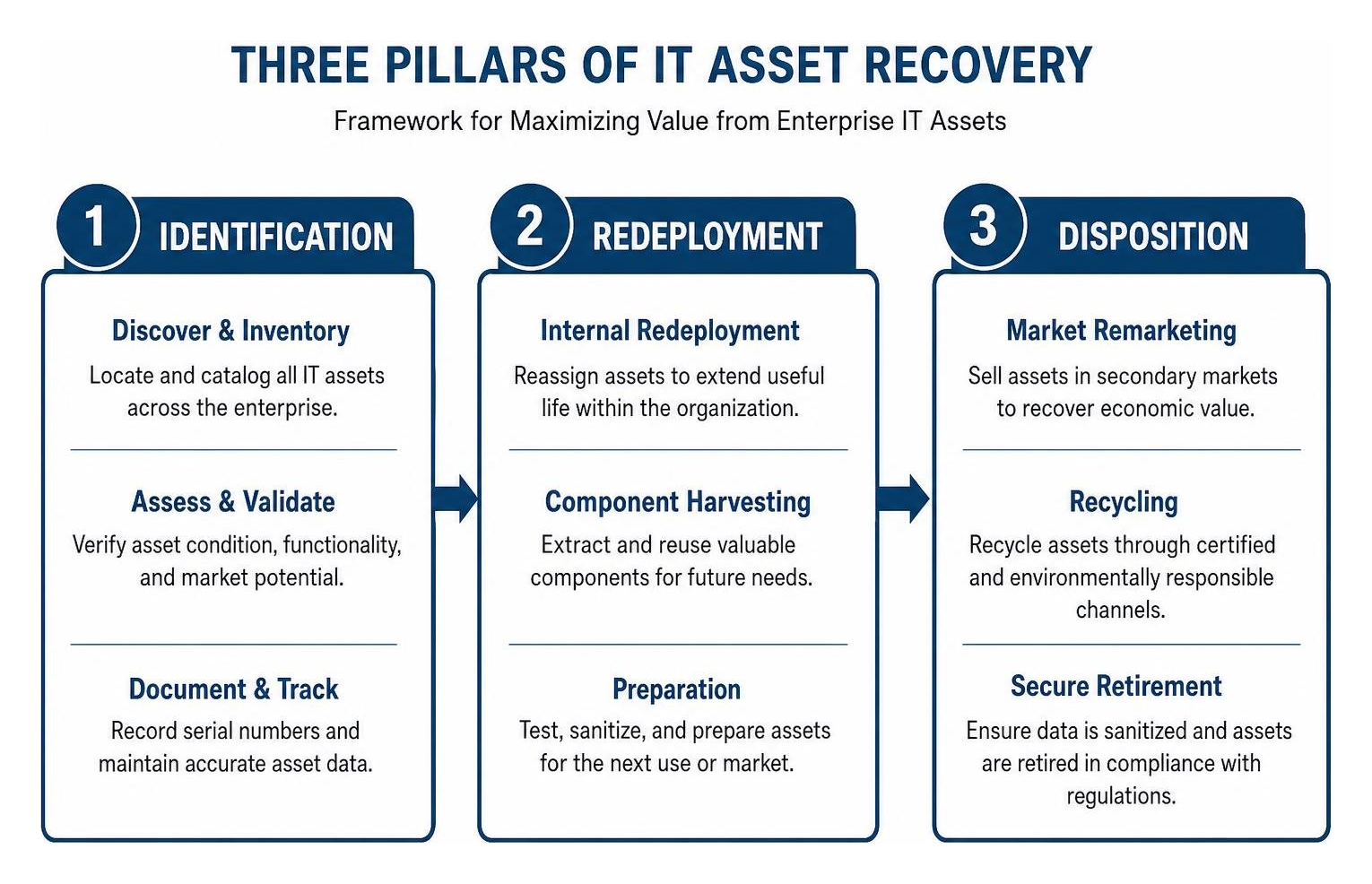
Mastering these pillars allows enterprise teams to turn IT cost centers into engines of capital efficiency, as outlined in The Ultimate Guide to Asset Recovery.
Operational Asset Recovery Meaning for Enterprise IT Infrastructure
Enterprise IT infrastructure encompasses complex hardware ecosystems: modular blade servers, storage area networks (SANs), top-of-rack switches, and enterprise desktop fleets. Each category carries varying depreciation schedules and secondary market demand.
Understanding what IT asset disposition is and why it matters provides the operational baseline needed to audit, inventory, and sanitize these enterprise systems without introducing regulatory or operational risks.
Strategic Identification, Redeployment, and Hardware Cannibalization
The recovery lifecycle begins with systematic identification:
- Asset Tagging & Hardware Audits: Cataloging active and dormant hardware across all facilities, recording CPU specifications, memory density, drive health, and serial numbers.
- Classification: Grouping equipment into productive units, underutilized systems, and genuinely obsolete infrastructure.
Once identified, redeployment offers the highest possible return on investment because it eliminates the need to purchase brand-new equipment at current market prices.
Hardware cannibalization is a powerful redeployment technique. For example, if an enterprise maintains two degraded enterprise rack servers with failing motherboards, technicians can harvest functional enterprise ECC RAM, high-end power supplies, and processors from one unit to restore the other to full production capacity. By swapping and recombining working components, IT teams can cut their volume of non-operational equipment in half while extending hardware life cycles. Discovering practical tactics for maximizing value from obsolete IT equipment empowers engineering teams to defer major capital expenditures.
Disposition Paths: Resale, Refurbishment, and Certified Recycling
When internal redeployment is no longer technically feasible, organizations turn to structured disposition channels:
- Refurbishment and Resale: Working with certified ITAD specialists to clean, test, recondition, and remarket enterprise computers and server hardware on secondary markets.
- Component Liquidation: Selling enterprise parts (CPUs, high-capacity server memory, enterprise SSDs) to specialized industrial buyers following professional IT asset liquidation guidelines.
- Certified Electronics Recycling: When hardware has reached true functional obsolescence or suffered physical damage, processing it through zero-landfill, EPA-compliant e-waste channels recovers base materials (precious metals, copper, aluminum) safely and sustainably.
Legal and Investigative Frameworks for Recovering Misappropriated IT Assets
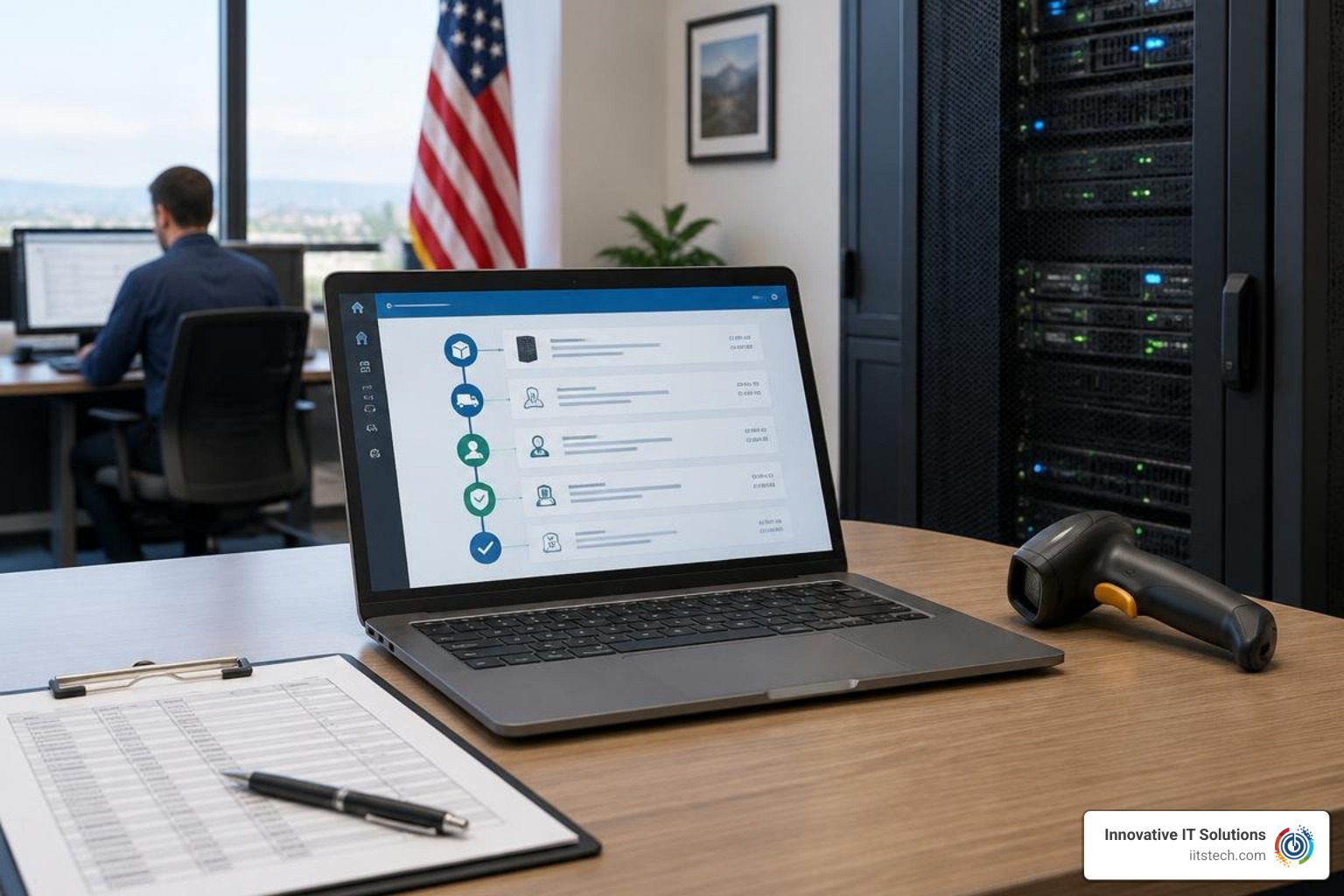
When enterprise computing equipment is unlawfully taken, lost during corporate restructuring, or misappropriated by fraudulent contractors, the recovery process shifts from logistics management to legal and forensic tracing.
The Four-Phase Recovery Process: From Tracing to Legal Recovery
Recovering misappropriated IT equipment follows a clear four-phase procedural framework:
- Pre-Investigative Verification: Establishing initial ownership through internal purchase orders, fixed asset registers, serial number databases, and warranty registration records.
- Investigative Tracing: Utilizing digital forensic audits, internal access logs, and tracking tools to determine where the hardware was diverted and who currently possesses it.
- Judicial and Legal Action: Filing appropriate civil motions (such as replevin actions or emergency preservation orders) or coordinating with law-enforcement agencies to secure freezing or seizure orders.
- Disposal or Restitution: Physical return of the recovered computers and server hardware to the rightful enterprise owner, or executing court-ordered liquidation if monetary compensation is awarded.
Civil Claims vs. Criminal Proceedings for Recovery of IT Hardware
Organizations faced with stolen or unlawfully retained computing hardware generally pursue recovery through civil litigation, criminal prosecution, or a combination of both.
| Aspect | Civil Asset Recovery Claims | Criminal Asset Confiscation Proceedings |
|---|---|---|
| Initiator | The victimized business entity | State prosecutors / Law enforcement agencies |
| Legal Basis | Replevin, conversion, breach of contract, unjust enrichment | Statutory criminal codes, anti-fraud statutes, theft laws |
| Standard of Proof | Preponderance of the evidence (balance of probabilities) | Beyond a reasonable doubt |
| Direct Outcome | Court order for return of property (restitution) or damages | Criminal penalties for offender; seizure/confiscation of illicit assets |
| Speed and Control | Higher corporate control; can settle via private negotiation | Dependent on judicial calendars and prosecutorial priorities |
Coordinating IT Asset Recovery Across Jurisdictions
Enterprise server components and high-end computing devices are highly portable and easily transported across state or national borders. Recovering hardware that has crossed jurisdictions requires:
- Immutable chain-of-custody documentation linking physical serial numbers to original corporate purchase agreements.
- Collaboration with interstate law enforcement or utilization of legal instruments such as letters rogatory and domestic cross-jurisdictional subpoenas.
- Working alongside forensic recovery specialists who understand multi-regional property rights and transportation security.
Asset Disposition Methods: Return, Compensation, and Liquidation
Whether resolving an internal surplus situation or concluding a legal dispute over misappropriated enterprise hardware, the end game of asset recovery involves selecting the proper disposition model.
Comparing Equipment Return and Financial Compensation
When stolen or disputed business IT equipment is recovered, the resolution typically falls into one of two categories:
- Restitution (Physical Return of Equipment): The actual hardware is returned to the enterprise. This outcome is ideal when the recovered enterprise servers or computers are still within their useful operating lifespan, contain proprietary software configurations, or have high intrinsic utility for internal redeployment.
- Compensation (Monetary Reimbursement): In cases where recovered hardware has been damaged, obsolete, or liquidated by an unauthorized third party, courts or insurance settlements mandate financial compensation. Historical claims data reveals that financial compensation is frequently ordered when returning the original physical assets is impractical due to depreciation or operational wear.
Business Surplus Liquidation Models for Enterprise Hardware
For corporate surplus, organizations choose from distinct monetization pathways based on time constraints and value targets:
- Private Treaty Sales: Direct, negotiated sales of high-value, specialized data center assets (such as high-density blade chassis or modular server racks) to specific enterprise buyers. This approach yields the highest net returns for premium hardware.
- Online Enterprise Tech Auctions: Listing bulk quantities of retired corporate laptops and standardized server components to a broad network of competitive enterprise buyers, maximizing exposure and creating competitive bidding.
- Consignment Remarketing: Partnering with an ITAD vendor who tests, cleans, inventories, and markets retired IT equipment on behalf of your enterprise, splitting net revenues upon final sale.
- Orderly vs. Forced Liquidation: Orderly liquidation allows companies to systematically market hardware over several months to capture maximum value, whereas forced liquidation prioritizes immediate warehouse clearance over optimal price discovery.
Evaluating the business benefits of selling used IT equipment helps IT directors and CFOs choose the right model to balance speed, labor overhead, and financial returns.
Frequently Asked Questions About Asset Recovery
What is the fundamental difference between asset recovery and asset confiscation?
Asset recovery is the comprehensive process of locating, securing, and returning assets to their rightful owner or capturing residual economic value from surplus gear. Confiscation, by contrast, is a specific legal penalty executed by government authorities to permanently deprive an individual or entity of property derived from or used in illegal activity. Recovery returns value to the owner; confiscation strips ownership as a punitive or statutory measure.
How do enterprise organizations determine whether to redeploy or liquidate server hardware?
Enterprises evaluate three primary metrics:
- Performance Compatibility: Can the server hardware handle current workloads or upcoming virtualization demands without creating performance bottlenecks?
- Operating Costs: Does the older hardware consume excessive power and cooling relative to modern high-efficiency server architectures?
- Secondary Market Residual Value: Will selling the hardware or harvesting its high-value server components (processors, RAM, drives) generate sufficient capital to offset the purchase price of new infrastructure? If operating costs exceed replacement savings, liquidation is the economically sound choice.
What role do inventory records and tracking tools play in recovering business IT hardware?
Accurate, centralized inventory records form the legal and operational backbone of all asset recovery efforts. Detailed logs containing serial numbers, MAC addresses, hardware configuration specs, purchase orders, and asset tag identifiers provide the required proof of ownership in court proceedings and enable law-enforcement agencies to trace and verify stolen hardware. In surplus operations, tracking tools ensure no data-bearing drives or high-value server components go unaccounted for during decommissioning.
Conclusion
Managing business-grade computing infrastructure demands a complete understanding of asset recovery in all its forms. Whether your organization is modernizing data centers, liquidating surplus computers, cannibalizing retired server racks for valuable parts, or establishing strict asset tracking to protect corporate property, a disciplined recovery strategy protects your bottom line and safeguards critical corporate data.
At Innovative IT Solutions, we deliver end-to-end IT asset disposition, secure NIST/DoD-compliant data sanitization, and certified hardware recovery for enterprise clients across Oklahoma City, South OKC, and nationwide. We help organizations turn idle technology into working capital while ensuring absolute regulatory and environmental compliance.
Ready to unlock hidden capital from your retired infrastructure? Partner with our team to maximize value through structured IT asset recovery today.


