
The Growing Challenge of Business E-Waste Disposal
Electronic recycling programs are the structured systems businesses use to safely dispose of decommissioned IT hardware — from servers and laptops to networking equipment and storage arrays.
If you’re an IT manager looking for a quick answer, here are your main options:
| Option | Best For | Cost |
|---|---|---|
| Certified ITAD provider | Businesses needing compliance docs + data destruction | Often free for qualifying volumes |
| Manufacturer take-back | Brand-specific equipment returns | Varies by manufacturer |
| Retailer drop-off (e.g., Best Buy) | Small quantities of business devices | Free up to 3 items/day |
| Municipal e-waste depot | Individual devices, no data destruction guarantee | Usually free |
| Mail-in recycling service | Remote locations, small volumes | Varies |
For business-grade IT hardware — especially anything holding sensitive data — a certified ITAD provider is almost always the right choice.
The scale of the problem is hard to ignore. Only 22.3% of e-waste globally was formally recycled in 2024, and the volume of discarded electronics is growing five times faster than recycling efforts can keep up with. For enterprises refreshing server racks, decommissioning data centers, or retiring fleets of laptops, that gap creates real risk: regulatory exposure, data breach liability, and wasted recoverable value sitting in a storage room.
The good news? There are more options than most IT teams realize — and the right program can actually return value while keeping your organization compliant.
I’m Mike Haden, Founder and Director of Business Development at Innovative IT Solutions, where I’ve spent 14 years building an R2v3-certified ITAD operation focused on responsible electronic recycling programs for enterprise clients. In that time, we’ve processed over a million pieces of corporate IT equipment, and I’ve seen what separates a compliant, value-generating disposal program from one that creates more problems than it solves.
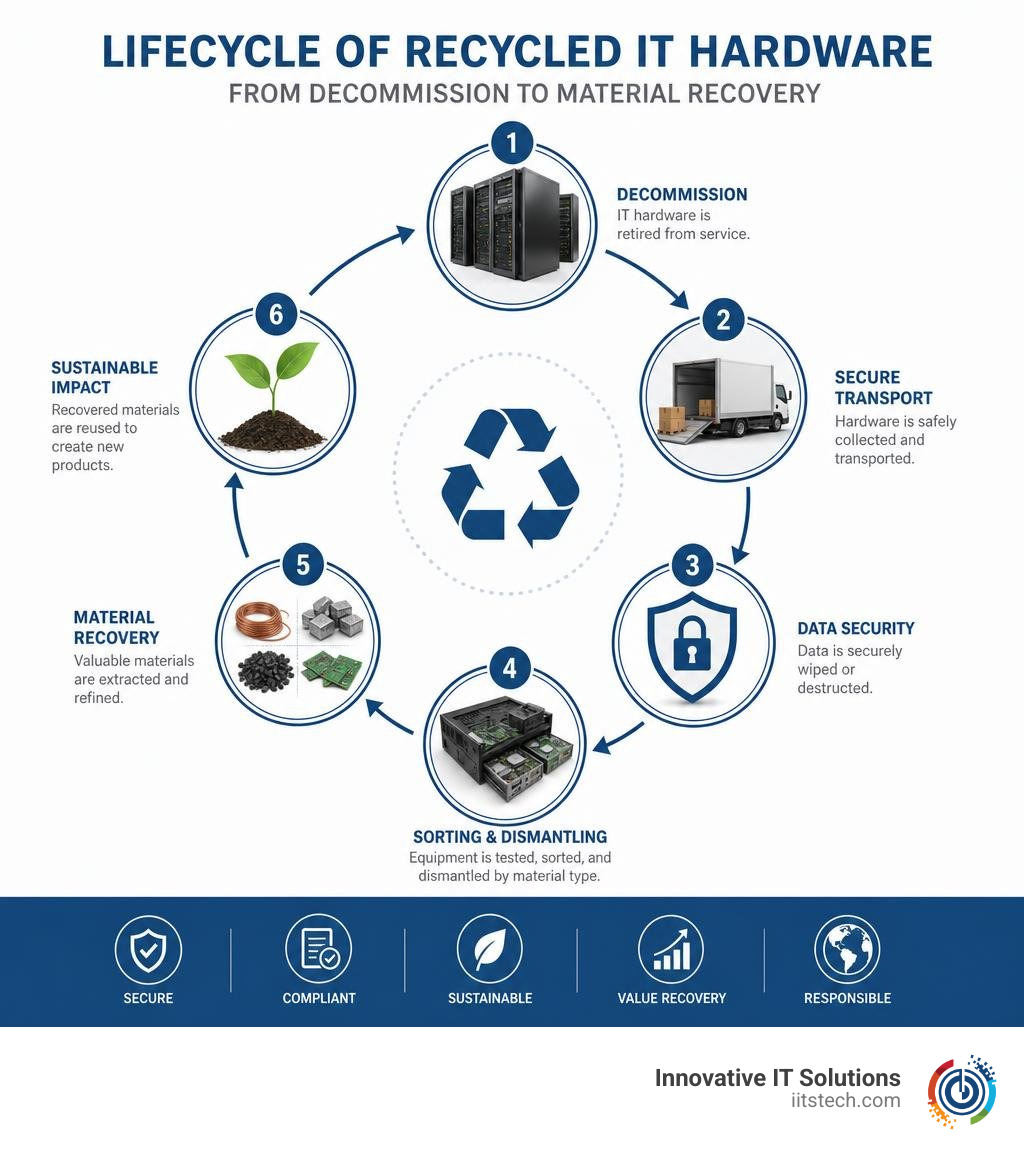
Must-know electronic recycling programs terms:
Maximizing Sustainability Through Corporate Electronic Recycling Programs
When we talk about retiring business IT hardware, we aren’t just talking about cleaning out a storage closet. We are talking about unlocking a massive reserve of valuable raw materials and preventing serious environmental harm.
Enterprise-grade technology—like high-density server racks, enterprise switches, and business laptops—is packed with precious metals and rare earth elements. When these assets are thrown into landfills, those resources are lost forever, and toxic substances like lead, cadmium, and mercury risk leaching into local soil and water tables.
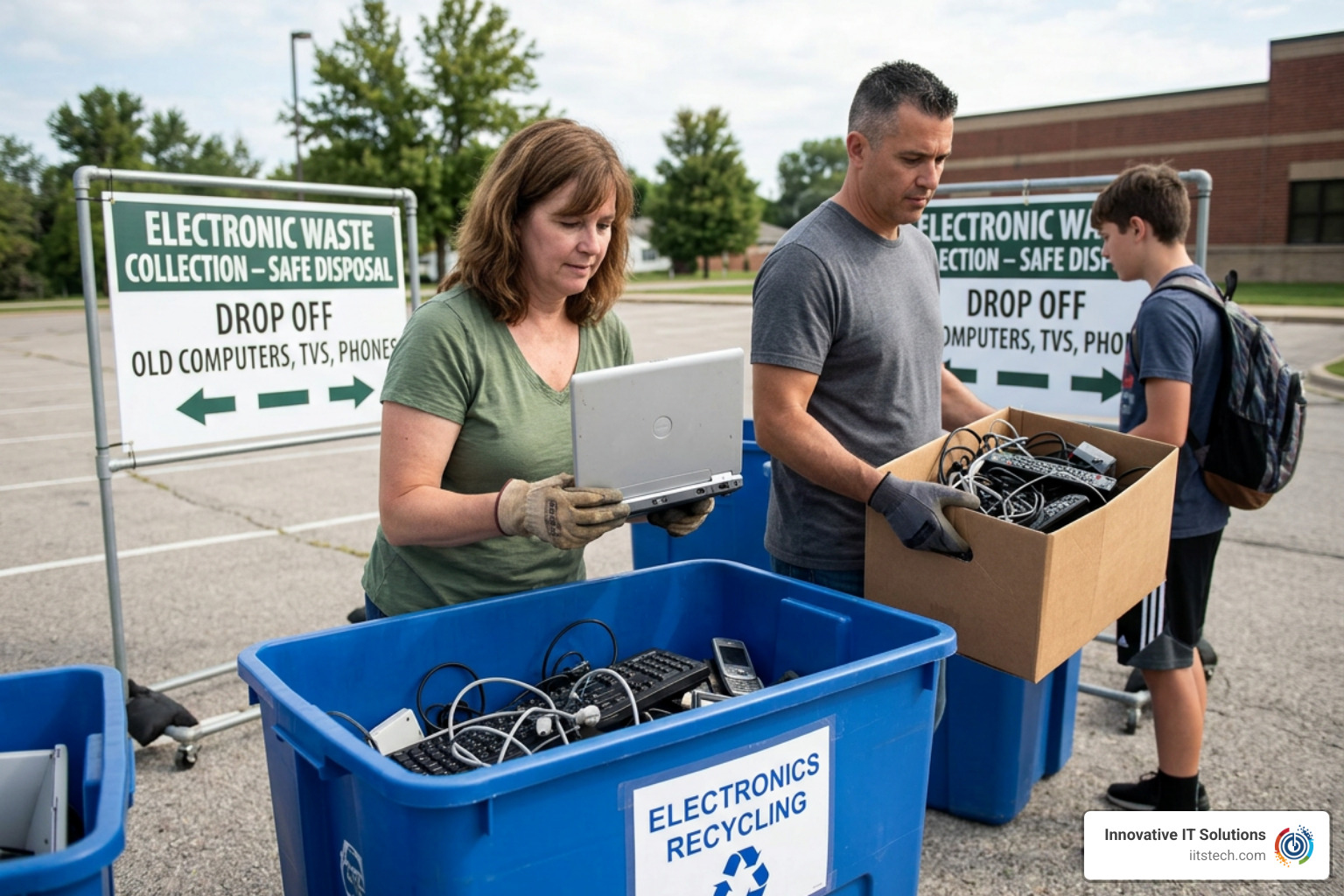
By partnering with certified corporate electronic recycling programs, businesses can play a direct role in resource recovery. Consider the sheer environmental impact of recycling corporate devices at scale:
- Energy Conservation: Recycling just one million laptops saves enough energy to power more than 3,500 U.S. homes for an entire year.
- Precious Metal Recovery: For every million mobile devices or compact IT assets recycled, we can recover approximately 35,000 pounds of copper, 772 pounds of silver, 75 pounds of gold, and 33 pounds of palladium.
When your business chooses to recycle rather than discard, you are actively reducing the demand for raw mining, lowering your corporate carbon footprint, and supporting a circular economy. To understand how these materials are safely recovered and reintroduced into the manufacturing loop, you can read more about E-Waste Recycling Services: The Smart Way to Dispose of Electronics.
Navigating State-Specific E-Waste Laws and Compliance
For businesses operating in the United States, managing e-waste is not just an environmental choice—it is a legal obligation. Regulatory compliance is becoming increasingly strict as state and federal governments crack down on corporate liability, landfill bans, and the improper disposal of hazardous materials.
Failing to properly document where your decommissioned IT hardware ends up can result in severe financial penalties and devastating reputational damage.
Texas Computer Take-Back Mandates
For companies with regional operations or partners in neighboring Texas, it is helpful to understand how state-level mandates function. The Texas Commission on Environmental Quality (TCEQ) enforces strict manufacturer responsibility laws.
Under Texas law, computer manufacturers are legally required to offer free, accessible recycling opportunities to consumers for their brand’s equipment. This model of extended producer responsibility ensures that manufacturers help shoulder the burden of recycling the hardware they produce. While these programs are highly effective for standard computers, they rarely offer the comprehensive data security and serialized auditing that modern businesses require.
National Regulations for Enterprise Electronic Recycling Programs
At the national level, enterprise electronic recycling programs must navigate a complex patchwork of state laws and federal EPA guidelines. For example, the California Electronic Waste Recycling Act, passed originally in 2004, set a major precedent by requiring advanced recovery fees and strict downstream tracking for specific display devices. Today, dozens of states have enacted their own unique e-waste legislation, banning commercial IT hardware from municipal landfills entirely.
For businesses operating in Oklahoma, staying compliant means ensuring that every retired server, desktop, and laptop is tracked from the moment it leaves your facility to its final destination. Partnering with a professional ITAD provider ensures that your disposal methods align perfectly with federal EPA standards and local environmental laws. To explore how to set up a fully compliant framework for your organization, check out our guide on establishing an Electronic Recycling Program for Your Business.
How to Prepare Business Hardware for E-Waste Depots
Before you load up a pallet of retired servers or hand over a stack of corporate laptops to any recycling program, your IT team must take precise preparatory steps. Simply dropping off live drives at a local depot is a recipe for a catastrophic data breach.
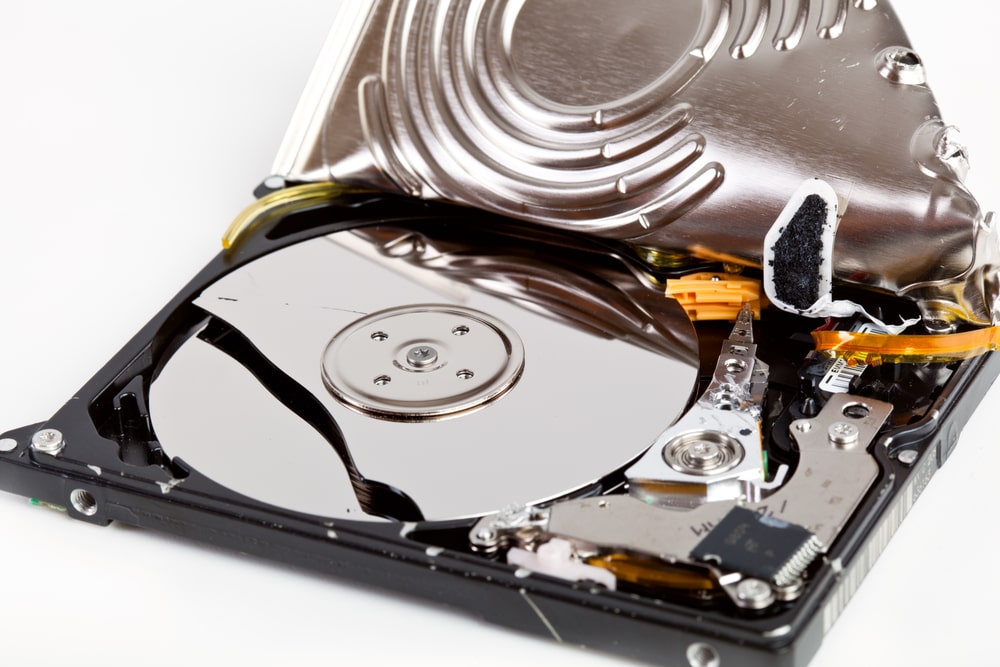
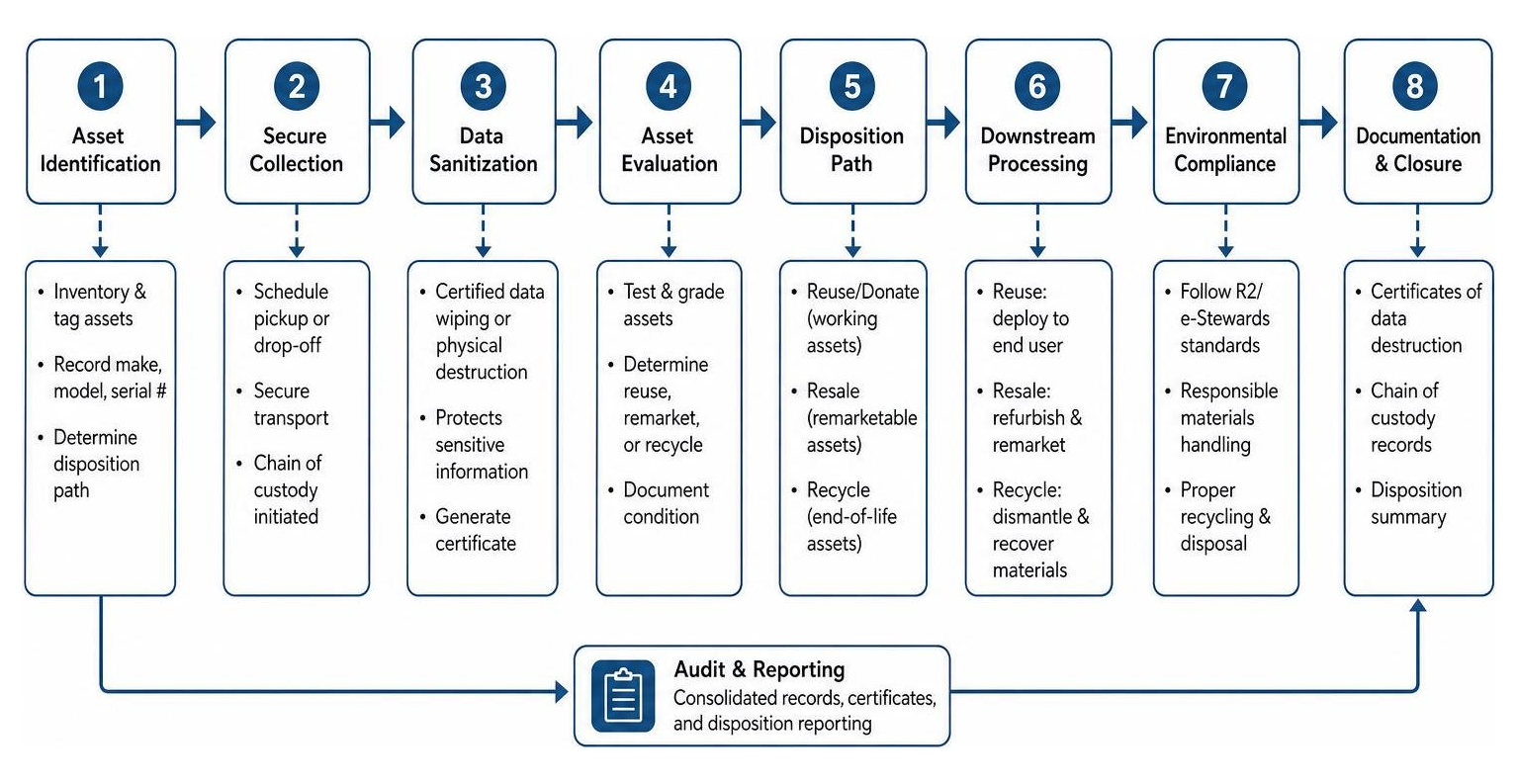
Refined hardware decommissioning requires a structured process:
- Inventory Management: Create a complete serialized list of all hardware slated for retirement.
- Asset Tag Removal: Physically remove all corporate asset tags and identifying stickers from the machines to protect your brand’s privacy.
- Chain of Custody: Document every handoff from your internal IT department to the recycling logistics team.
Secure Data Destruction and NIST Standards
The single most critical step in preparing business hardware is secure data destruction. Under federal regulations like HIPAA, GLBA, and Sarbanes-Oxley, businesses are legally responsible for protecting sensitive client, patient, and employee data stored on retired media.
To ensure complete compliance, your ITAD partner should adhere strictly to NIST SP 800-88 guidelines for media sanitization. This standard defines the exact methods required for:
- Clear: Logical sanitization of data-bearing devices using secure software overwriting.
- Purge: Protecting data against robust laboratory attacks using advanced degaussing or firmware-level secure erase commands.
- Destroy: Physical destruction, such as industrial hard drive shredding, which renders the media completely unreadable.
If you are planning an upcoming hardware refresh, we recommend reviewing the 3 Steps to Take for Electronic Waste Recycling to ensure your team does not miss any critical security protocols.
Choosing Certified Electronic Recycling Programs
Not all electronic recycling programs are created equal. To safeguard your business, you should only partner with organizations that hold recognized, third-party industry certifications.
When vetting an e-waste recycler, look for the following credentials:
- R2v3 (Responsible Recycling): The gold standard for electronics recycling, requiring rigorous annual audits, strict worker safety protocols, and absolute downstream tracking of all hazardous materials to their final destination.
- e-Stewards: A globally recognized standard focused on preventing the export of hazardous e-waste to developing nations.
- ISO 14001 & 45001: Standards verifying robust environmental management systems and occupational health and safety.
- NAID AAA: The highest certification for secure data destruction, ensuring that all data-bearing assets are handled under strict security controls.
For a deeper look into how these certifications protect your business during the recycling lifecycle, read about The Steps of Electronic Recycling.
Frequently Asked Questions About E-Waste Recycling
Navigating corporate IT asset disposition can raise plenty of questions. Below, we have compiled the most common questions IT directors and business owners ask when looking for local e-waste solutions.
| Feature | Computer Recycling Programs | Computer Donation Programs |
|---|---|---|
| Primary Goal | Material recovery and environmental safety | Extending hardware lifecycle and community aid |
| Hardware State | Non-working, obsolete, or end-of-life | Fully functional, relatively modern (under 5 years old) |
| Data Destruction | Handled via certified wiping or physical shredding | Must be wiped prior to donation (often lacks certified audit trail) |
| Financial Return | Commodity value recovery or asset resale share | Potential corporate tax write-off |
| Best For | Servers, storage arrays, broken or outdated PCs | Excess working laptops, desktop workstations |
What business IT hardware is accepted at local recycling depots?
Most business-focused recycling depots accept a wide range of enterprise technology, including:
- Rack servers, blade servers, and server components (CPUs, RAM, power supplies)
- Enterprise networking gear (managed switches, routers, firewalls, and access points)
- Data storage arrays, SAN/NAS systems, and hard drives (HDDs, SSDs)
- Corporate laptops, desktop PCs, and workstation terminals
- Uninterruptible Power Supplies (UPS) and lead-acid backup batteries
To learn more about what happens to these complex systems once they enter the recycling stream, check out our resource on Computer Recycling Services: What Happens to Your Old Tech?.
How do computer donation programs differ from recycling?
While recycling focuses on breaking down non-working or obsolete hardware into raw commodities, donation programs aim to extend the active lifecycle of working computers. Donating functional corporate laptops and desktops is an excellent way to bridge the digital divide, providing essential technology to schools, veterans, and underserved families.
For example, community-focused hardware initiatives, like those supported by organizations such as Compudopt, have successfully distributed over 111,000 computers, served more than 180,000 students, and connected over 30,000 households with essential technology.
When donating, always ensure you receive a tax receipt for your corporate records, and verify that all personal and proprietary data has been completely sanitized beforehand.
Where can businesses find local electronics recycling options?
For businesses operating in Oklahoma City, South OKC, and the wider Oklahoma area, finding a reliable, secure drop-off or pickup solution is simple. You can utilize specialized corporate ITAD providers, municipal collection programs, or certified regional depots.
To find the most convenient and secure options near your facility, consult these local resources:
- Our curated guide on Oklahoma City Electronics Recycling: 7 Local Centers to Try
- Step-by-step local instructions: How to Properly Dispose of Electronics: Computer Recycling in Oklahoma City
- National and regional finder tools: Best Electronics Recycling Locations Near You
- Eco-friendly disposal tips: Don’t Trash Your Tech: Best Places to Recycle Electronics the Right Way
- For state-wide recycling directories, visit Where to Recycle .
Conclusion
Managing decommissioned IT hardware does not have to be a logistical headache or a compliance risk. By choosing certified, structured electronic recycling programs, your business can protect its sensitive data, maintain perfect regulatory compliance, and contribute directly to a cleaner, more sustainable planet.
At Innovative IT Solutions, we specialize in providing enterprise-grade IT Asset Disposition (ITAD) services for businesses across Oklahoma City, South OKC, and the state of Oklahoma. Our zero-landfill, EPA-compliant processes are designed to give you complete peace of mind. We provide NIST/DoD-compliant data destruction, full serialized compliance documentation, and asset recovery services to help you maximize your return on retired technology.
Ready to secure your data and recycle your business hardware the right way? Contact our team of experts today at Innovative IT Solutions Recycling Services.


