
Don’t Trash Your Tech: Where to Recycle Electronics the Right Way
Finding the best place to recycle electronics depends on what you have, where you are, and how sensitive your data is. Here’s a quick answer:
Top places to recycle electronics in 2026:
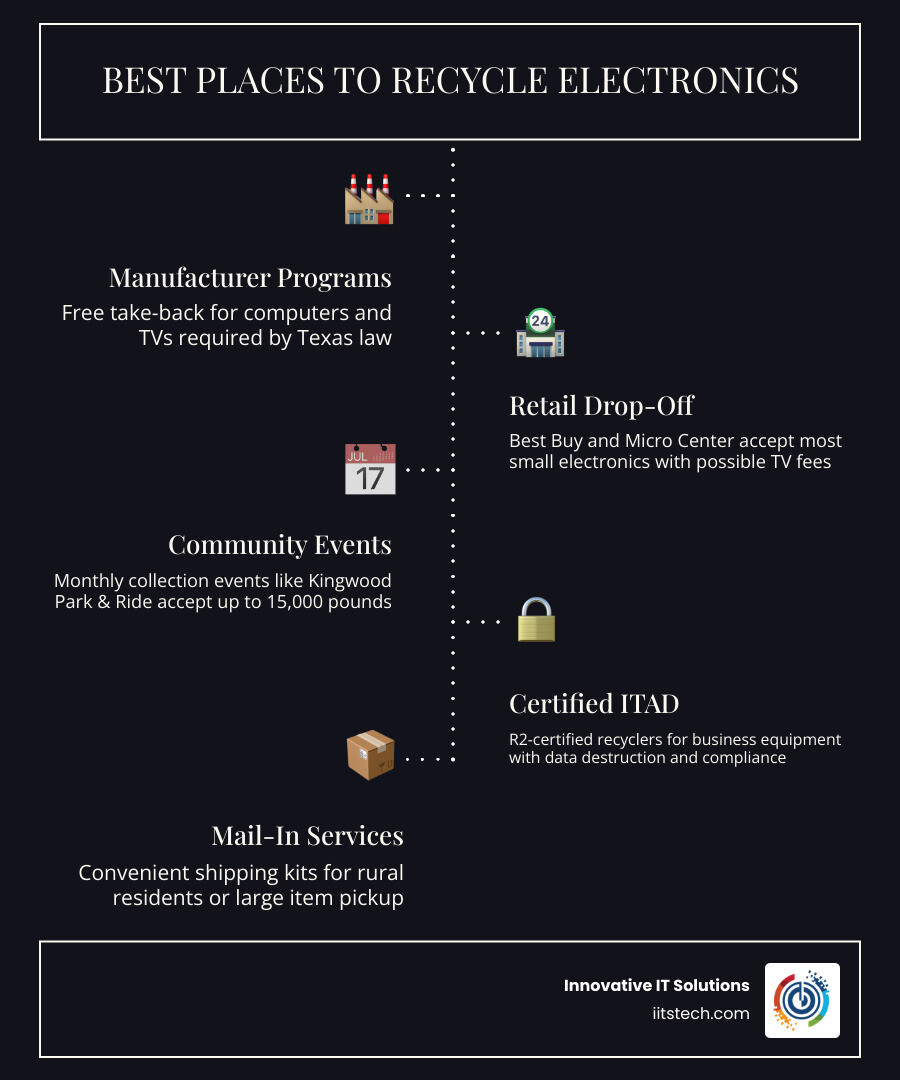
- Manufacturer take-back programs – Free for computers and TVs in states with manufacturer responsibility laws
- Major retailers and local drop-off programs – Free drop-off for most small electronics; fees may apply for TVs
- Local community events – Helpful for periodic household collection days in many cities
- Certified ITAD recyclers – Best for businesses needing data destruction and compliance documentation
- Mail-in services – Ideal if you’re far from a drop-off location
The scale of the problem is hard to ignore. According to the United Nations Global E-waste Monitor, the world produced 62 million metric tons of electronic waste in 2022 – and only about 22% of it was documented as properly collected and recycled. The rest? Headed to landfills, where hazardous materials like lead, mercury, and cadmium leach into soil and water.
For IT managers, the stakes are even higher. It’s not just about the environment. Decommissioned hardware that isn’t handled correctly is one of the most overlooked data security risks your organization faces. According to IBM’s 2025 Cost of a Data Breach Report, the average breach costs $4.44 million – and improper hardware retirement is a real contributing factor.
This guide breaks down your best options – whether you’re clearing out a home office drawer or decommissioning an entire server room. While we serve clients nationwide from our base in Oklahoma City, we’ll also cover state-specific programs in places like Texas and Oklahoma to help you find the right solution wherever you are.
I’m Mike Haden, Founder of Innovative IT Solutions, Inc., with 14 years of experience helping organizations find the best place to recycle electronics securely and responsibly through certified R2v3 ITAD processes. I’ve seen what goes wrong when hardware disposal is treated as an afterthought – and I’ll walk you through exactly how to get it right.
Best Place to Recycle Electronics: Your 5 Best Options
If you’re trying to choose the best place to recycle electronics, start with one simple question: are you recycling household gadgets, or business equipment with data and compliance risks attached?
Here are the five best options, depending on your situation:
| Option | Best for | Typical cost | Main advantage | Main drawback |
|---|---|---|---|---|
| Manufacturer take-back | Computers and TVs covered by state programs | Usually free | State-supported and easy to verify | Limited to certain product categories |
| Retail drop-off | Small household electronics | Often free | Convenient and familiar | Item caps, size limits, business restrictions |
| Community collection events | Residents with mixed household e-waste | Often free | Local and simple | Event schedules and item restrictions |
| Certified ITAD recycler | Businesses, data-bearing devices, bulk loads | Varies | Secure destruction, documentation, resale value | Usually not the fastest casual consumer option |
| Mail-in or haul-away | People far from drop-off sites or with mobility limits | Varies | Convenient from home or office | May involve shipping or service fees |
Best place to recycle electronics for free
Many states have manufacturer responsibility systems that provide free recycling for certain electronics. For example, Texas requires computer and TV manufacturers to provide consumers with recycling opportunities for those products. Oklahoma residents can take advantage of community collection events, municipal programs, and certified recyclers like Innovative IT Solutions in Oklahoma City.
The practical takeaway is simple:
- Computers can often be recycled for free through manufacturer programs in states with take-back laws
- TVs may also qualify through manufacturer-supported recycling options
- State environmental agencies often publish guidance to help consumers locate approved programs and collection methods
- In Oklahoma, residents can contact their local municipality or visit a certified recycler for free or low-cost options
The EPA’s electronics donation and recycling page is a helpful starting point for finding programs in any state. For Texas specifically, the Texas Commission on Environmental Quality points consumers to manufacturer-based resources for computer and TV recycling.
For electronics outside manufacturer-covered categories, you may need a different route such as a retailer, local event, or certified recycler.
Best place to recycle electronics when you want convenience
Convenience usually means one of three things:
- A nearby store drop-off
- A scheduled community collection event
- A mail-in option when leaving the house sounds like too much work
Major retail programs are popular because they accept many common household electronics and don’t care where you bought them. Some also offer mail-back options or larger haul-away services.
Community events can be even easier if they happen regularly in your area. You drive up, unload, wave goodbye to that mystery box of tangled cords, and reclaim your trunk. Cities like Oklahoma City, Houston, and Dallas all host periodic collection events.
Best place to recycle electronics when data security matters
If a device holds personal or business data, convenience should not be your only filter. Hard drives, SSDs, phones, tablets, copiers, and servers need secure handling.
That is where certified ITAD and secure recycling providers stand out. We recommend looking for:
- NIST 800-88 or DoD-compliant data destruction
- Serialized asset tracking
- Certificates of destruction
- Chain-of-custody documentation
- Zero-landfill and EPA-compliant downstream processing
For more on secure disposition, see Shred It or Save It: A Guide to Computer Recycling and Disposal.
Best place to recycle electronics for business equipment
For businesses, the best place to recycle electronics is usually not a store bin by the front door. Business equipment often involves:
- Customer or employee data
- Compliance requirements
- Asset tags and inventory controls
- Potential resale value
- Reporting needs for audits or ESG goals
That is why IT asset disposition matters. A proper ITAD process can include secure pickup, data destruction, reuse or resale, recycling, and documentation. Research shows organizations often recover 15% to 30% of hardware refresh budgets through certified asset liquidation, so recycling does not always mean “goodbye forever and also goodbye value.”
Businesses in Oklahoma, Texas, and across the country can benefit from working with a certified ITAD provider like Innovative IT Solutions, headquartered in Oklahoma City, which serves clients nationwide.
For a deeper look, see Electronic Recycling Program for Your Business and IT Equipment Recycling.
Electronics Recycling Rules Every Resident Should Know
Several states have enacted laws that put responsibility on manufacturers for certain categories of electronics recycling. Understanding your state’s rules can help you find free or low-cost options.
What state manufacturer responsibility laws require
States like Texas, California, and others require manufacturers of:
- Computer equipment
- Televisions
to offer recycling opportunities to consumers.
In plain English, if you have an old desktop, laptop, monitor sold as computer equipment, or a TV, there may be a state-backed framework meant to help you recycle it responsibly.
This is one reason manufacturer take-back programs rank so highly for households: they are not random goodwill gestures. They are part of legal structures intended to give consumers access to recycling options.
In Oklahoma, while there is no statewide manufacturer take-back mandate equivalent to Texas’s program, residents have access to municipal recycling programs, community collection events, and certified recyclers like Innovative IT Solutions in Oklahoma City.
Where to recycle items not covered by manufacturer programs
Not every gadget fits neatly into state manufacturer categories. Phones, tablets, printers, cables, accessories, and small electronics may require different solutions.
For those items, consumers often turn to:
- Retail store recycling programs
- Community e-waste events
- Municipal solid-waste or household hazardous waste resources
- Donation and reuse directories
- EPA donation and recycling tools
Useful public resources include municipal recycling pages, manufacturer take-back information, and the EPA’s electronics donation and recycling directory.
What counts as household electronics
In practical terms, household electronics usually include items such as:
- Desktop computers
- Laptops
- Monitors
- Televisions
- Tablets
- Keyboards and mice
- Cables and chargers
- Printers and peripherals
- Gaming consoles
- Routers and small networking gear
If you’re unsure whether an item should go to an e-waste recycler or another disposal channel, start with How to Dispose of Electronic Waste.
Store Drop-Off and Mail-In Recycling: What’s Free, What Costs Extra
Retail drop-off is appealing because it is easy. But “easy” and “free” are not always the same thing.
What electronics are usually accepted for free at major stores
Large retailers commonly accept many smaller consumer electronics for free recycling, often including:
- Laptops
- Desktop towers
- Cell phones
- Tablets
- Keyboards
- Mice
- Cables
- Chargers
- Headphones
- Small accessories
- Some gaming devices
Retail drop-off has become one of the most common ways consumers recycle small devices.
At many stores, household drop-off is limited to residents and not intended for business loads.

Common fees and limits for TVs, monitors, and oversized devices
This is where people get surprised.
Common published retail rules may include:
- Per-household daily item limits
- Separate limits for TVs and laptops
- Fees for certain TVs and monitors in many states
- Free recycling only for certain house brands or smaller screen sizes
- State-specific exceptions in some places
Large screens, CRT devices, and oversized items are the most likely to trigger fees or rejection. Community events may also impose size restrictions. For example, some local event programs cap CRT TVs at 27 inches and LCD TVs at 50 inches.
Before you load up your car, check the posted policy page for the exact item category and local participation.
When mail-in or haul-away service makes more sense
Mail-in and haul-away options are especially helpful when:
- You live far from a drop-off site
- You cannot lift bulky devices
- You are in an apartment with limited transport
- You have a few small items but no time to travel
- You are replacing a large appliance or TV and want removal included
Some retail programs offer standalone haul-away for a fee, while others tie it to a replacement purchase. Mail-in options work best for compact electronics such as phones, tablets, cables, and laptops.
For consumers who want a recycler option with donation and recycling information, manufacturer programs, local municipalities, and certified electronics recyclers are good places to start.
Local Electronics Recycling Options Compared
For residents in many metro areas, local collection programs can be a strong alternative to retailer drop-off, especially if you have a wider mix of devices.
Community collection events: what they typically accept and reject
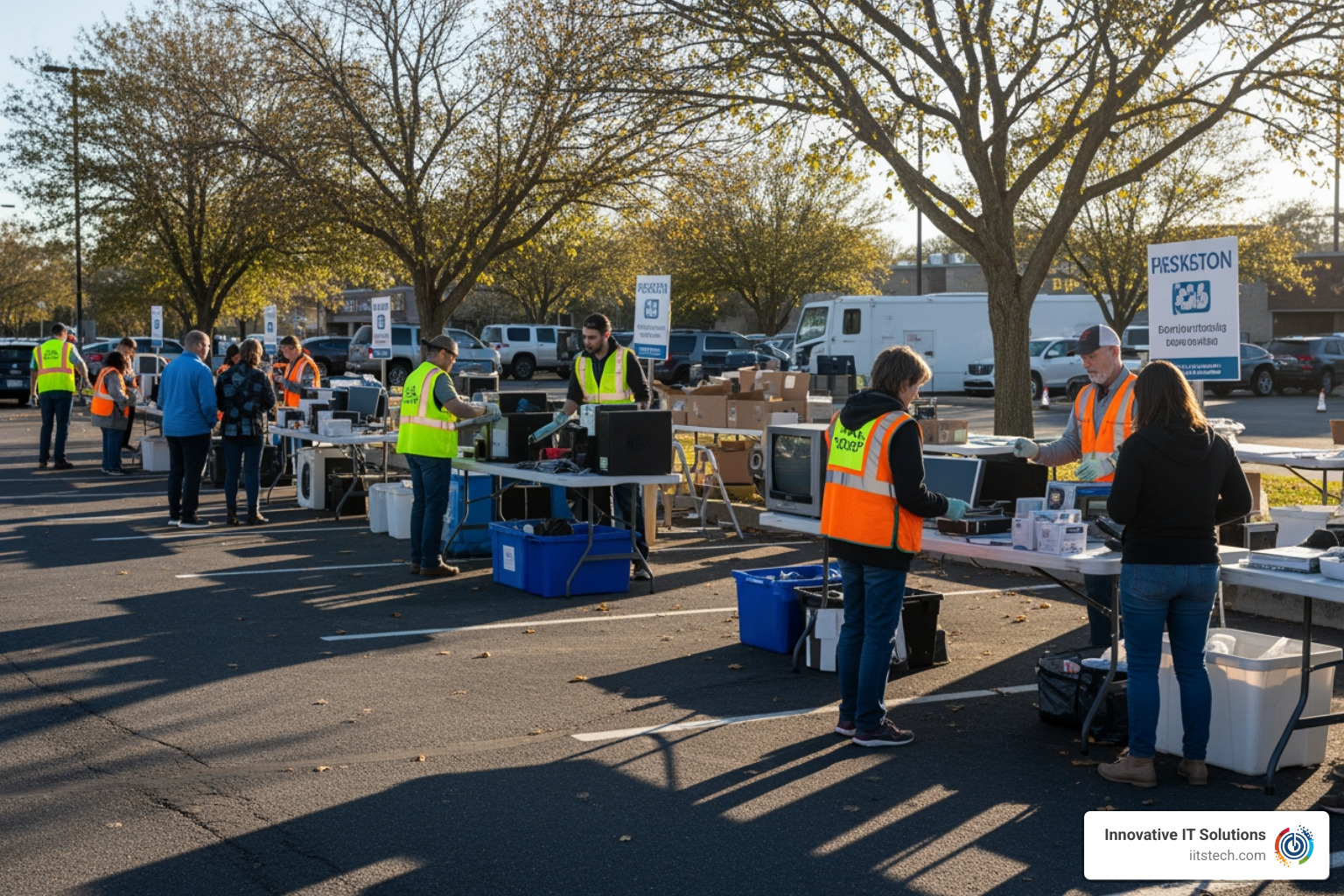
Many cities run recurring community collection events. For example, the Kingwood area near Houston has monthly events that have reportedly averaged about 15,000 pounds of electronics per month since the program began. Oklahoma City and other metro areas also host periodic e-waste collection days.
Accepted items typically include many common electronics such as:
- Computers
- Monitors
- TVs within size limits
- Cell phones
- Printers
- Cables and accessories
Common restrictions include:
- No household appliances
- No hazardous waste
- No alkaline batteries
- No smoke alarms
- No medical waste
- TV size limits, such as CRT up to 27 inches and LCD up to 50 inches
These kinds of events are convenient for household clean-outs, but they are still rule-based. If your item is bulky, hazardous, or unusual, you may need another outlet.
Certified local recyclers
Certified recyclers in your area offer a different kind of value than community events:
- Ongoing drop-off instead of waiting for event dates
- More secure handling of data-bearing devices
- Better support for bulk loads
- More formal processing and documentation
- Broader downstream recycling controls
In Oklahoma City, Innovative IT Solutions provides certified ITAD services including secure data destruction, asset recovery, and EPA-compliant recycling. Businesses and residents across Oklahoma and neighboring states can take advantage of these services year-round.
Some certified programs also emphasize secure destruction of hard drive data and material recovery over landfill disposal. That is especially important for anyone recycling business devices or personal computers with sensitive files.
How local options compare to national drop-off programs
In general:
- Community events are great for local convenience and household volumes
- Retail drop-off works well for small electronics and quick errands
- Certified recyclers are better for data security, larger quantities, and business equipment
- National store programs tend to have stricter household-per-day limits
- Local certified recyclers may accept categories that stores or events reject
If you want to understand what happens after drop-off, read Computer Recycling Services: What Happens to Your Old Tech? and E-Waste Recycling Services: The Smart Way to Dispose of Electronics.
What You Can’t Recycle Everywhere — and Where to Take It Instead
Here is the frustrating truth: there is no universal electronics recycling list that every store, event, or recycler follows.
Items stores and events often refuse
Commonly rejected items include:
- Refrigerators
- Washers and dryers
- Vacuums
- Loose hazardous waste
- Alkaline batteries
- Car batteries
- Smoke alarms
- Medical waste
- Radioactive devices
- Certain large CRTs
- Appliances with refrigerants
These items are often refused because they require a different handling stream, not because no one wants to help.
Better alternatives for hard-to-recycle electronics and accessories
If your item is not accepted at a retail store or local event, try one of these alternatives:
- Municipal household hazardous waste programs
- Battery recycling programs
- Appliance recyclers
- Manufacturer mail-back services
- Certified electronics recyclers
- Donation or refurbishing programs for working equipment
A quick reference list:
- TVs too large for store limits -> certified recycler or manufacturer program
- Alkaline or car batteries -> battery or auto-parts recycling channel
- Appliances -> appliance recycler or municipal bulk collection
- Medical or hazardous materials -> authorized hazardous waste program
- Working computers -> donation or resale may be better than shredding value
When donation or resale is better than recycling
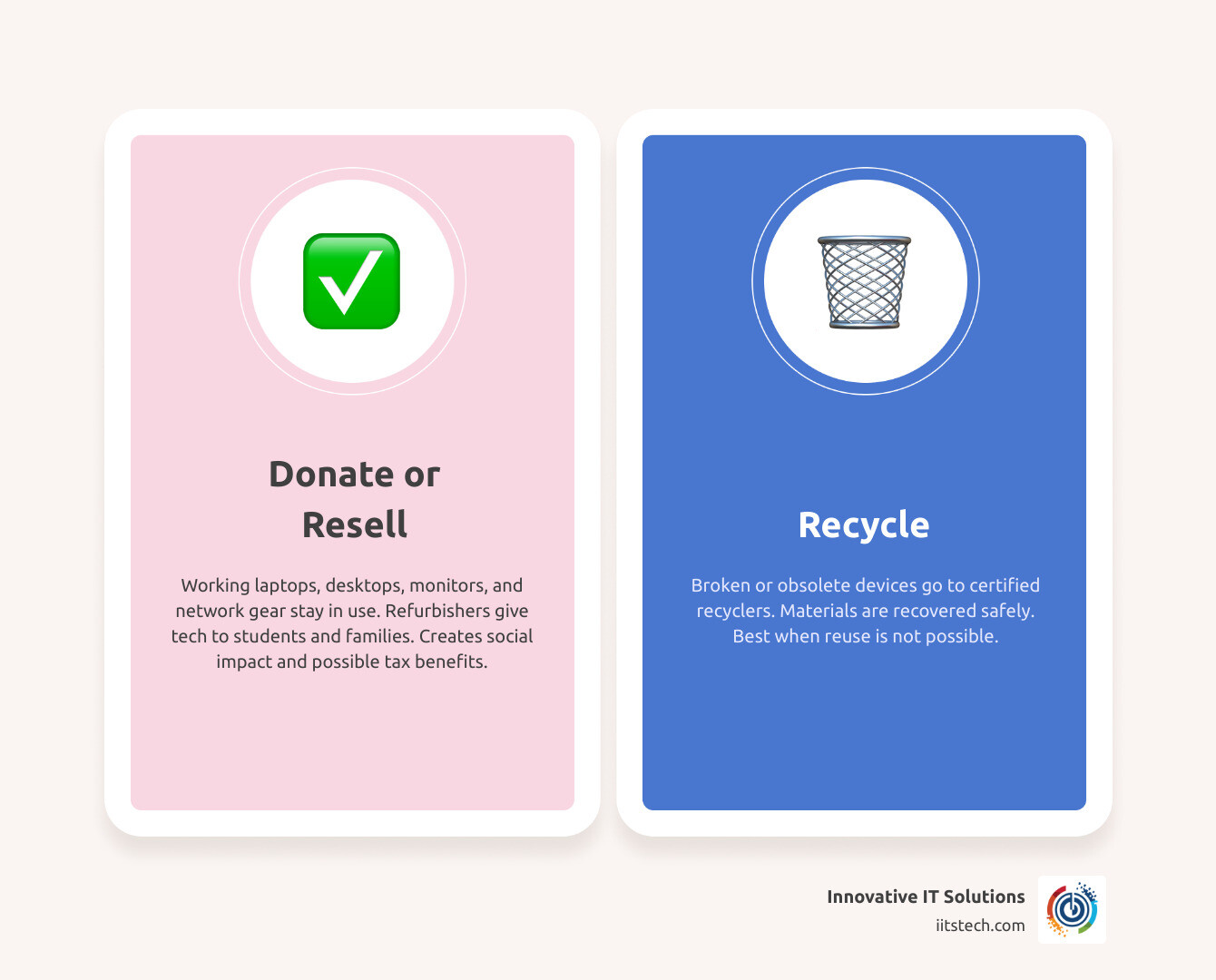
Not every old device is scrap. If it still works, donation or resale can extend its life and keep useful equipment in circulation.
This is especially true for:
- Working laptops
- Usable desktop computers
- Monitors in good condition
- Network gear with current business value
- Surplus office technology
Some donation programs refurbish computers for students and families, which can create a bigger social impact than immediate material recovery alone.
Businesses should also consider whether resale or asset recovery makes more sense than pure recycling. Start here: Is It Better to Recycle or Resell Old IT Equipment? and 5 Questions to Ask Before Donating Old IT Equipment.
Protect Your Data Before You Recycle Any Device
If a device can log in, store files, remember passwords, sync cloud accounts, or auto-fill your credit card, treat it like a data risk.
That includes more than laptops and phones. Think:
- External hard drives
- SSDs
- USB flash drives
- Copiers and printers
- Servers
- Networking gear
- Tablets
- Smart devices
How to prepare phones, laptops, and drives for recycling
Before recycling, we recommend this checklist:
- Back up anything you want to keep
- Sign out of Apple, Google, Microsoft, and other linked accounts
- Remove SIM cards and memory cards
- Deauthorize the device from services where needed
- Enable encryption if available before wiping
- Perform a factory reset or approved wipe
- Remove asset tags if appropriate
- Ask whether the recycler provides destruction documentation
For more preparation tips, see Ways to Prepare Your Computer Prior to Recycling.
What secure recyclers do that regular drop-off sites may not
A standard consumer drop-off site may do a fine job collecting material. But it may not provide:
- NIST-compliant data sanitization
- Drive shredding
- Serialized inventory logs
- Certificates of destruction
- Audit-ready records
- Full downstream tracking
- Zero-landfill assurances
For businesses, schools, healthcare groups, and financial organizations, those details matter a lot. The average data breach cost of $4.44 million makes “I assumed the reset button was enough” a very expensive sentence.
A secure recycler or ITAD partner can also support EPA-compliant processing, asset recovery, and full reporting. To avoid common mistakes, read The Top 5 Mistakes Companies Make When Recycling Electronics.
Frequently Asked Questions About the Best Place to Recycle Electronics
Where is the best place to recycle electronics if I have old computers and a TV?
If you live in Texas, start with manufacturer recycling programs because state law requires computer and TV manufacturers to offer consumer recycling opportunities. If you also have small accessories or unrelated gadgets, a retail drop-off or community event can fill the gaps. If the devices contain sensitive data or come from a business, a certified recycler is the safer choice.
Can I recycle electronics for free if I live far from a drop-off location?
Yes, sometimes. Your best options are:
- Manufacturer mail-back programs
- Retail mail-in kits
- Community event days when they rotate through nearby areas
- Haul-away services if you have bulky items
- A certified recycler that offers pickup for larger business loads
Mail-in is especially helpful for small electronics, laptops, tablets, and accessories.
How do I know if an electronics recycler is trustworthy?
Look for proof, not promises.
A trustworthy recycler should be able to explain:
- Whether they hold certifications such as R2
- How they handle data-bearing devices
- Whether they provide certificates of destruction
- How they track downstream vendors
- Whether they follow zero-landfill or EPA-compliant processes
- Whether they accept residential, commercial, or both types of loads
If you’re recycling business equipment, NAID AAA, NIST 800-88 alignment, and chain-of-custody documentation are strong signs you are dealing with a serious provider.
Conclusion
The best place to recycle electronics is not always the nearest place. Sometimes it is the free manufacturer program. Sometimes it is the local store on your errand route. And sometimes, especially for business devices and anything with sensitive data, it is a certified ITAD partner with secure destruction and full documentation.
Our rule of thumb is simple:
- Use manufacturer programs for covered consumer computers and TVs
- Use retailer drop-off for small household electronics
- Use community events for local convenience
- Use certified ITAD and recycling services for data-bearing devices, business equipment, compliance needs, and asset recovery
Whether you’re in Oklahoma City, across Oklahoma, or anywhere in the United States, Innovative IT Solutions can help you retire your technology securely and responsibly.
If you want a smarter, more secure way to dispose of retired tech, explore E-Waste Recycling Services: The Smart Way to Dispose of Electronics.
Your old tech does not belong in the trash. It belongs in the right hands.


