
Destroying Data Like the Pentagon: DoD Approved Methods for IT Disposal
What Is DoD Approved Data Destruction? (Quick Answer)
DoD approved data destruction refers to the set of officially sanctioned methods for permanently sanitizing storage media that contains classified, sensitive, or controlled unclassified information (CUI). If you need a fast reference, here are the currently accepted methods:
| Method | Applies To | Standard |
|---|---|---|
| Physical shredding / disintegration | HDDs, SSDs, optical media, flash | NSA/CSS Spec 9-12 |
| Degaussing + physical destruction | Magnetic HDDs and tapes | NSA EPL (Degaussers) |
| Purging (Secure Erase / cryptographic) | Eligible magnetic and SSD media | NIST SP 800-88 |
| Crushing / pulverizing / mangling | HDDs | DoD / DCSA guidelines |
The short version: Software wiping alone is rarely enough for classified media. For most DoD and defense contractor scenarios, physical destruction — often combined with degaussing — is required.
Data breaches cost organizations millions. But for defense contractors and federal agencies, the stakes go even higher. Mishandling decommissioned hardware that holds classified data or CUI can mean regulatory penalties, security incidents, and loss of clearance. Yet many IT managers are still relying on outdated methods — or simply aren’t sure which standard actually applies to them today.
The landscape has shifted significantly. DoD 5220.22-M — the old three-pass overwrite rule you may have heard about — is no longer the benchmark. The current framework pulls from NIST SP 800-88, NSA/CSS Specification 9-12, and related directives. Knowing the difference matters, especially when DCSA auditors come knocking.
I’m Mike Haden, Founder and Director of Business Development at Innovative IT Solutions. Over 14 years of running an R2v3-certified ITAD operation, I’ve helped hundreds of organizations navigate DoD approved data destruction requirements — from processing enterprise HDDs and SSDs to maintaining the chain-of-custody documentation that keeps audits clean. This guide covers everything you need to stay compliant and protect your organization.
The Evolution of DoD Approved Data Destruction Standards
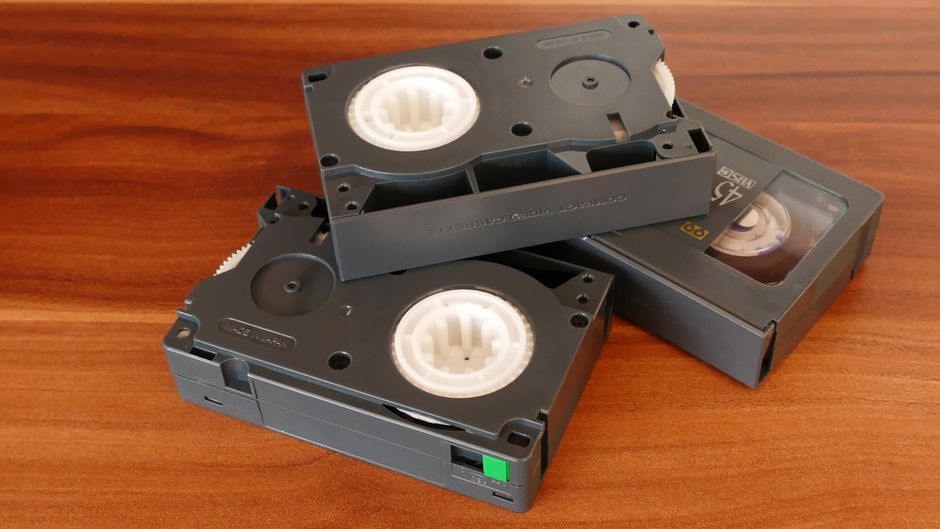
To understand where we are in May 2026, we have to look back at how data storage has evolved. In the early days of computing, data lived on massive magnetic tapes and floppy disks. The methods used to sanitize those drives were relatively straightforward: write over the data a few times, or run a strong magnet over the drive, and the data was gone.
As storage density increased and solid-state drives (SSDs) entered the market, these legacy methods became dangerously obsolete. Today, organizations must navigate three primary standards to achieve true compliance: the legacy DoD 5220.22-M, the widely adopted NIST SP 800-88, and the ultra-strict NSA/CSS Specification 9-12. For a broader look at how these frameworks compare, you can read more about What are Current Data Destruction Standards?.
The Myth of the DoD 5220.22-M Three-Pass Overwrite
For decades, the phrase “DoD compliant wipe” referred to the DoD 5220.22-M standard, which was first published in 1995 in the National Industrial Security Program Operating Manual (NISPOM). This standard required a three-pass overwrite process:
- Overwrite all addressable locations with binary zeros.
- Overwrite all addressable locations with binary ones.
- Overwrite all addressable locations with a random bit pattern, followed by verification of the final pass.
While this was highly effective for the low-density magnetic hard drives of the 1990s, it is a myth that this remains the gold standard today. In fact, the Department of Defense and other federal agencies no longer recognize the three-pass overwrite as an acceptable method for sanitizing modern storage media. Modern hard drives have sector layouts and firmware wear-leveling algorithms that software-based overwriting cannot reliably access. Relying on this outdated method for modern drives is one of the most common ineffective data destruction methods we see businesses make.
NIST SP 800-88: The Modern Gold Standard
Because the old DoD standard failed to address modern storage technologies like SSDs, smartphones, and high-density magnetic media, the National Institute of Standards and Technology released NIST Special Publication 800-88 Guidelines for Media Sanitization.
NIST SP 800-88 is the actual benchmark used by the U.S. government, defense contractors, and private enterprises today. Rather than relying on a fixed number of overwrite passes, NIST SP 800-88 categorizes media sanitization into three progressive levels:
- Clearing: Using logical techniques (such as standard overwriting) on all user-addressable storage locations to protect against simple, non-invasive data recovery attempts.
- Purging: Applying physical or logical techniques (such as ATA Secure Erase or cryptographic erasure) that render target data recovery impossible using advanced laboratory techniques.
- Destroying: Physically shredding, disintegrating, incinerating, or pulverizing the media to make recovery completely impossible.
Physical Destruction vs. Software-Based Sanitization
Choosing between software-based sanitization and physical destruction depends heavily on your data’s classification level, the type of media you are disposing of, and whether the hardware needs to be reused.
For unclassified or Controlled Unclassified Information (CUI), software wiping (purging) is often acceptable and allows for the reuse or resale of the IT asset. However, for classified, Secret, or Top Secret data, physical destruction is almost always mandatory. To understand the operational differences and when to deploy each strategy, you can read our detailed breakdown on Physical Destruction vs Data Wiping: When Each Method is Required.
| Sanitization Level (NIST 800-88) | Method | Hardware Reusable? | Target Media | Security Level |
|---|---|---|---|---|
| Clear | Software Overwrite (1-pass) | Yes | HDDs, unclassified systems | Low |
| Purge | ATA Secure Erase / Degaussing | Yes (except degaussed HDDs) | HDDs, SSDs, Magnetic Tape | Medium to High |
| Destroy | Shredding, Disintegration, Crushing | No | All media types | Maximum (Classified/TS) |
Degaussing Requirements for DoD Approved Data Destruction
For magnetic media, such as traditional hard disk drives (HDDs) and magnetic tapes, degaussing is a highly effective purging method. A degausser works by exposing the media to an intense magnetic field that disrupts the magnetic domains on the platters, completely scrambling the recorded data and rendering the drive permanently unusable.
However, degaussing is subject to strict technical requirements:
- Coercivity Ratings: The magnetic field strength of the degausser must match or exceed the coercivity rating of the media, measured in Oersteds (Oe).
- NSA Requirements: Under current NSA guidelines, new degaussers must generate a minimum magnetic field strength of 30,000 Gauss to be evaluated for the Evaluated Products List (EPL).
- The “Degauss and Destroy” Mandate: For classified hard drives, degaussing alone is insufficient. NSA policy mandates that degaussing must be immediately followed by physical destruction, such as deforming the platters or crushing the drive.
To learn more about how magnetic fields neutralize data, you can check out this resource to Learn More About Data Degaussing. For a complete list of government-approved degaussing hardware, refer directly to the NSA Evaluated Products List for Magnetic Degaussers.
Physical Destruction Specifications for DoD Approved Data Destruction
When physical destruction is required, simply drilling a hole in a hard drive or striking it with a hammer does not meet federal compliance. The Department of Defense and the NSA have established incredibly precise physical destruction specifications based on media type:
- Magnetic Hard Drives: Must be bent, crushed, or shredded to deform the internal platters completely. Industrial crushers like the SEM Model 0101 (which is NSA-listed and features a throughput of up to 204 drives per hour) are designed specifically to meet these physical destruction mandates.
- Solid-State Drives (SSDs) and Flash Media: Because SSDs store data on tiny silicon microchips rather than magnetic platters, traditional hard drive shredders (which output 1.5-inch or 0.75-inch strips) are useless. A memory chip can easily pass through a standard shredder completely intact. To prevent this, NSA/CSS Specification 9-12 requires solid-state and flash media to be disintegrated to particles no larger than 2 mm in size.
- Optical Media (CDs, DVDs, Blu-rays): Optical discs must be reduced to specific edge sizes using approved devices. CDs must be destroyed to a maximum edge size of 5 mm or less, while DVDs and Blu-ray discs (BDs) must be disintegrated to a maximum edge size of 2 mm or less.
For official guidance on approved optical shredders, you can review the NSA Evaluated Products List for Optical Destruction Devices.
Compliance Requirements for Defense Contractors and Federal Agencies

If your organization is a defense contractor or works with federal agencies, your data destruction practices are bound by strict regulatory frameworks. Under DFARS 252.204-7012 and NIST SP 800-171, contractors must safeguard Covered Defense Information (CDI) and Controlled Unclassified Information (CUI). Part of this safeguarding includes having a verifiable, secure process for media sanitization and disposal during IT asset retirement. Failure to comply can result in failed Defense Counterintelligence and Security Agency (DCSA) audits and the potential loss of lucrative government contracts.
Witness and Verification Protocols by Classification Level
The level of security clearance and the classification of the data dictate the exact protocols required during the physical destruction process:
- Confidential and Secret Material: The destruction must be witnessed and verified by at least one authorized individual with the appropriate security clearance level.
- Top Secret / SCI Material: The destruction of Top Secret material requires a strict two-person witness rule. Two cleared individuals must visually witness the entire destruction process from start to finish and sign off on the destruction records.
- Verification: Regardless of classification, organizations must perform verification procedures to confirm that 100% of the media was successfully destroyed or purged, inspecting a sample of the processed drives to ensure forensic-proof results.
Chain-of-Custody and Certificates of Destruction
To remain audit-ready, you must maintain an unbroken chain-of-custody. This means documenting every single handoff of your data-bearing assets from the moment they are pulled from the rack to the moment they are shredded.
A compliant chain-of-custody process includes:
- Storing retired drives in locked, secure collection bins.
- Scanning and logging serialized inventory at the point of collection.
- Transporting assets via GPS-tracked vehicles.
- Issuing a formal, legally binding Certificate of Destruction that details the date, time, method of destruction, device serial numbers, and the names/signatures of the operators and witnesses.
For step-by-step guidance on setting up this process for your business, read our guide on How to Ensure Certified Data Destruction for Retired Devices.
Frequently Asked Questions about DoD Approved Data Destruction
Is the DoD 5220.22-M standard still active?
Technically, no. The Department of Defense has transitioned away from DoD 5220.22-M for federal and defense contractor applications. It has been superseded by the National Industrial Security Program Operating Manual (NISPOM) rule under 32 CFR Part 117, which points directly to NIST SP 800-88 guidelines for media sanitization. While some legacy commercial contracts still reference “DoD wiping,” modern compliance audits require NIST-aligned processes.
Why can’t solid-state drives (SSDs) be degaussed?
Degaussing only works on magnetic media. SSDs do not use magnetic fields to store data; instead, they store electrical charges on NAND flash memory chips. Exposing an SSD to a degausser does absolutely nothing to the data on those silicon chips. To destroy data on an SSD, you must use software-based purging (like cryptographic erasure) or disintegrate the drive to a 2 mm particle size to physically pulverize the microchips.
What is the difference between clearing and purging?
Clearing is a logical sanitization process that prevents simple, commercially available data recovery tools from reading the drive. It is typically done via standard overwriting. Purging is a deeper level of sanitization (such as executing an ATA Secure Erase command or degaussing) that protects against advanced laboratory-grade data recovery techniques.
Conclusion
Navigating the complexities of DoD approved data destruction is not just about avoiding a data breach—it is about maintaining regulatory compliance, protecting national security, and ensuring your business is ready for its next DCSA audit. Whether you are dealing with CUI on retired office laptops or Secret-level data on enterprise server drives, relying on outdated methods like the DoD three-pass wipe is a risk you cannot afford to take.
At Innovative IT Solutions, we provide fully certified, EPA-compliant, and zero-landfill IT asset disposition (ITAD) services right here in Oklahoma City. From secure on-site mobile shredding in South OKC to providing comprehensive, audit-ready Certificates of Destruction, we ensure your data is handled with the highest level of security.
Don’t leave your data security to chance. Schedule a consultation for certified data destruction services with the team at Innovative IT Solutions today.


