
Why E-Waste Recycling Matters More Than Ever
E-waste recycling is the process of collecting, sorting, and processing discarded electronics to recover valuable materials and safely dispose of hazardous ones — keeping toxic substances out of landfills and putting reusable metals back into the supply chain.
Quick answer — what you need to know:
- What it is: Recycling end-of-life electronics like laptops, phones, servers, and monitors
- Why it matters: E-waste contains toxic materials (lead, mercury, cadmium) that contaminate soil and water
- The scale: 50–60 million tons of e-waste are generated globally every year — and only 17.4% gets recycled
- The value: That discarded e-waste was worth over $57 billion in recoverable materials in 2019 alone
- For businesses: Improper disposal risks data breaches, regulatory fines, and compliance failures
- The solution: Use a certified recycler with documented chain-of-custody, data destruction, and zero-landfill practices
Every year, millions of tons of old computers, phones, and servers get thrown away instead of recycled. The materials inside them — gold, copper, silver, rare earth metals — are simply lost. Meanwhile, the toxic chemicals they contain leak into the environment.
For IT managers, the stakes are even higher. Decommissioned hardware doesn’t just create an environmental problem. It creates a data security problem, a compliance problem, and a logistics problem — all at once.
This guide breaks down everything you need to know: how e-waste recycling works, where to take your devices, what regulations apply, and how to get real value back from retired assets.
I’m Mike Haden, Founder and Director of Business Development at Innovative IT Solutions, where I’ve spent 14 years building an R2v3-certified ITAD operation focused on responsible e-waste recycling, secure data destruction, and helping organizations recover value from surplus technology. Let’s get into what this all means for you and your organization.
What E-Waste Is and Why It Matters
When we talk about e-waste, we are referring to any electronic product that is nearing the end of its “useful life.” This isn’t just limited to that old bulky monitor in your garage. It includes computers, laptops, servers, smartphones, tablets, printers, VCRs, stereos, and even fax machines. As technology evolves at breakneck speeds in 2026, the lifespan of these devices keeps shrinking, leading to a massive surge in discarded hardware.
The problem is that many people still treat electronics like regular trash. When these items end up in landfills, they don’t just sit there. They are “ticking time bombs” of hazardous materials. Electronics are packed with heavy metals like lead, cadmium, beryllium, and mercury. If a battery or a circuit board is crushed in a landfill, those toxins can leak into the ground, eventually reaching our water supply.
The global scale is staggering. Between 50 and 60 million tons of e-waste are generated worldwide every single year. To put that in perspective, the documented e-waste discarded in 2019 alone was worth more than US$57 billion. Yet, globally, only about 17.4% of that waste is ever officially recycled.

Why e-waste recycling is a growing environmental and health concern
The environmental impact of improper disposal is a major worry for organizations like the EPA. When e-waste is handled by the “informal sector”—meaning people who burn or use acid baths to get to the metals—it releases toxic emissions into the air.
For public health, this is a disaster. Workers exposed to these processes, often in developing nations, face severe health risks from inhaling toxic fumes. Even here in Oklahoma, improper disposal can lead to soil pollution and water contamination in our local watersheds. By choosing professional e-waste recycling, we engage in “urban mining,” recovering resources from what we already have rather than digging new holes in the earth.
The hidden value inside old electronics
Your old office server isn’t just a heavy box; it’s a treasure chest. Electronics contain precious and base metals including copper, aluminum, gold, silver, and palladium.
However, recovering these isn’t easy. Currently, only about 10 out of the 60 chemical elements present in e-waste can be effectively recovered through mechanical processing. This is why specialized technology is required. When we recover these materials, we reduce the need for “virgin mining,” which is incredibly energy-intensive and environmentally damaging. Recycling metals like aluminum and copper saves a massive amount of energy compared to processing raw ore from a mine.
How E-Waste Recycling Works
Modern e-waste recycling is a high-tech industrial process. It isn’t just about smashing things with a hammer. It requires a sophisticated “chain of custody” to ensure that every part of the device is accounted for and that all hazardous materials are handled according to EPA standards.
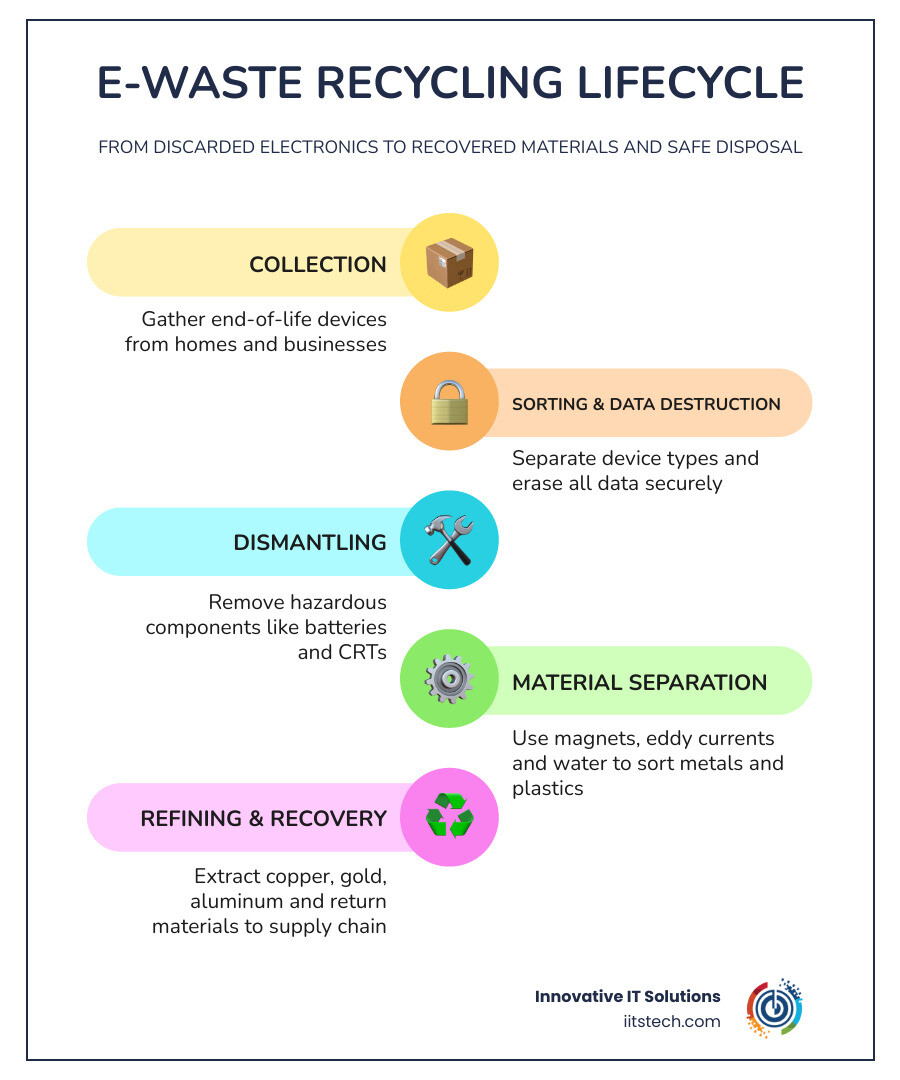
The process generally starts with collection and transportation to a secure facility. Once there, the real work begins. We follow a strict set of steps for electronic recycling to ensure maximum material recovery and total data security.

The key steps in e-waste recycling
- Manual Sorting and De-manufacturing: Before any machines get involved, technicians manually sort the items. We remove batteries (especially volatile lithium-ion ones), ink cartridges, and mercury-containing bulbs. This prevents contamination and fire hazards during the later stages.
- Dismantling: We break devices down into their primary components. Circuit boards go one way, plastic shells another, and metal frames a third.
- Shredding: The remaining components are shredded into tiny pieces, often less than two inches wide. This makes it easier to separate the materials.
- Mechanical Separation: We use a series of advanced technologies to sort the shredded bits. Large magnets pull out ferrous metals (steel and iron). “Eddy currents” are used to pop non-ferrous metals like aluminum and copper into separate bins. Water separation or air classifiers help sort plastics from glass based on their density.
- Refining: The separated metals are sent to specialized smelters where they are purified to be used again in new products.
By using these methods, we can achieve a “zero-landfill” goal, ensuring that what happens to your old tech is beneficial for the planet, not a burden.
Why secure e-waste recycling starts with data destruction
For businesses in Oklahoma City, the biggest hurdle to recycling is often the fear of a data breach. You can’t just throw a hard drive in a bin and hope for the best.
Before any physical recycling happens, data must be destroyed. This involves more than just a “factory reset.” We use NIST 800-88 and DoD-compliant software to overwrite data multiple times, or we use industrial shredders to physically destroy the platters of a hard drive or the flash chips of an SSD.
If you are preparing your computer for recycling, you should always sign out of your cloud accounts and perform a basic wipe, but professional destruction is the only way to get a certified “Certificate of Destruction” for your compliance records.
The Biggest Benefits of E-Waste Recycling
The benefits of a professional program extend far beyond just “being green.” While the environmental perks are huge, the economic and security benefits are often what drive businesses to take action.
How e-waste recycling reduces pollution and virgin mining
Every time we recover a pound of copper from an old server, that’s a pound of copper that doesn’t need to be mined from the earth. Mining is one of the most destructive industries on the planet, often leading to deforestation and massive carbon emissions.
Recycling also protects our local Oklahoma environment. By keeping heavy metals out of the soil, we ensure that our groundwater remains safe for future generations. When you look at the environmental impact of ITAD done right, you see a massive reduction in the carbon footprint of your IT department.
Why businesses gain more from professional recycling programs
For a business, e-waste recycling is a strategic opportunity. Through IT Asset Disposition (ITAD), we can often find opportunity in your e-waste.
- Asset Recovery: If your equipment is only a few years old, it might still have resale value. We can refurbish and resell that hardware, returning a portion of the profits to your bottom line.
- Compliance: Regulations like HIPAA, Sarbanes-Oxley, and various state laws require documented proof that data was destroyed. We provide the paper trail you need for an audit.
- Logistics: We handle the heavy lifting. Instead of your IT team spending weekends hauling monitors, we provide secure pickup and transport.
What You Can Recycle and Where to Take It
Knowing what can be recycled is half the battle. Generally, if it has a cord or a battery, it belongs in an e-waste recycling program.
Commonly accepted items and common restrictions
While most things are accepted, there are some nuances. Here is a quick breakdown of what businesses can and can’t recycle:
| Item Category | Typically Accepted? | Common Restrictions/Fees |
|---|---|---|
| Laptops & Desktops | Yes | Usually free; hard drive destruction may have a fee |
| Servers & Networking | Yes | Often high value; great for asset recovery |
| Smartphones & Tablets | Yes | Remove SIM cards and sign out of iCloud/Google |
| Monitors (LCD/LED) | Yes | Small fees may apply for cracked screens |
| CRT (Tube) TVs/Monitors | Varies | Often incur a significant fee ($25-$50) due to leaded glass |
| Printers & Copiers | Yes | Remove ink/toner cartridges first |
| Loose Batteries | Yes | Must be sorted by chemistry (Lithium, Lead Acid, etc.) |
A note on “Hazardous Waste”: Most recyclers cannot accept radioactive devices (like certain smoke detectors), bio-hazardous medical equipment, or large appliances like refrigerators (which contain freon) unless they are specifically certified for them.
Free programs, local drop-offs, and certified recyclers
For Oklahoma residents, there are several ways to dispose of electronics responsibly. The City of OKC offers various reuse and repurpose programs. Residents can also look into the Oklahoma Computer Recovery Act, which requires certain manufacturers to offer recycling options for their products.
Retailers like Best Buy also offer consumer-level programs, though they often have limits (such as three items per household per day) and may charge fees for large TVs. For businesses, however, these retail programs aren’t sufficient. You need a partner that offers specialized e-waste recycling services that include data destruction and bulk logistics.
How to choose a trustworthy recycler
Don’t just hand your data to anyone with a truck. Look for these “gold standard” certifications:
- R2v3 (Responsible Recycling): This ensures the recycler follows strict environmental and data security standards.
- NAID AAA: This is the highest certification for data destruction.
- Zero-Landfill Policy: Ensure they aren’t just shipping your waste to a landfill in another country.
Regulations, Industry Challenges, and the Future of Electronics Recovery
The world is catching up to the e-waste crisis. Governments are passing laws to ensure that manufacturers take more responsibility for the products they create.
How regulations shape e-waste recycling
Many states have implemented Extended Producer Responsibility (EPR) laws. These laws require manufacturers to fund the collection and recycling of the electronics they sell.
In Oklahoma, we follow specific state guidelines regarding the disposal of “covered electronic devices.” While we don’t have the same “Advanced Recovery Fee” system as California, we still have strict environmental regulations that businesses must follow to avoid heavy fines. Staying compliant isn’t just about the law; it’s about maintaining your company’s reputation in the community.
The challenges holding the industry back
Despite our best efforts, the industry faces some tough hurdles:
- Design for the Dump: Many modern devices are glued together, making them nearly impossible to dismantle without breaking them.
- Non-Removable Batteries: If a battery is glued into a laptop, it becomes a fire hazard during the shredding process.
- Low Awareness: Many people still don’t know that e-waste recycling is an option or why it’s necessary.
- Material Complexity: As devices get smaller and more complex, separating the 60+ elements inside becomes a scientific challenge.
What a circular economy for electronics looks like
The future isn’t just about better recycling; it’s about a “circular economy.” This means moving away from the “take-make-waste” model.
- Repair and Reuse: The most sustainable device is the one that stays in use. Refurbishing hardware for a second life is a core part of our mission.
- Design for Disassembly: We are advocating for manufacturers to use screws instead of glue.
- Closed-Loop Recycling: Using the metals recovered from old phones to build the next generation of devices.
Frequently Asked Questions about E-Waste Recycling
How should I prepare a computer or phone before recycling?
Preparation is key to security. Follow these three steps for recycling:
- Back up your data: Once it’s gone, it’s gone forever.
- Sign out of everything: Unlink your Apple ID, Google Account, and any find-my-device features.
- Perform a factory reset: This is a good first step, but a professional recycler will perform a much deeper, permanent wipe.
Is e-waste recycling free?
For most small consumer items (phones, tablets, laptops), you can often find free drop-off locations at local events or through manufacturer programs. However, for businesses requiring secure pickup, data destruction certificates, and the processing of bulky items like CRT monitors or large printers, there is typically a service fee. This fee covers the high cost of labor, specialized machinery, and environmental compliance.
Can old electronics be reused instead of recycled?
Absolutely! In fact, reuse is better than recycling. If a laptop is only four years old, we can often refurbish it, upgrade the RAM, and find it a new home. This extends the life of the product and provides a higher “asset recovery” value for the original owner.
Conclusion
The “tsunami” of e-waste isn’t going away, but we can change how we respond to it. Whether you are a resident in South OKC looking to clear out your closet or a large corporation in Oklahoma City decommissioning a data center, your choice of how to handle old tech matters.
At Innovative IT Solutions, we believe that e-waste recycling should be simple, secure, and sustainable. By choosing a partner that prioritizes NIST-compliant data destruction and zero-landfill processing, you aren’t just getting rid of “junk”—you are protecting your data, recovering value, and helping build a cleaner future for Oklahoma.
If you’re ready to turn your old IT equipment into a new opportunity, contact us today for a secure recycling solution. Let’s work together to keep our community clean and our data safe.


