
Why Every IT Team Is Leaving Money on the Table with Old Hardware
Asset recovery value maximization is the practice of systematically reclaiming the highest possible financial return from surplus, end-of-life, or decommissioned IT equipment — through resale, redeployment, refurbishment, or responsible recycling.
Here’s a quick summary of how to maximize returns on old hardware:
- Inventory first — tag and assess every decommissioned device by model, age, and condition
- Act fast — IT hardware depreciates quickly; delays shrink your recovery window
- Prioritize resale over recycling — a working server or laptop recovered today can return up to 28% of its original value
- Sanitize data before anything moves — NIST/DoD-compliant wiping protects you legally and enables resale
- Match each asset to the right channel — resale, redeployment, donation, parts harvesting, or certified recycling each serve a different asset profile
- Document everything — certificates of destruction and chain-of-custody records are non-negotiable for HIPAA, GDPR, and PCI compliance
If you manage IT at a mid-sized organization, this situation is probably familiar: a storage room filling up with old laptops, decommissioned servers, retired networking gear. Nobody’s using it. Nobody’s sure what data is still on it. And nobody has a clear plan for what to do with it.
That idle equipment isn’t neutral. It’s actively costing you money.
Storage space in the U.S. averages $6.50 per square foot per month. Hardware depreciates every week it sits untouched. And the longer you wait, the thinner the resale market gets.
The good news: that same equipment can generate real cash recovery — plus free up space, reduce compliance risk, and support your organization’s sustainability goals — when handled through a structured asset recovery program.
This guide walks through everything an IT manager needs to know: how asset recovery works, which disposition methods return the most value, how to build a program from scratch, and how to stay compliant throughout.
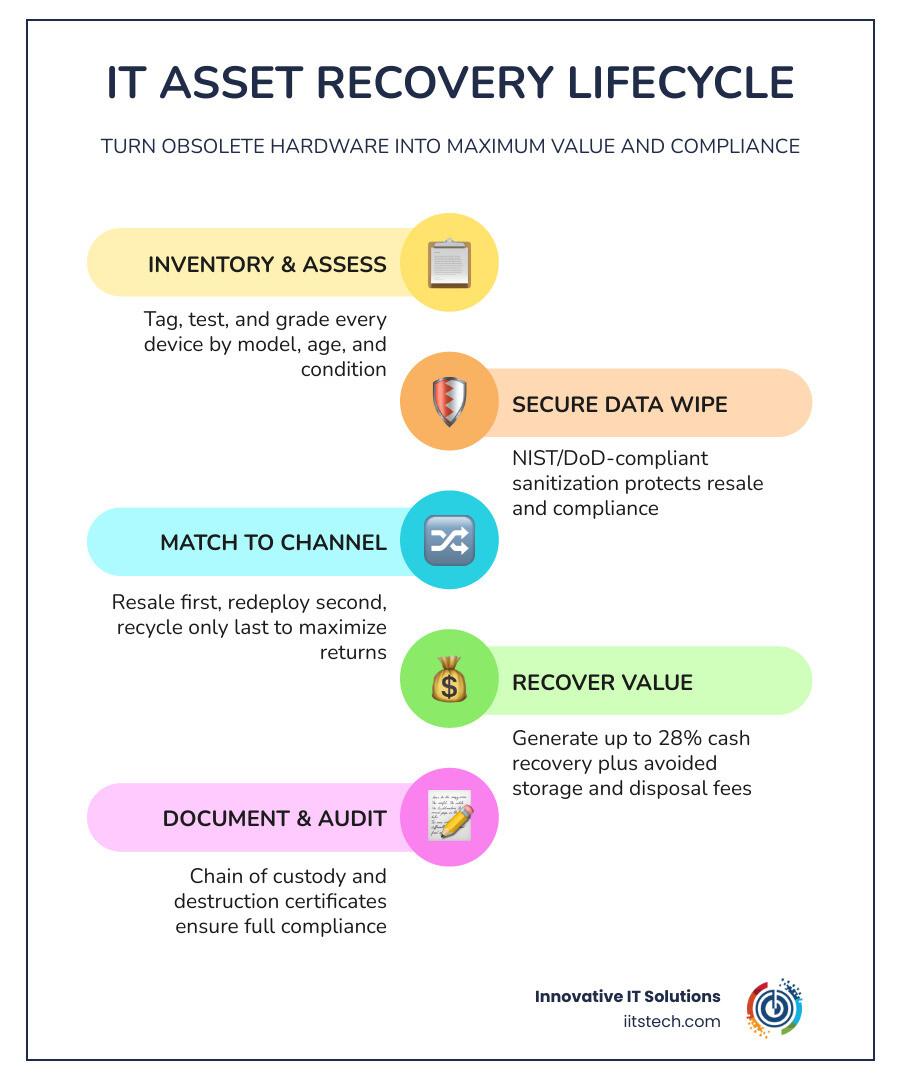
What Asset Recovery Means for Obsolete IT Equipment
For IT teams, asset recovery is the process of turning retired hardware into usable value instead of letting it become clutter, liability, or e-waste. That value may be cash from resale, savings from redeployment, recovered parts, tax advantages from donation, or material recovery through recycling.
In practice, obsolete IT equipment usually falls into one of these buckets:
- Surplus devices that still work
- End-of-life hardware with low but real resale value
- Distressed or damaged assets that may still have parts value
- Equipment that cannot be reused and must be recycled safely
The goal is simple: stop value leakage. Every week old devices sit in storage, they lose market value, take up space, and increase data security risk.
Asset recovery value maximization: definition and business purpose
When we talk about asset recovery value maximization, we mean choosing the highest-value compliant outcome for every asset. In IT, that usually follows a reuse hierarchy:
- Redeploy internally if the device still meets a business need
- Recondition or refurbish if a modest investment increases value
- Resell into the secondary market if demand is strong
- Donate if value to the business is better realized through social impact or tax benefit
- Recycle only when no higher-value path remains
That “recycling last” mindset matters. Recycling is important, but it is rarely the first choice if the hardware still has usable life.
Why unused IT equipment loses value faster than most teams expect
IT hardware is brutal that way. It does not age gracefully in a back room.
Reasons value drops quickly include:
- Fast product refresh cycles for laptops, servers, and networking gear
- New operating system and software requirements
- Falling demand for older processors, memory standards, and form factors
- Ongoing storage and handling costs
- Hidden labor spent tracking, moving, and securing idle equipment
- Data exposure risk on unprocessed drives and devices
Research shows a technology company can recoup up to 28% of the initial value from outdated server equipment when recovery happens strategically. Wait too long, and that same equipment may only be worth parts or scrap.
Asset recovery vs recycling vs ITAD
These terms are related, but they are not the same.
- Asset recovery focuses on reclaiming value
- Recycling focuses on material reclamation and responsible disposal
- ITAD, or IT asset disposition, is the broader framework that includes data destruction, logistics, remarketing, recycling, and compliance
A strong ITAD program is what makes asset recovery safe and scalable. If you want the full picture, see our guide on why every business needs a secure ITAD strategy.
The Financial, Environmental, and Operational Benefits of Asset Recovery
A good recovery program does more than create resale revenue. It improves cash flow, lowers disposal costs, supports ESG goals, and makes IT operations cleaner and more predictable.
The global asset recovery services market was valued at $6.28 billion in 2024 and is projected to reach $12.01 billion by 2034, which tells you organizations are treating this as a strategic function, not an afterthought.
How asset recovery value maximization improves ROI
The most useful financial metric is not gross sales proceeds. It is net recovery value.
Net recovery value considers:
- Sale proceeds
- Refurbishment costs
- Pickup and freight costs
- Data destruction costs
- Labor and admin time
- Fees for disposition services
- Avoided storage costs
- Avoided disposal costs
That is why asset recovery value maximization is really about margin protection. Sometimes a quick direct resale beats holding out for a slightly higher price. Sometimes redeployment creates more value than any external sale because it avoids buying replacement hardware.
Typical industrial liquidation can recover 28% to 35% of net book value, and strategic execution can push results higher. IT hardware behaves differently from heavy equipment, but the principle is the same: preparation, timing, and channel selection drive outcomes.
Environmental and compliance gains from secure disposition
The best recovery program is not just profitable. It is defensible.
For IT teams, that means:
- NIST- and DoD-aligned data sanitization
- EPA-compliant downstream recycling
- Zero-landfill processes where practical
- Chain-of-custody tracking
- Certificates of data destruction
- Certificates of recycling and audit-ready records
These controls reduce legal and reputational risk. They also support customer requirements and internal governance. If you operate in healthcare, finance, education, or any regulated environment, documentation is not a “nice to have.” It is your safety net.
Operational benefits: space, security, and procurement efficiency
Old hardware affects day-to-day operations more than many teams realize.
A structured program helps you:
- Reclaim warehouse and office space
- Reduce clutter in staging and storage areas
- Eliminate “mystery devices” with unknown data status
- Improve refresh planning
- Offset future procurement through resale proceeds or redeployment
- Strengthen internal controls and audit readiness
And yes, space costs money. At $6.50 per square foot per month, storing unused equipment becomes expensive surprisingly fast. Our article on the business benefits of selling your used IT equipment breaks this down further.
Best Disposition Methods for Maximizing Value from Old Hardware

Not every device belongs in the same exit lane. The best recovery programs classify assets early and assign each one to the channel most likely to maximize value.
When to choose resale, redeployment, or reconditioning
Use resale when:
- The device is functional
- Market demand exists
- Specs are still commercially relevant
- Cosmetic condition is acceptable or can be improved easily
Use redeployment when:
- Another team can still use the device
- Replacement avoidance is worth more than resale
- Standardization requirements permit reuse
Use reconditioning when:
- Light repair, cleaning, battery replacement, or reimaging increases value
- The asset has enough remaining life to justify the effort
This is especially effective for:
- Business laptops
- Enterprise desktops
- Servers with current-enough specs
- Networking gear with active secondary market demand
When donation, parts harvesting, or recycling makes more sense
Donation may be the right move when:
- Resale value is low
- Devices are still usable
- CSR or community impact is a priority
- The tax outcome is more beneficial than sale
Parts harvesting makes sense when:
- Whole-unit resale is weak
- Valuable components still have demand
- The device is not cost-effective to repair fully
Recycling is the best route when:
- The asset is nonfunctional and obsolete
- Repair costs exceed expected return
- The equipment contains hazardous materials
- No secondary market exists
Recycling should be certified, documented, and downstream accountable. “We dropped it off somewhere” is not a compliance strategy.
How to match each asset type to the right channel
Here is a practical comparison for common IT assets:
| Asset type | Best value path | Notes |
|---|---|---|
| Laptops | Resale or redeployment | High recovery if wiped, tested, and graded quickly |
| Desktops | Redeployment, resale, or donation | Demand varies by age and spec |
| Servers | Resale, parts harvesting, or recycling | Timing matters; enterprise demand moves fast |
| Storage arrays | Resale or recycling | Often depends on generation and drive status |
| Switches and routers | Resale or redeployment | Good value when models remain supported |
| Mobile devices | Resale or donation | Lock status and battery health matter |
| Peripherals | Bulk resale, donation, or recycling | Lower unit value, but volume adds up |
If your priority is to recover the most value before devices age out of the market, a resale-first workflow usually wins.
How to Build an Asset Recovery Program That Maximizes Returns
A successful program is not just “collect old devices and hope for the best.” It needs process, timing, and documentation.
Asset recovery value maximization starts with inventory and condition assessment
The first step is a complete asset inventory.
Capture:
- Asset tag
- Serial number
- Manufacturer and model
- Device type
- Age and configuration
- Functional status
- Cosmetic condition
- Current location
- Assigned user or department
- Data-bearing status
Functional testing and condition grading are critical. Poor grading leads to bad pricing, channel mistakes, and disputes later. We recommend setting clear categories such as:
- Grade A: fully functional, clean cosmetics
- Grade B: functional with moderate wear
- Grade C: functional but heavily worn or limited value
- Grade D: nonfunctional, parts or recycle only
This is where asset recovery value maximization really begins. You cannot optimize what you cannot see.
Valuation, channel selection, and timing
Once inventory is complete, the next step is fair market valuation.
That includes looking at:
- Current secondary market demand
- Age and specs
- Support status
- Quantity available
- Cosmetic and functional grade
- Packaging, accessories, and rails or caddies for server gear
- Whether assets should be sold individually, in lots, or through direct buyers
Timing matters enormously. Research in liquidation and distressed asset recovery consistently shows that delay is one of the biggest destroyers of value. In IT, we see that every day. A current-generation laptop has a much better recovery window than one sitting six more months until the next refresh cycle makes it feel ancient.
Secure data destruction, documentation, and final disposition
Nothing should move before the data risk is addressed.
For data-bearing devices, best practice includes:
- Secure overwrite or cryptographic erase where appropriate
- Physical destruction when required by policy or device condition
- Serialized tracking of drives and devices
- Chain-of-custody logs
- Certificates of destruction or sanitization
- Final disposition reports
This protects you while preserving value where possible. A wiped and documented laptop is sellable. An unwiped laptop is a lawsuit with hinges.
If you want to avoid common mistakes during sales and disposition, read how to sell used IT equipment without getting burned and what happens to your equipment after ITAD.
Technology, Services, Risks, and Industry-Specific Strategy
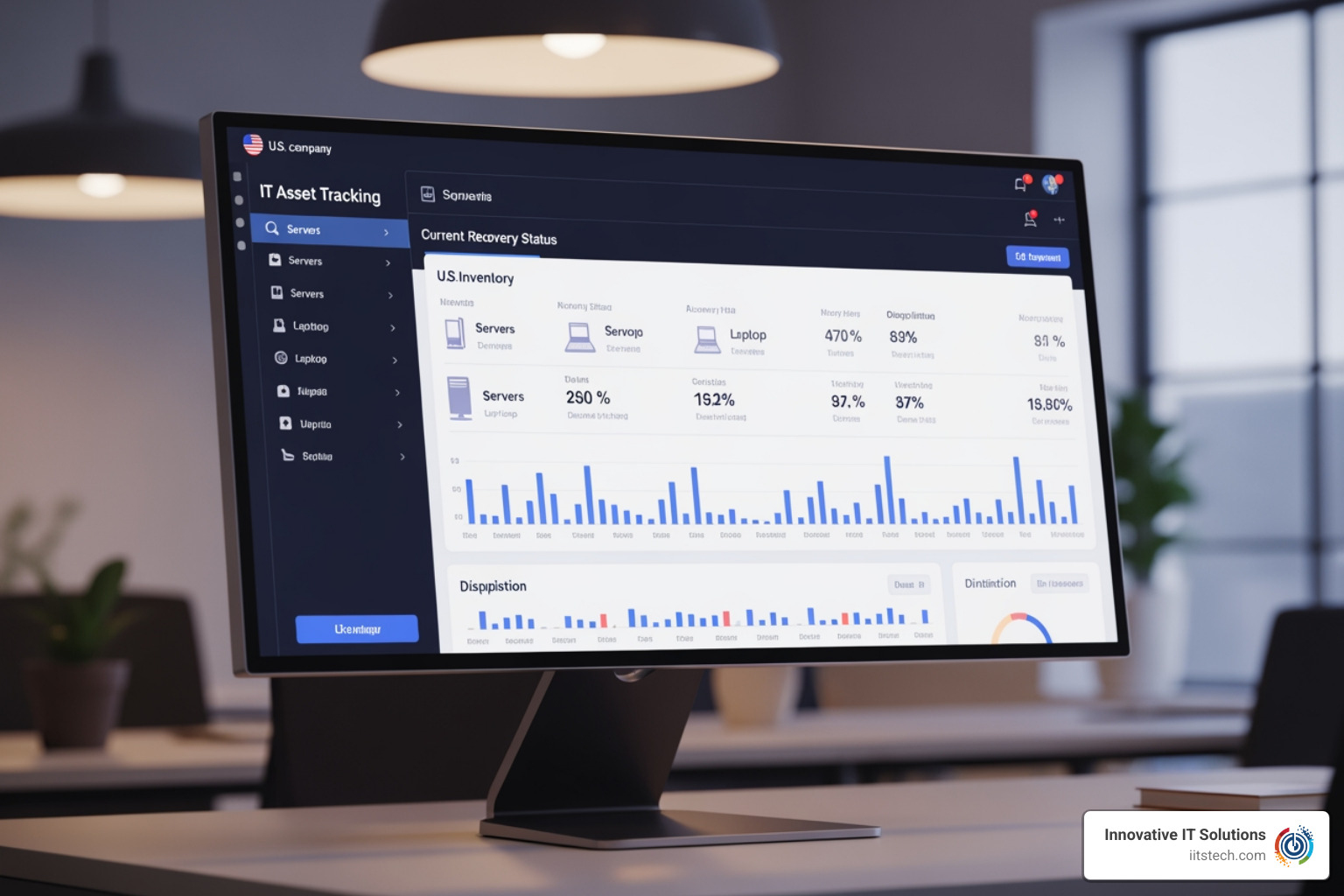
Asset recovery gets much better when it is supported by good data and the right service model.
How software and data platforms improve visibility and recovery outcomes
Modern asset recovery programs use centralized systems to track:
- Inventory status
- Location
- Condition
- Data destruction status
- Market value
- Disposition path
- Recovery results by asset class
That visibility supports faster decisions and better forecasting. In broader asset recovery markets, data-driven workflows have improved contact and recovery outcomes significantly. While those examples often come from real estate and finance, the lesson applies to IT too: better data means better recovery decisions.
Useful technology features include:
- Real-time asset tracking
- Workflow automation
- Condition and pricing databases
- KPI dashboards
- Audit trails
- Integration with CMDB or ITAM systems
Common mistakes that destroy recovery value
We see the same value killers over and over:
- Waiting too long to process retired equipment
- Missing serial numbers or incomplete asset records
- Skipping functional testing
- Using weak or undocumented data wiping
- Sending reusable hardware straight to scrap
- Choosing the wrong sales channel
- Failing to document chain of custody
- Ignoring environmental downstream accountability
One especially serious risk: used drives sold without proper sanitization. Research has found a significant share of used drives sold online still contain readable data. That is not just sloppy. It is dangerous.
How asset recovery differs in manufacturing, IT, real estate, and finance
Asset recovery is not one-size-fits-all.
- In manufacturing, the focus is often heavy equipment, production lines, spare parts, and liquidation timing. For a broader view, see equipment liquidation explained: maximizing asset recovery.
- In IT, the priorities are residual value, rapid depreciation, data destruction, and compliant recycling.
- In real estate, recovery may center on distressed properties, ownership data, liens, and disposition workflows. A useful overview is how asset recovery solutions maximize value.
- In finance, asset recovery often involves secured collateral, repossession, judgments, and legal enforcement.
For organizations in Oklahoma and across the United States, the framework changes by asset type, but the underlying idea stays the same: identify value early, preserve it, and choose the best realization path.
KPIs, ROI Measurement, and Frequently Asked Questions
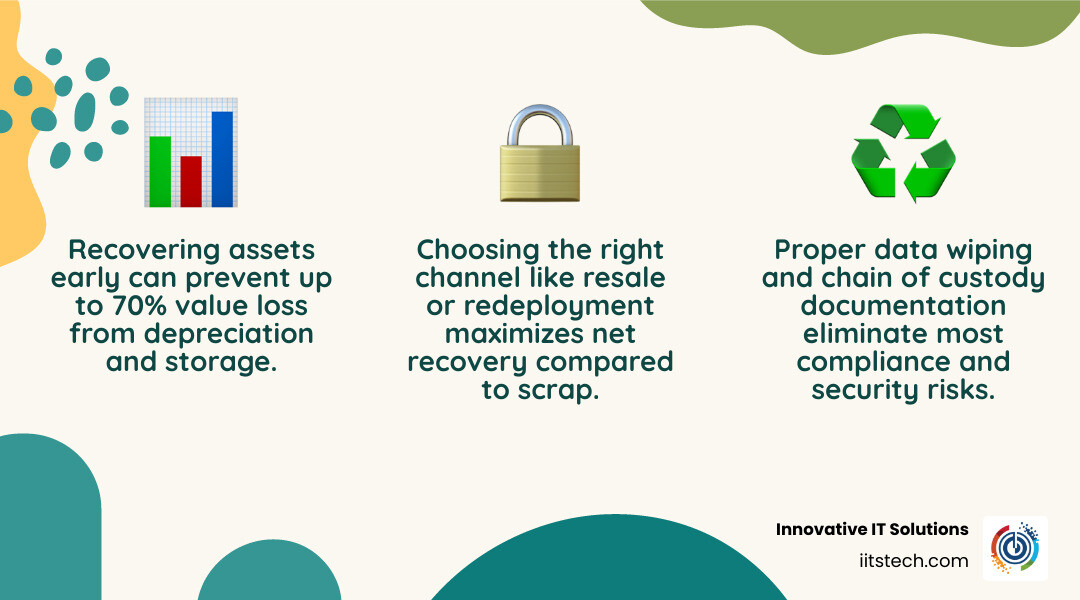
If you do not measure recovery performance, you are guessing.
KPIs every IT asset recovery program should track
The most useful KPIs include:
- Gross recovery revenue
- Net recovery value
- Recovery rate by asset class
- Time-to-recovery
- Reuse or redeployment rate
- Resale yield per device type
- Landfill diversion rate
- Data destruction compliance rate
- Chain-of-custody accuracy
- Percentage of assets processed within policy timeline
These metrics help you see where value is being created or lost.
How to calculate true ROI from obsolete IT assets
A simple ROI formula is:
ROI = (total recovered value + avoided costs – total program costs) / total program costs
Include all the value drivers, not just sale proceeds:
- Resale income
- Avoided storage cost
- Avoided disposal fees
- Avoided replacement purchases through redeployment
- Scrap/material recovery
- Tax benefit from donation where applicable
Then subtract:
- Logistics
- Testing and processing labor
- Data destruction costs
- Repair/refurbishment expense
- Service fees
That gives you the real economic picture.
What is the fastest way to increase returns on obsolete IT equipment?
Do these four things first:
- Identify surplus hardware earlier
- Triage assets within days, not quarters
- Price to the current market
- Complete secure wiping fast so devices can move
The fastest gains usually come from reducing delay. Time is the enemy of residual value.
How do you maximize value without creating data security or compliance risk?
Use a documented process that includes:
- NIST- or DoD-aligned sanitization
- Serialized asset tracking
- Chain of custody
- Certificates of destruction
- EPA-compliant recycling for non-reusable assets
- Downstream vendor accountability
At Innovative IT Solutions, this is exactly where secure ITAD and recovery work together. You should never have to choose between maximum returns and responsible compliance.
Should you sell, donate, or recycle old business computers?
The short answer:
- Sell if the devices have strong market value
- Donate if they still work but resale is limited and your goals include community benefit
- Recycle if they are unsafe, obsolete, or uneconomical to repair
The right answer depends on condition, demand, policy requirements, and timeline. Many organizations use a blended strategy across the same batch.
Conclusion
Obsolete IT equipment does not have to become dead weight. With the right process, it becomes recovered revenue, reclaimed space, lower risk, and stronger sustainability performance.
That is the heart of asset recovery value maximization: move quickly, wipe securely, document thoroughly, and route every asset to the highest-value responsible outcome.
At Innovative IT Solutions, we help organizations in Oklahoma City, OKC, South OKC, and across Oklahoma do exactly that through secure ITAD, asset recovery, electronics recycling, and resale programs built for compliance and maximum returns.
If you are ready to turn retired hardware into real value, explore our asset recovery services, sell your gear, or learn more about our electronic recycling program for your business.


