
Why Selling Used Audio Equipment the Right Way Puts More Money in Your Pocket
If you’re looking to sell used audio equipment, here are the best options available in May 2026:
| Selling Method | Best For | Speed | Payout |
|---|---|---|---|
| Specialized buyer (e.g., TMR, SellStereo) | High-end HiFi gear | Fast | Moderate |
| Consignment service | Maximum return, no rush | Slow | Highest |
| Trade-in program | Upgrading gear | Fast | Moderate (store credit) |
| Online marketplace (eBay, Reverb, Audiogon) | DIY sellers | Variable | High (before fees) |
| Local cash buyer (e.g., PayMore) | Instant cash, no shipping | Same day | Lower |
You’ve got audio gear sitting around. Maybe it’s a system you’ve outgrown. Maybe it’s decommissioned equipment from a business upgrade. Either way, it has real value — and how you sell it determines how much of that value you actually keep.
The challenge? There are a lot of options. Each one comes with its own trade-offs in speed, payout, risk, and effort. Sell on the wrong platform and you could lose 15–20% of your sale price to fees alone. Sell to the wrong buyer and you risk scams, chargebacks, or leaving serious money on the table.
This guide cuts through the noise and shows you exactly where to sell, how to price, and what to watch out for.
I’m Mike Haden, founder of Innovative IT Solutions, with 14 years of experience in IT asset disposition, equipment remarketing, and helping organizations recover maximum value from surplus technology — including audio equipment. Over that time, I’ve developed the processes and platform knowledge to help you sell used audio equipment efficiently, securely, and profitably.
Best Platforms to Sell Used Audio Equipment Online
When you decide to release your pre-loved gear back into the wild, your choice of platform dictates your entire selling experience. The online landscape for audio gear is highly stratified. Selling a consumer-grade Bluetooth speaker requires a completely different approach than offloading a pristine pair of Wilson Audio speakers or a vintage mixing console.
For businesses and individuals alike, choosing where to list is the first and most critical decision in the asset recovery process. If you have a bulk lot of commercial AV gear or integrated office systems, you can also look into specialized business liquidation routes via our Innovative IT Solutions Sell Your Gear portal to bypass the consumer listing hassle entirely.

Specialized Audio Marketplaces vs. General Platforms
To get the most eyes on your gear, you must match the platform to your target audience’s demographics:
- Audiogon: Established in the late 1990s, Audiogon is the undisputed digital town square for high-end, audiophile-grade 2-channel stereo equipment. If you are selling preamplifiers, high-performance digital-to-analog converters (DACs), or exotic power cables, this is where niche buyers gather. The audience here knows exactly what they are looking for and is willing to pay premium prices for well-maintained equipment.
- Reverb: If your gear leans toward music production, studio recording, or live sound, Reverb is your best bet. It is a highly active marketplace designed specifically for musicians, engineers, and creators.
- eBay: The behemoth of general marketplaces. While eBay offers unmatched global reach, it comes with a steep cost. eBay typically charges a 10% Final Value Fee on completed sales, plus an additional 3-4% in payment processing fees. Additionally, because the audience is general, you may deal with more lowball offers and less-informed buyers.
- Specialized Managed Services: Companies like The Music Room (TMR) offer direct purchase or consignment. TMR is highly respected, having completed over 50,000 transactions and more than 500,000 appraisals of HiFi gear. They even offer a 90-day warranty on all tested and sold equipment to their buyers, which helps justify their margins. For professional recording setups, Vintage King Sell & Trade Your Gear is the gold standard for consoles, outboard gear, and high-end microphones.
How to Safely Sell Used Audio Equipment on Marketplaces
Peer-to-peer selling on open marketplaces offers high payouts, but it exposes you to significant risks, including fraudulent return claims, payment chargebacks, and shipping disputes.
To protect yourself, always communicate strictly through the platform’s official messaging system. Never agree to take a transaction off-platform to “save on fees.” When accepting payments, use secure, platform-approved methods. If you are using PayPal, avoid using the “Friends and Family” option for commercial sales; while it bypasses fees, it strips away all seller protections, leaving you vulnerable if a buyer claims they never received the item.
For a deeper dive into avoiding online marketplace pitfalls, read our expert guide on how to sell used IT equipment without getting burned.
Comparing Your Selling Options: Direct Sale, Consignment, and Trade-Ins
Before you photograph a single piece of gear, you need to decide which selling model aligns with your goals. Are you looking for immediate cash, or do you have the patience to wait for the absolute highest offer?

Here is how the three primary resale methods compare:
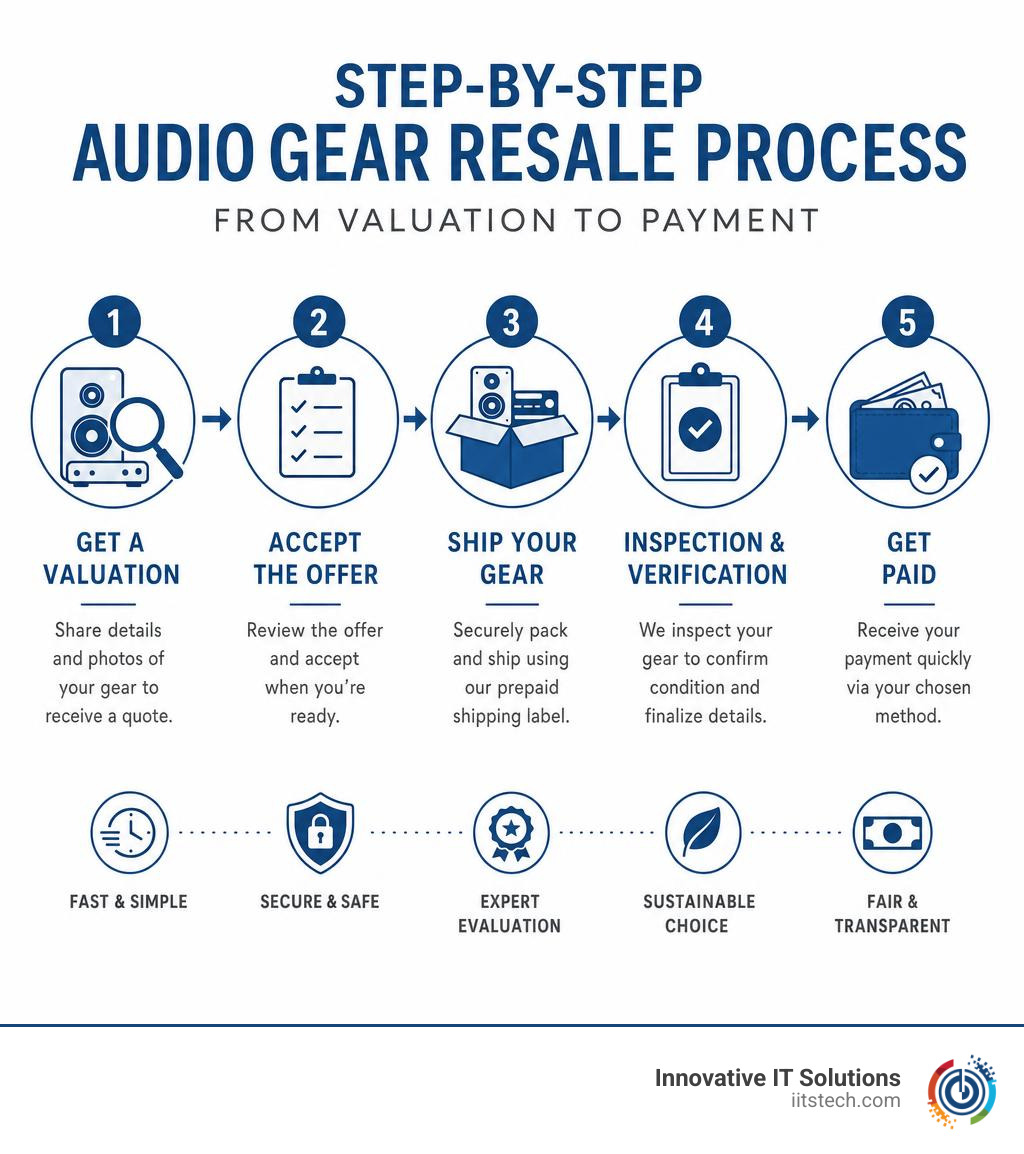
- Direct Sale (Cash Buyers): Services like Sell Stereo or direct-buy programs from specialized dealers offer instant cash quotes. They handle the logistics, often providing prepaid shipping labels. The trade-off is a lower payout, as these businesses must leave room for their own resale margin.
- Consignment: Consignment bridges the gap between DIY selling and direct sales. A professional dealer lists, markets, and ships your gear for you, taking a percentage of the final sale price (typically 20% to 35%). Consignment yields a higher return than a direct sale because the risk is shared, but it can take weeks or months to secure a buyer.
- Trade-Ins: If your goal is to upgrade your current setup, trading in your equipment to a specialized retailer is incredibly convenient. Retailers frequently offer a “trade-up bonus,” giving you 10% to 15% more value if you take store credit instead of cash.
| Feature | Direct Sale | Consignment | Online Marketplace (DIY) | Professional Buyback / ITAD |
|---|---|---|---|---|
| Payout Speed | Fast (1-3 days) | Slow (Weeks to months) | Variable (Days to weeks) | Fast (Upon inspection) |
| Average Payout | Moderate | High | Highest | Fair Market Value |
| Seller Effort | Very Low | Low | Very High | Zero (Fully managed) |
| Risk Exposure | Zero | Low | High (Scams/Returns) | Zero (Fully documented) |
Valuation, Hidden Costs, and Tax Implications of Reselling Gear
Pricing used electronics is a science. Set the price too high, and your listing will gather digital dust; set it too low, and you leave money on the table.
To determine the true market value of your gear, specialized platforms do not guess. They rely on historical transaction data. For example, TMR appraisals leverage a proprietary database of over 50,000 completed sales alongside three years of global eBay transaction history. You can perform similar research by filtering eBay or Reverb search results to show only “Sold Listings.”
When calculating your net return, do not forget the hidden costs of DIY selling:
- Platform Fees: 5% on Reverb, up to 10% on eBay.
- Payment Processing: 3% to 4% via PayPal or credit card processors.
- Packaging Supplies: Heavy-duty boxes, bubble wrap, and instapak foam can easily cost $20 to $50 per item for heavy amplifiers or speakers.
Tax Implications of Reselling Audio Gear
Sellers must also remain aware of tax reporting thresholds. Historically, payment processors like PayPal reported payments exceeding $20,000 or 200 transactions in one single year for tax purposes via a 1099-K form. While federal thresholds continue to evolve, many states enforce much lower reporting limits.
If you sell your used gear for less than you originally paid for it, it is considered a non-taxable personal loss. However, you must keep your original purchase receipts to prove your cost basis to the IRS if you receive a 1099-K. For businesses, liquidating these assets properly can offer great write-offs and depreciation advantages. Learn more about the financial advantages in our article on the business benefits of selling your used IT equipment.
Step-by-Step Guide to Preparing Your Gear for Sale
To command top dollar, your equipment must look and perform like new. Buyers in the audio space are notoriously meticulous. A single speck of dust in a photo or a scratch on a faceplate can knock hundreds of dollars off the final sale price.
First, clean the equipment safely. Use a dry microfiber cloth to remove dust. For stubborn grime on metal faceplates, use a slightly damp cloth with a mild, non-ammonia cleaner—never spray liquids directly onto the gear. Use compressed air to clear dust from heatsinks and inputs, but hold fan blades in place so they do not spin and damage their bearings.
Next, perform a comprehensive functional test. Check every input, output, switch, and dial. If a potentiometer is scratchy, treat it with a specialized electronics contact cleaner like DeoxIT.
If you still have the original factory packaging, double-box the item. Original packaging can increase the value of vintage and high-end gear by 10% to 20% because it guarantees safer shipping. Gather all original accessories, including remote controls, power cables, manuals, and antennas.
If your gear is too old, damaged, or simply not worth the hassle of listing individually, you must decide whether to scrap it or find an eco-friendly partner. Read our guide on whether it is better to recycle or resell old IT equipment to make the greenest, most profitable choice.
Preparing to Sell Used Audio Equipment for Maximum Value
Once your gear is clean and tested, it is time to create your listing.
- High-Resolution Photography: Take photos in bright, natural light. Reverb allows up to 25 images per listing—use them all. Capture every angle: front, back, sides, top, and bottom. Take close-up shots of the inputs, model labels, and serial numbers.
- Disclose Every Defect: If there is a scratch on the side panel, photograph it and point it out in the description. Transparency builds trust. Buyers are far more likely to purchase from a seller who honestly discloses minor cosmetic wear than one who tries to hide it.
- Use Platform Tools: On platforms like Reverb, users who add gear to their watch list are 3x as likely to make a purchase. You can leverage this behavior by offering targeted price drops to watchers or running temporary sales to trigger notifications.
Frequently Asked Questions About Reselling Audio Gear
What types of audio equipment are easiest to sell?
High-performance, 2-channel stereo products from reputable brands are always in high demand. Amplifiers, preamplifiers, turntables, and high-end passive speakers hold their value incredibly well and sell quickly.
Conversely, mass-market home theater receivers, car audio components, and older smart speakers depreciate rapidly and are much harder to sell online. Specialized buyers like TMR and Sell Stereo actively refuse car audio and cheap home theater gear because the shipping costs often exceed the market value.
How do shipping, returns, and buyer protection policies differ across platforms?
On peer-to-peer marketplaces like Reverb and eBay, the seller is generally responsible for safe delivery. Reverb offers discounted shipping labels and an optional “Safe Shipping” insurance program that protects sellers if gear is damaged in transit.
If you sell directly to a managed service like TMR, they typically provide prepaid shipping labels and can even send custom packaging materials to ensure your gear arrives safely at their facility. For detailed shipping guidelines and standards, you can review the The Music Room Seller FAQ.
Is it better to sell to local cash buyers or online marketplaces?
Local cash buyers provide unmatched speed and convenience. If you want cash in hand today and do not want to deal with packing heavy boxes or risking online scams, selling locally is excellent. You can visit a physical store like PayMore Audio Equipment to get an instant cash offer on the spot. If you are in the Oklahoma City area, local pawn shops like Neighborhood Pawn Car Audio are also convenient options for quick cash deals on car audio or consumer electronics.
However, local buyers must factor in their physical overhead and localized demand, meaning their cash offers will generally be lower than what you could get by listing the item yourself to a global audience on an online marketplace. For businesses with large quantities of AV or IT assets, utilizing a professional asset recovery service is the best way to balance high payouts with zero operational hassle.
Conclusion
Whether you are an audiophile upgrading your home listening room or a business coordinator tasked with liquidating a warehouse of commercial AV systems, taking a systematic approach ensures you get top dollar when you sell used audio equipment.
By matching your gear to the right platform, cleaning and documenting it meticulously, and understanding the hidden costs of shipping and transaction fees, you can maximize your financial return.
For businesses looking to liquidate large quantities of commercial audio, IT, or video equipment, managing individual listings is rarely a productive use of internal resources. Partnering with a professional ITAD provider streamlines the entire process while protecting your organization’s data and compliance standing.
At Innovative IT Solutions, we provide fully managed asset recovery, secure data destruction, and EPA-compliant electronics recycling with a zero-landfill guarantee. We serve businesses throughout Oklahoma City, South OKC, and the surrounding regions, helping you turn retired hardware into working capital.
Ready to clear out your surplus gear efficiently and securely? Read our professional guide to IT asset liquidation and vendor selection or contact us directly at our Innovative IT Solutions Sell Your Gear page to receive a professional appraisal today.